

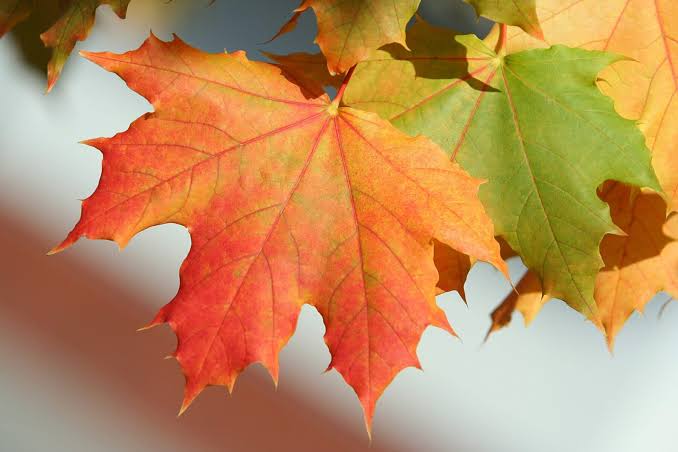
If you are trying to tell a sugar maple, Norway maple and red maple apart in Massachusetts, do not rely on fall color alone. Start with the leaf margins and petiole, then check the seeds, buds and bark. Norway maple gives us one especially useful clue: break the leaf stalk and it usually releases milky white sap. Red maple tends to have clearly toothed leaf edges and red buds. Sugar maple usually has five lobes, much less serration and pointed brown buds.
And if the tree was sold as a Legacy sugar maple, that does not add a fourth species to the comparison. Legacy is a cultivar of sugar maple, Acer saccharum.
Around Reading, Tewksbury and the rest of eastern Massachusetts, these three maples can stand surprisingly close together. They may also look much more alike from the driveway than they do when you have a leaf, twig or pair of seeds in your hand.
We use more than one feature before putting a name on a tree.
Quick Comparison: Sugar Maple vs Norway Maple vs Red Maple
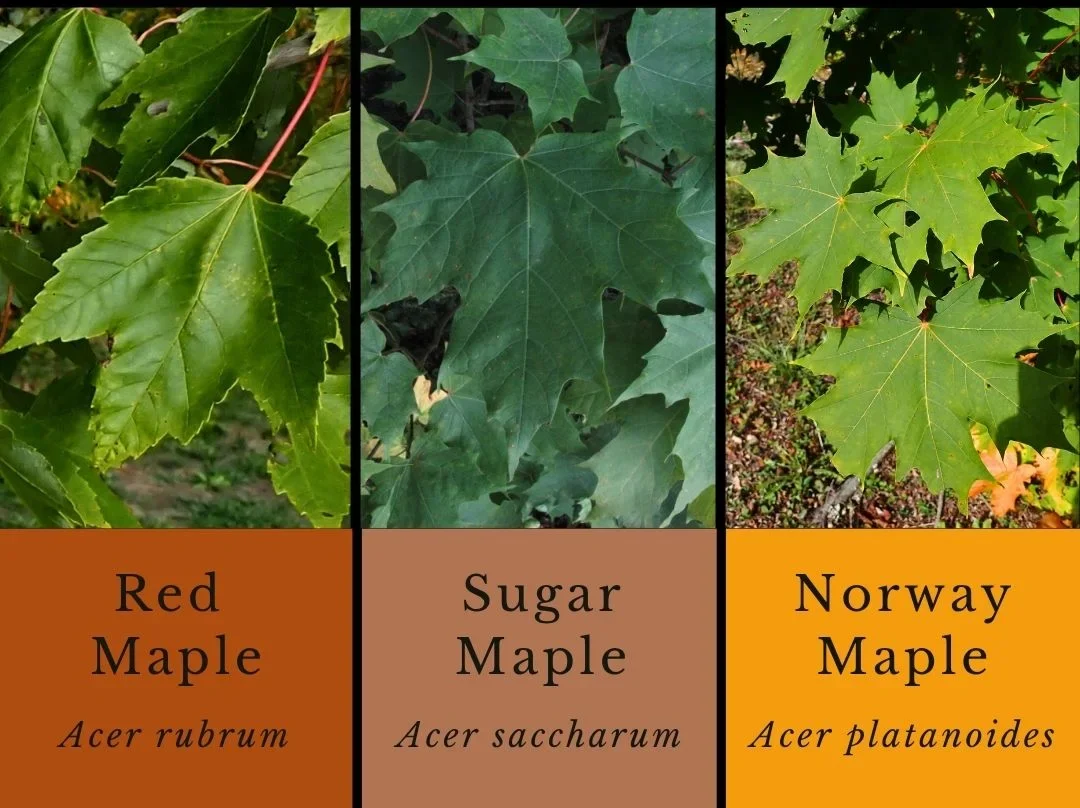
| Feature | Sugar Maple | Norway Maple | Red Maple |
|---|---|---|---|
| Scientific name | Acer saccharum | Acer platanoides | Acer rubrum |
| Native to Massachusetts? | Yes | No; invasive | Yes |
| Typical leaf | Usually 5 lobes | Usually 5–7 pointed lobes | Usually 3 prominent lobes, sometimes 5 |
| Leaf margin | Relatively smooth or lightly toothed | Mostly smooth between larger points | Noticeably serrated |
| Broken petiole | Clear sap | Milky white sap | Clear sap |
| Winter buds | Brown, narrow and pointed | Larger and rounder/blunter | Small, blunt and reddish |
| Samaras | Horseshoe-shaped, less widely spread | Very wide, often close to horizontal | Smaller V-shaped pair |
| Mature bark | Long irregular plates and furrows | Tighter intersecting grooves | Narrow, scaly plates |
That table gets you close. The rest of the guide helps when the tree does not look like the perfect specimen in a field manual.
First, Make Sure You Are Looking at a Maple
Before separating one maple species from another, look at how the leaves and twigs are arranged.
Maples generally have opposite branching.
That means two leaves, buds or twigs emerge across from each other at the same point on the stem.
It is a useful first screen because plenty of trees can have vaguely maple-shaped leaves without sharing that opposite arrangement.
Once we see opposite branching and a palmate maple leaf, we start narrowing the species.
Sugar Maple: Look for the Pointed Brown Buds and Cleaner Leaf Edge
Sugar maple is Acer saccharum, one of the native maples associated with New England forests and maple-syrup production.
A typical sugar maple leaf has five lobes. The spaces between those lobes are relatively deep, and the edge of the leaf has far less fine serration than red maple.
We avoid calling the margin completely toothless because real leaves vary. Small coarse teeth can be present. What matters in this comparison is that the leaf does not have the fine saw-like edge we expect from a red maple.
Turn your attention to the twig and the difference gets clearer.
Sugar maple terminal buds are brownish, narrow and sharply pointed.
That is one of our favorite winter clues.
What Is a Legacy Sugar Maple?
A Legacy sugar maple is a cultivated selection of sugar maple sold as Acer saccharum ‘Legacy’.
It is still the same species.
Legacy was selected for landscape traits such as a dense oval crown, thick dark-green foliage and red-orange fall color. Those characteristics can make the tree look a little more uniform than a naturally occurring sugar maple, but they do not replace the normal species-level identification clues.
If you are trying to determine whether an established landscape tree is a Legacy specifically, leaf shape alone usually will not prove the cultivar.
Old planting records, nursery tags or property documentation are much stronger evidence for the cultivar name.
From a tree-care standpoint, we first identify it as a sugar maple and evaluate the actual tree in front of us.
The Sugar Maple Petiole Does Not Produce Milky Sap
The petiole is the small stalk connecting the leaf blade to the twig.
Break a fresh sugar maple leaf at that stalk and the sap should be clear rather than milky.
That becomes especially useful when the other possibility is Norway maple.
The leaves can look similar enough to confuse a homeowner at first glance.
The petiole test gives us another trait in a few seconds.
Sugar Maple Seeds Have a More Horseshoe-Shaped Form
Maple fruits are called samaras.
Each familiar “helicopter” consists of a seed with a wing that helps it move away from the parent tree.
Sugar maple produces paired samaras whose wings do not stretch nearly straight across from each other the way Norway maple’s often do.
Think of a horseshoe or a more downward-curving pair.
We would not identify the species from angle alone, but the seed shape supports the leaf and bud evidence.
Mature Sugar Maple Bark Becomes Platy
Young sugar maple bark can be fairly smooth and gray.
That changes with age.
On mature trees, we look for long, irregular vertical ridges or plates. Portions can appear to pull away slightly along their edges.
Bark is helpful on a large tree where the canopy is too high to inspect closely, although it is rarely our only identification feature.
Age, injuries and growing conditions can change its appearance.
Norway Maple: The Milky Petiole Is the Best Quick Test
Norway maple is Acer platanoides.
It was planted extensively as a shade and street tree, which is one reason there are still plenty of mature specimens around Massachusetts neighborhoods.
The easiest warm-season field test is usually the petiole.
Break a fresh leaf stalk.
If you see a milky white substance rather than clear sap, Norway maple moves to the top of the list.
That single feature is much more useful than trying to decide whether the leaf “looks more European” or comparing tiny differences in green color.
Norway Maple Leaves Can Look Like Sugar Maple at First
Norway maple often carries five to seven lobes with sharply pointed tips.
The leaf can be broad, dense and fairly substantial.
At a distance, it is easy to call it a sugar maple.
Up close, we look at several differences.
The lobe tips are often sharper.
The leaf frequently appears broader.
The petiole produces the milky sap.
The samaras spread much wider.
Those clues together are much stronger than leaf silhouette alone.
Norway Maple Samaras Can Be Nearly Horizontal
This is another good field marker.
The two wings on a Norway maple samara spread widely apart, often approaching a straight line.
Sugar maple samaras generally hang at a narrower angle.
If there are dozens of paired seeds hanging from the tree, you may be able to spot that difference before you can reach a leaf.
Seeds are particularly useful because they give us a second confirmation of what the petiole already suggested.
Norway Maple Is Invasive in Massachusetts
This distinction matters for more than identification.
Norway maple is an invasive species in Massachusetts.
It can produce large numbers of seedlings and create dense shade that suppresses native vegetation beneath mature trees.
Massachusetts restricts its importation, sale and propagation.
That does not mean an existing Norway maple in a homeowner’s yard suddenly has to be removed.
Existing landscape trees require an individual decision.
We look at their condition, structure, location and the owner’s goals just as we would with another established tree, while recognizing the ecological issue created by continued seed production.
Do Not Confuse “Red Norway Maple” With Red Maple
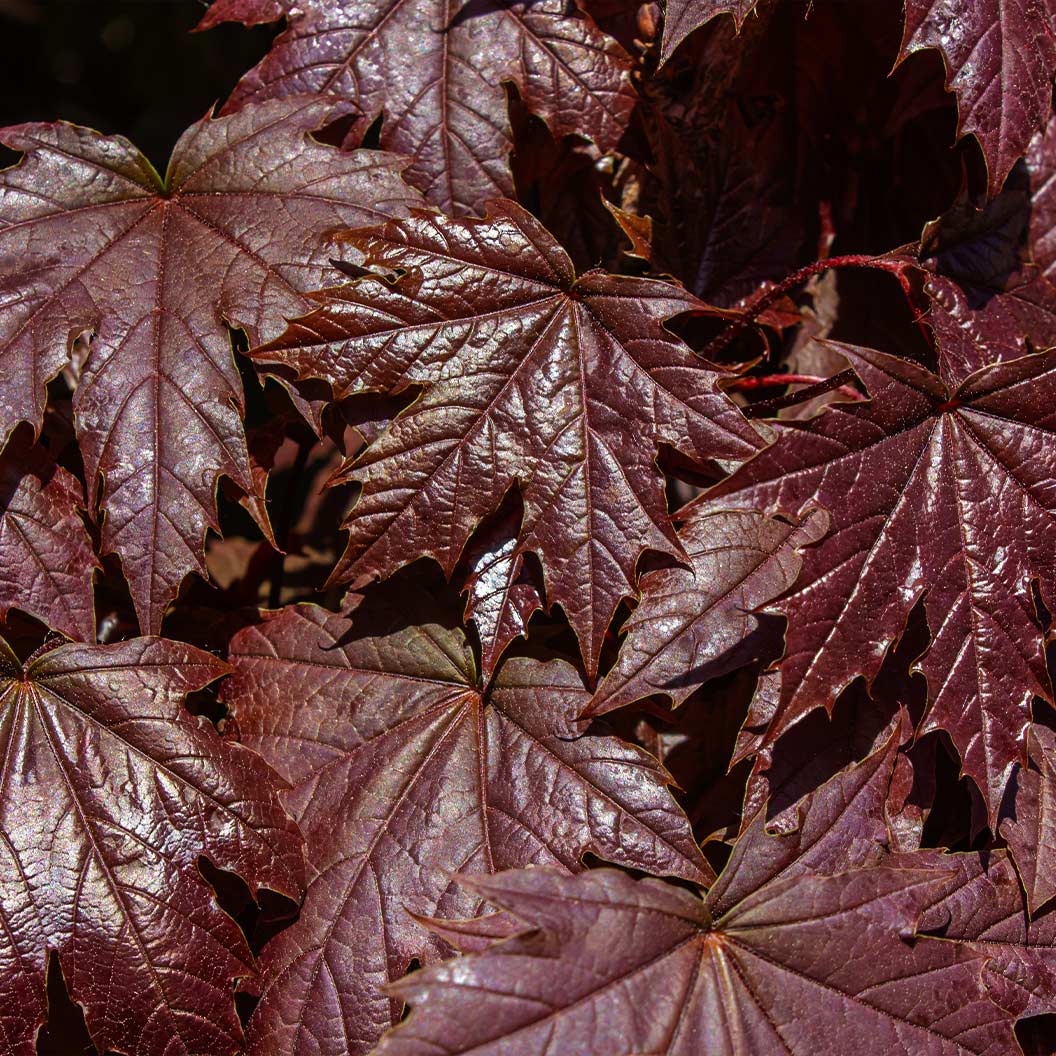
Dark-leaved Norway maple cultivars create another naming problem.
Some people refer casually to a purple or reddish Norway maple as a “red maple.”
Botanically, that can be misleading.
A red maple is Acer rubrum.
A Norway maple with dark red or purple foliage is still Acer platanoides.
If you have searched for a “Norway red maple tree,” check the petiole instead of relying on leaf color.
Milky sap points toward Norway maple.
Red Maple: Look at the Serrated Edge
Red maple is Acer rubrum, another native species common across New England.
The easiest leaf clue is the edge.
Red maple usually has three obvious lobes, although smaller basal lobes can make some leaves look five-lobed.
The margins are noticeably toothed.
That fine serration separates it quickly from the cleaner-looking edge of sugar maple.
The spaces between the lobes also tend to look sharper and more V-shaped.
A Red Maple Is Not Named for Having Red Leaves All Year
This sounds obvious once you hear it, but it causes plenty of misidentification.
Red maple leaves are green through much of the growing season.
The “red” appears in several other parts of the tree.
Twigs can carry a reddish cast.
The petiole may be red.
Flowers and samaras can show red.
Most useful for winter identification, the buds are distinctly reddish.
So a green tree in July can still be a red maple.
Red Maple Buds Help After the Leaves Are Gone
By winter, the easy petiole test disappears with the leaves.
Now we look at the twig.
Red maple buds are relatively small, blunt and red.
Sugar maple buds are longer, browner and pointed.
That difference is easy to appreciate once you put two twigs beside each other.
Winter identification is one reason we do not depend on leaf pictures alone.
Tree work in Massachusetts continues after leaf drop.
Red Maple Bark Becomes Scaly With Age
Young red maples tend to have relatively smooth gray bark.
Older specimens develop darker ridges and narrow, flaky or scaly plates.
That appearance differs from the longer irregular plates we commonly see on an older sugar maple.
Again, bark varies.
Use it as supporting evidence, especially when winter buds are available.
The Seeds Also Come at a Different Time
Red maple has another seasonal clue.
Its samaras mature in spring.
Sugar maple fruits mature later, typically in fall.
Timing can be surprisingly useful when you know what month you are looking at the tree.
A maple dropping winged seeds in spring belongs in a different part of our identification process from a sugar maple carrying maturing samaras later in the year.
Fall Color Helps, but We Do Not Use It as the Main Test
Sugar maple is famous for yellow, orange and red fall color.
Red maple can produce brilliant red but also yellow or mixed color.
Norway maple often stays green later and commonly turns yellow, though cultivated forms complicate that picture.
Weather complicates it too.
Temperature, drought, tree health, sunlight and individual genetics all affect autumn color.
A homeowner can absolutely use fall color as a clue.
We would not base the entire identification on it.
A Simple Leaf Test When All Three Are Growing Nearby
If you can safely reach a healthy leaf, this sequence works well:
- Confirm opposite leaf arrangement.
- Break the petiole and look for milky sap.
- If the sap is milky, Norway maple is likely.
- If the sap is clear, look at the leaf margin.
- Fine, obvious serration points toward red maple.
- A cleaner five-lobed margin points more toward sugar maple.
- Use buds, seeds or bark to confirm.
That last step matters.
Trees do not read identification guides.
One odd leaf should not overrule the rest of the tree.
How We Separate Them in Winter
Leafless identification starts with twigs and buds.
For sugar maple, we look for pointed brown terminal buds.
For red maple, the buds are smaller, blunter and red.
Norway maple buds tend to be larger and more rounded than sugar maple buds.
Then we add bark.
A mature sugar maple tends toward long irregular plates.
Red maple develops narrower scales.
Norway maple commonly develops tighter intersecting furrows.
A good twig at eye level is usually more useful than staring at a trunk from twenty feet away and trying to match a bark photograph.
Sugar Maple and Red Maple Are Both Native Trees Worth Recognizing
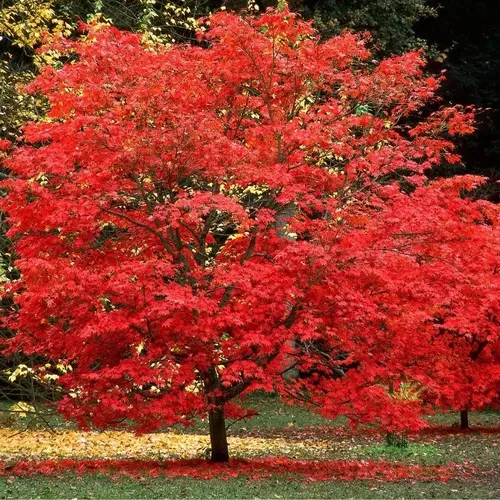
Sugar maple and red maple occupy different ecological niches, but both are native.
Sugar maple is more closely associated with rich, well-drained northern hardwood sites.
Red maple is much more adaptable.
It can grow across a broad range of moisture conditions, which helps explain why homeowners encounter it in so many different Massachusetts settings.
Species identification gives us context.
The health and structure of the individual tree still control our recommendations.
Red Maple Can Produce Maple Syrup Too
Sugar maple gets most of the attention because its sap generally contains more sugar and it tends to stay usable later into the tapping season.
Red maple can also produce good maple syrup.
It simply tends to have lower sugar concentration and begins spring growth earlier.
That means more sap may need to be evaporated for the same amount of finished syrup, depending on the actual sugar concentration that year.
There is no single boiling ratio that every red maple follows.
Norway Maple Sap Is Not the Reason to Keep the Species Straight
Norway maple sap is not commonly used for commercial maple-syrup production.
For homeowners, the bigger identification issue is ecological.
A Norway maple dropping seedlings around a woodland edge is behaving very differently in the Massachusetts landscape from a native sugar or red maple.
That makes correct ID useful when you are deciding what to encourage, replace or manage on a property.
Growth Rate Alone Will Not Identify a Norway Maple
Searches for Norway maple growth rate often lead people toward another weak identification shortcut.
Norway maple can grow relatively quickly under favorable landscape conditions.
So can several other maples.
A fast-growing tree is not automatically a Norway maple.
Site quality, sunlight, competition, age, root conditions and previous pruning can all change growth rate.
Use physical features instead.
There Are More Maple Species in Massachusetts
This comparison focuses on three trees that are commonly confused.
It is not a complete maple tree species list.
Silver maple is another tree homeowners encounter, with much deeper leaf sinuses and a pale silvery underside.
Black maple is closely related to sugar maple.
Striped maple and mountain maple also occur in the Northeast.
Freeman maple hybrids add another layer because they combine red and silver maple genetics.
This is why pictures of maple tree types help most when they are combined with several actual features from the tree.
Hybrids and Cultivars Can Make Picture Matching Harder
Landscape trees are not always textbook wild specimens.
Nurseries sell cultivars selected for shape, fall color, growth habit and foliage.
Hybrid maples can combine features from two species.
That can make a single online photo a poor final answer.
Legacy sugar maple is a good example of the cultivar issue.
The cultivar name tells you which selected form of sugar maple was planted.
The species underneath is still Acer saccharum.
Why Correct Maple Identification Matters Before Pruning
We do not need the species name to recognize a broken branch.
But species identification adds context when we are planning ongoing tree care.
Different maples vary in growth habit, site tolerance, response to stress and common structural issues.
We still inspect the actual branch architecture rather than trimming according to a species stereotype.
A large sugar maple with a sound crown needs a different plan from a Norway maple with co-dominant stems over a driveway.
The label helps us understand the tree.
The structure tells us what work is needed.
Maple Pruning in Tewksbury
East Coast Tree Service works with mature maples throughout the area.
Our tree service in Tewksbury, MA includes pruning, removal, stump grinding and emergency work.
When we trim a maple, we look at deadwood, crossing limbs, weak attachments, clearance over structures and the overall balance of the crown.
We are not trying to turn every maple into the same shape.
The goal depends on why the tree needs work.
Maple Care in Reading
We also provide tree service in Reading, MA, where mature maples are common on residential properties.
Sometimes the call starts with species identification.
Other times the homeowner already knows it is a maple and wants to understand dead branches, canopy density, storm damage or a leaf problem.
Identification is one part of the inspection.
Condition comes next.
Black Spots Do Not Tell You Which Maple You Have
Tar spot is a good example.
Norway, red and sugar maples can all develop tar-like black spotting on their leaves.
That means the disease symptom itself is not enough to determine the species.
If black patches are what made you start looking closely at the tree, our guide to tar spot on maple leaves explains what those spots usually mean.
Then come back to leaf shape, petiole sap, buds and seeds for the species ID.
When the Species Matters Less Than the Condition
There is a point where identification stops being the main question.
A cracked stem is a structural issue whether the tree is a red maple or sugar maple.
Large dead branches over the house deserve attention regardless of the Latin name.
Fresh root movement after a storm matters more than fall color.
Heavy decay at a major union changes the conversation.
When we inspect trees, we use species as context rather than letting the species name replace an assessment.
When to Have a Maple Looked At
Consider having the tree evaluated if you notice large dead limbs, cracks, splitting unions, sudden lean, substantial canopy dieback, damaged roots or branches extending over areas where people regularly walk or park.
A maple can live for a long time with ordinary imperfections.
The questions are whether the defect is changing, whether the tree can support its remaining crown and what sits within reach if something fails.
For pruning work, our live tree trimming service covers North Reading and surrounding communities including Tewksbury.
The Fastest Way to Tell These Three Maples Apart
When leaves are present, start with the petiole.
Milky sap points strongly toward Norway maple.
If the sap is clear, look at the edge.
Fine serration and red petioles or buds point toward red maple.
A five-lobed leaf with a cleaner margin, pointed brown buds and horseshoe-shaped samaras fits sugar maple.
If the name Legacy appears on an old nursery record, tag or landscape plan, you are looking at a cultivated form of that sugar maple species rather than a separate type.
If you have a maple in Reading, Tewksbury, Billerica or another eastern Massachusetts community that needs pruning, structural work or a closer look, call East Coast Tree Service at (781) 518-8014 to schedule an on-site estimate.