

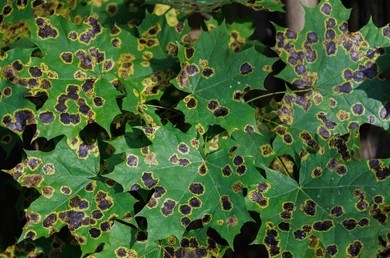
Tar spot on maple is a common fungal disease that causes distinctive black, tar-like spots on maple leaves. Although it can make a tree look unhealthy, tar spot is almost never fatal to an established, otherwise healthy maple. In most cases, the problem is primarily cosmetic and does not require fungicide treatment.
If your maple leaves develop yellow spots that later become raised, shiny black patches, you may be looking at tar spot of maple. Here’s how to identify the disease, understand what it means for your tree, and decide whether anything needs to be done.
What Is Tar Spot on Maple?
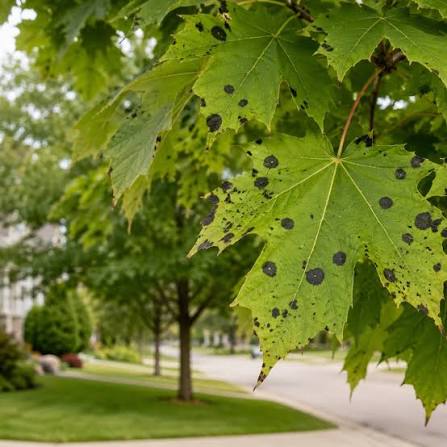
Tar spot on maple is a fungal leaf disease caused by fungi in the genus Rhytisma. Species associated with the disease include Rhytisma acerinum and Rhytisma americanum.
The fungus infects maple leaves during the growing season and eventually creates the characteristic black patches that give the disease its name.
Because the spots can become large, dark, and highly visible, homeowners sometimes assume the tree is seriously diseased or dying. Fortunately, the appearance is usually much more alarming than the actual impact on tree health.
What Do Tar Spots on Maple Leaves Look Like?
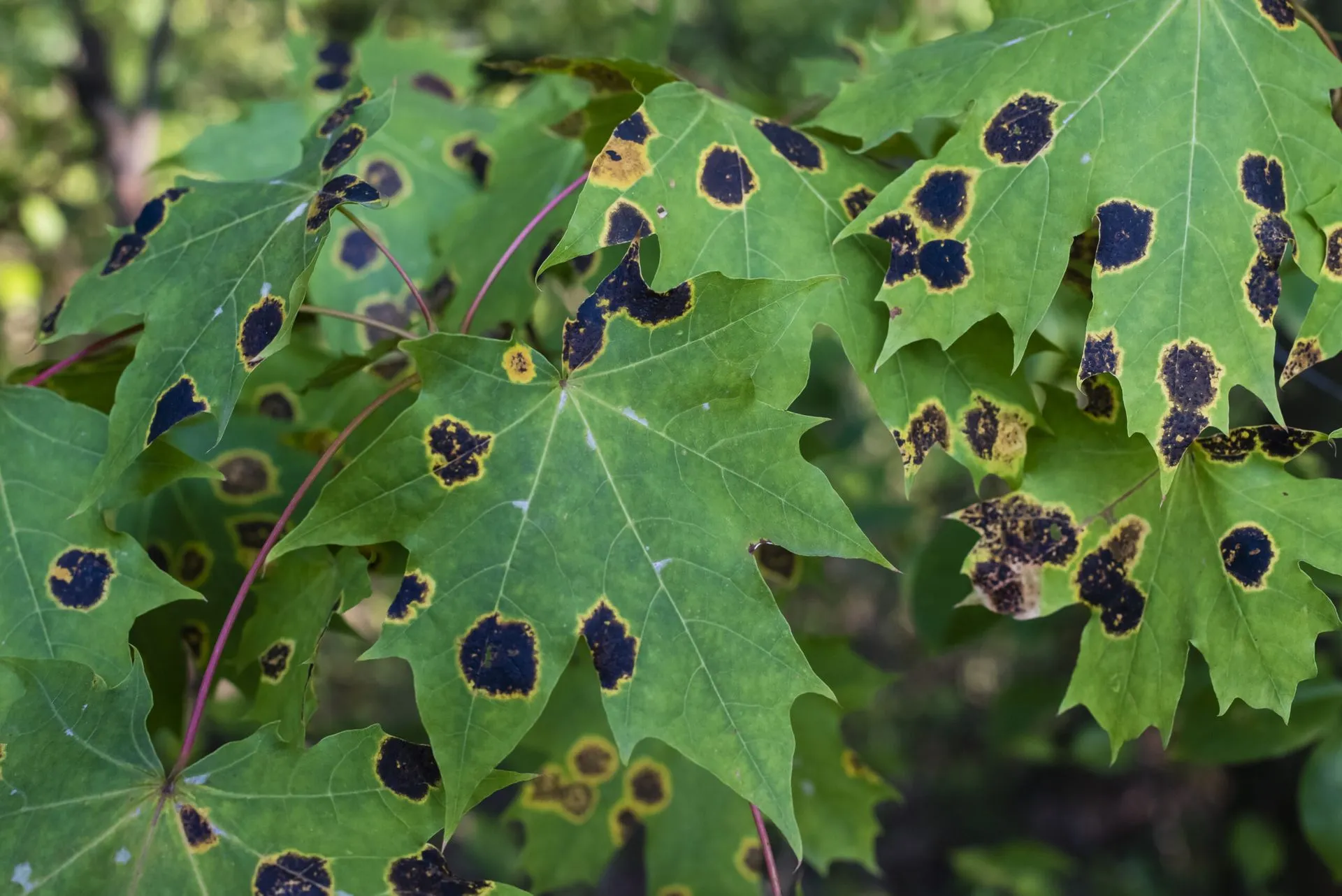
Tar spots on maple leaves change in appearance as the disease develops.
- Late spring to early summer: Small yellow, yellow-green, or pale spots begin appearing on the leaves.
- Mid-summer: The affected areas become darker and more noticeable.
- Late summer and fall: Raised, shiny black structures develop within the spots, making them look like drops or splashes of black tar.
The black areas can range from relatively small dots to large circular patches depending on the species of fungus, maple species, and severity of the infection.
Is Tar Spot on Maple Trees Dangerous?
For most healthy, mature trees, tar spots on maple trees are not dangerous.
Tar spot affects the leaves rather than attacking the trunk, major branches, or root system. Even when the foliage looks heavily spotted, an established maple can usually continue growing normally.
The disease is therefore considered primarily an aesthetic or cosmetic problem.
Severe infections may occasionally cause some leaves to brown or fall earlier than normal. However, late-season leaf loss is generally less damaging than defoliation occurring early in the growing season because the tree has already had much of the summer to photosynthesize and store energy.
Can Maple Tree Tar Spot Disease Kill a Tree?
Maple tree tar spot disease almost never kills a healthy tree by itself.
An otherwise healthy maple affected by tar spot will normally produce a new canopy the following spring.
However, repeated heavy infections may become more important when a tree is already under stress from other problems, such as:
- Drought
- Root damage
- Poor soil conditions
- Construction damage
- Other diseases
- Insect infestations
- Structural problems
- Severe or repeated defoliation
If a maple is showing branch dieback, canopy thinning, bark damage, or other symptoms beyond spotted leaves, tar spot may not be the only issue affecting the tree.
Which Maple Trees Get Tar Spot?
Several maple species can develop tar spot. Common hosts include:
- Norway maple
- Silver maple
- Sugar maple
- Red maple
- Other susceptible maple species
The exact appearance and severity of the spots can vary depending on both the maple species and the Rhytisma species involved.
What Causes Tar Spots on Maple Leaves?
The disease develops through a seasonal fungal cycle.
The fungi responsible for tar spot of maple survive the winter primarily in infected leaves that have fallen to the ground. In spring, spores are released from this leaf material and can infect newly emerging maple foliage.
Moisture plays an important role in infection. Wet spring conditions and prolonged leaf moisture can favor fungal development.
The infection may occur early in the season even though the dramatic black tar-like spots do not become obvious until much later.
Does Wet Weather Make Tar Spot Worse?
Yes. Cool or wet spring conditions can favor infection because fungal spores need suitable moisture conditions to infect developing leaves.
This is why tar spot severity can vary substantially from one year to another. A tree that shows relatively little disease one season may develop much more noticeable spotting after a wetter spring.
It also means the appearance of heavy tar spot does not necessarily indicate that the tree itself has suddenly become unhealthy.
Tar Spot vs. Anthracnose: How Can You Tell the Difference?
Tar spot is not the only fungal disease that can affect maple foliage. Anthracnose can also cause leaf discoloration and premature leaf drop, particularly following cool, wet spring weather.
The appearance of the damage provides an important clue.
- Tar spot: Usually begins as yellowish areas that eventually develop distinctive circular or irregular black, raised, tar-like patches.
- Anthracnose: More commonly produces irregular brown or dead areas of leaf tissue, often associated with veins or leaf margins.
A maple can potentially experience more than one leaf disease at the same time, so unusual symptoms or significant canopy decline may warrant a closer inspection.
Should You Treat Tar Spot on Maple?
In most residential situations, tar spot on maple does not need chemical treatment.
Fungicides may be available for certain situations, but treatment has to be timed around spring infection rather than after the black spots are already visible. Treating large mature trees can also require multiple applications and specialized equipment.
Because tar spot rarely causes meaningful long-term damage to healthy maples, the cost and effort of fungicide applications are often difficult to justify for a problem that is mostly cosmetic.
Once the black spots have developed during summer, spraying the affected leaves will not remove the existing spots.
How to Manage Tar Spot on Maple Trees
The simplest management strategy focuses on sanitation and overall tree health.
1. Rake Up Fallen Maple Leaves
Because the fungus can overwinter in infected leaves, removing heavily affected leaves after they fall may help reduce the amount of fungal material around the tree.
Rake the leaves and dispose of or compost them according to local municipal guidelines rather than allowing thick layers of infected foliage to remain underneath the tree throughout winter.
2. Maintain Good Tree Health
A healthy maple is much better equipped to tolerate cosmetic leaf diseases. Proper watering during drought, protecting the root zone, avoiding unnecessary trunk or root damage, and maintaining appropriate pruning practices can all support long-term tree vigor.
3. Improve Air Circulation When Appropriate
Dense vegetation around smaller trees can sometimes contribute to prolonged moisture on foliage. Selective pruning may improve airflow, although pruning should be based on the tree’s structure and health rather than performed solely as a tar spot treatment.
Homeowners who need help evaluating or pruning a maple can learn more about professional tree trimming in Reading, MA.
4. Avoid Removing Healthy Branches Just Because Leaves Have Spots
Tar spot is a leaf disease, so removing large amounts of otherwise healthy canopy generally does not eliminate the fungus and may unnecessarily stress the tree.
Pruning is more appropriate when branches are dead, damaged, crossing, structurally weak, or creating another legitimate tree-care concern.
Should You Remove a Maple Tree Because of Tar Spot?
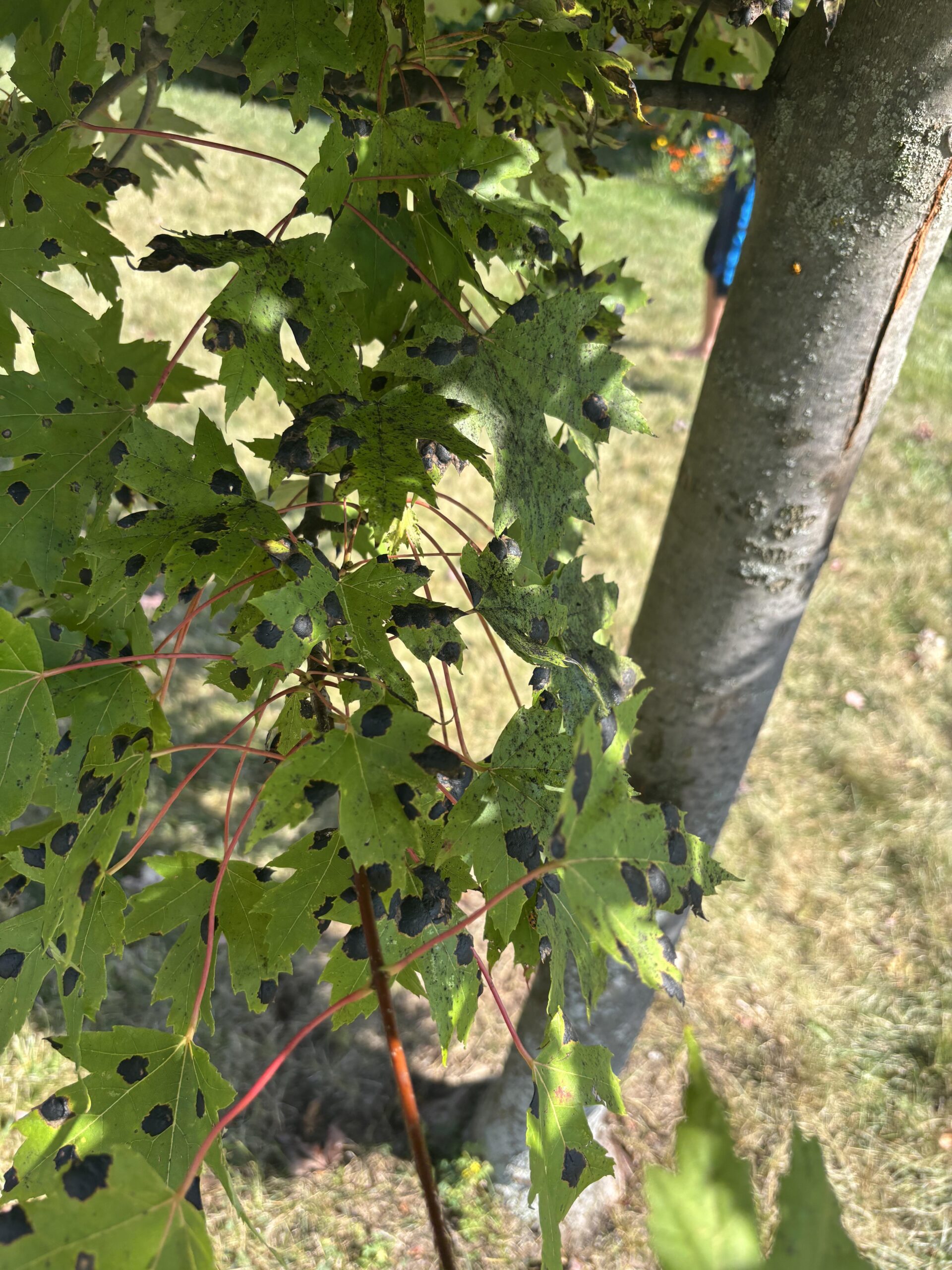
No. Tar spot alone is generally not a reason to remove a maple tree.
A mature tree with black-spotted leaves but otherwise healthy branches, normal growth, and a full canopy will typically recover normally and produce new leaves the following spring.
Tree removal or more intensive intervention should be based on broader health or structural concerns, not simply the presence of tar spots.
When Should You Call a Tree Professional?
Tar spot usually requires little intervention, but a professional tree evaluation may make sense when the symptoms go beyond cosmetic leaf spotting.
Consider having the tree inspected if you notice:
- Significant branch dieback
- Large dead limbs
- Major canopy thinning
- Cracks or cavities in the trunk
- Fungal growth on the trunk or roots
- Repeated severe defoliation
- Signs of insect infestation
- Declining growth over multiple seasons
- Concern about branches over a house, driveway, or other target
Homeowners in the area can learn more about professional tree services in Reading, MA and tree services in North Reading, MA.
Frequently Asked Questions About Tar Spot on Maple
Is tar spot on maple contagious?
Tar spot is caused by fungal spores that infect susceptible maple leaves. Spores can spread through the environment, particularly from infected fallen leaves, so nearby susceptible maples may also develop the disease when conditions favor infection.
Will tar spot come back next year?
It can. The fungi overwinter in fallen infected leaves, and new infections can occur the following spring. However, severity can change significantly from year to year depending on weather conditions and the amount of fungal material present.
Will tar spot make my maple lose its leaves?
Heavy infections can sometimes contribute to premature leaf drop. When this occurs late in summer or early fall, it usually has limited impact on an otherwise healthy mature tree.
Should I spray fungicide on black spots already on the leaves?
Usually not. Once the visible black tar spots have developed, fungicide will not make those existing spots disappear. Preventive fungicide programs, when warranted, must generally begin much earlier in the disease cycle.
Should I rake leaves from a tree with tar spot?
Yes. Removing fallen infected leaves is one of the simplest cultural practices for reducing the amount of fungus overwintering beneath the tree. It may not eliminate tar spot from the surrounding area, but it can reduce local inoculum.
Tar Spot on Maple: The Bottom Line
Tar spot on maple leaves looks much worse than it usually is. The disease creates noticeable yellow areas followed by raised black patches that resemble drops of tar, but it almost never kills an established, healthy maple.
For most homeowners, the best response is simple: rake fallen infected leaves, maintain good overall tree health, and monitor the maple rather than immediately reaching for fungicides.
If your tree is also experiencing branch dieback, substantial canopy loss, structural problems, or other symptoms unrelated to the characteristic black spots, a professional inspection can help determine whether something more serious than maple tree tar spot disease is affecting the tree.