

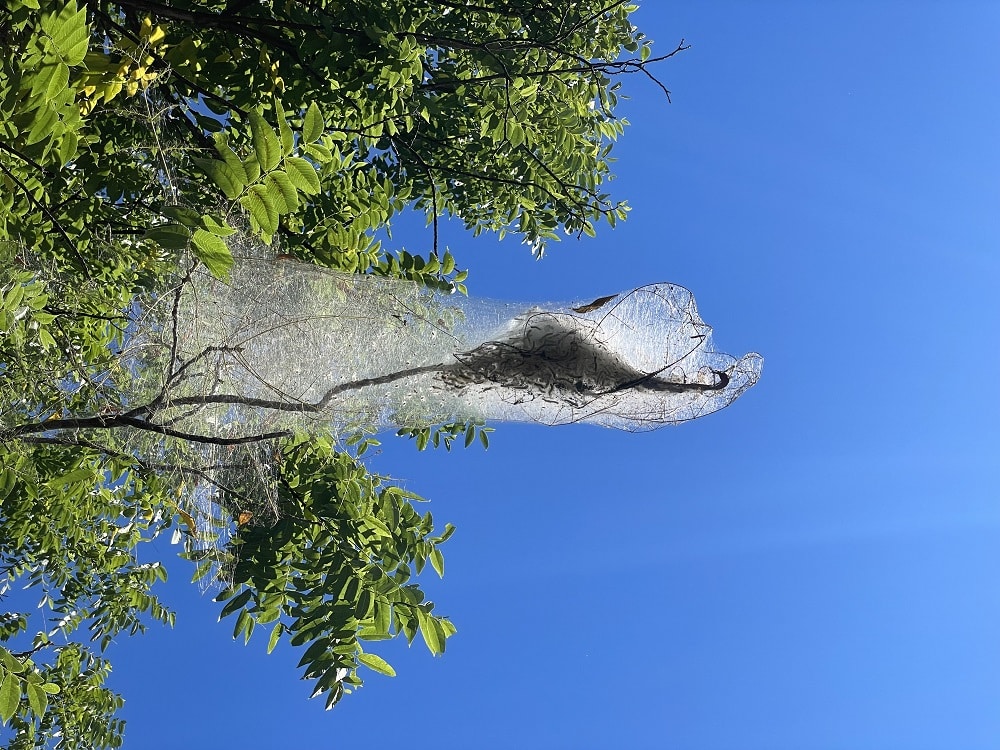
Fall webworm and tent caterpillars are easy to confuse, but three details usually identify them quickly: the time of year, where the web appears on the tree, and how the caterpillars feed. Fall webworms usually appear in late summer and early fall and build loose webs around leaves at the ends of branches. Tent caterpillars are primarily a spring pest and create denser silk tents in branch forks.
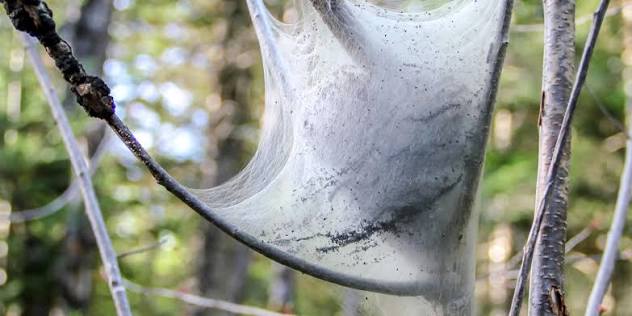
If you have noticed large webs covering parts of a tree, this guide explains the differences between fall webworm vs tent caterpillar, whether they can harm your trees, and what you can do about them.
Fall Webworm vs Tent Caterpillar: Quick Comparison
| Feature | Fall Webworm | Tent Caterpillar |
|---|---|---|
| Season | Late summer through early fall | Spring through early summer |
| Web location | Ends of branches, surrounding leaves | Branch forks and crotches |
| Web appearance | Loose, thin, messy webbing | Dense, compact, tent-like silk |
| Feeding behavior | Caterpillars live and feed inside the web | Caterpillars leave the tent to feed |
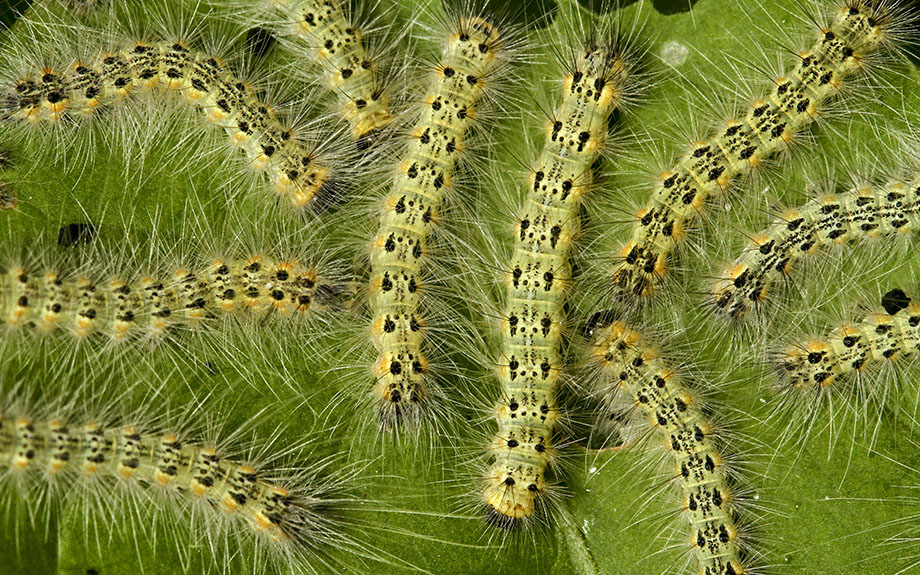
| Typical appearance | Pale, yellowish or greenish caterpillars with hairs | Darker caterpillars, often with a white stripe and blue markings |
| Typical tree impact | Usually cosmetic on established trees | Can cause more stress because feeding occurs earlier in the growing season |
What Is a Fall Webworm?
The fall webworm (Hyphantria cunea) is the larval stage of a moth found on many deciduous trees throughout North America. The fall webworm larvae feed together inside conspicuous silk webs that expand as the colony consumes more leaves.
Unlike tent caterpillars, fall webworms incorporate the leaves they are eating into their web. As a result, an active infestation can look like a large, loose bag of silk surrounding leaves and small branches.
The Hyphantria cunea caterpillar can vary somewhat in color, but larvae are generally pale yellow to greenish and covered with noticeable hairs. Depending on the population, darker forms may also occur.
How to Identify Fall Webworm
The easiest way to recognize fall webworm is to look at when and where the web appears.
- Late-season activity: Webs are most noticeable during late summer and early fall.
- Webs at branch tips: Colonies typically surround leaves near the outer ends of branches.
- Loose webbing: The silk looks thin, irregular, and often messy rather than forming a compact tent.
- Caterpillars remain inside: Fall webworm larvae feed within the expanding web.
- Leaves and debris inside: Damaged leaves, droppings, and other material often accumulate in older webs.
A large web at the end of a leafy branch in August or September is therefore much more likely to be fall webworm than a tent caterpillar infestation.
What Is a Tent Caterpillar?
Tent caterpillars belong to the genus Malacosoma. In the northeastern United States, one of the most familiar species is the Eastern tent caterpillar.
These caterpillars usually become active during spring, when trees are producing new foliage. Instead of enclosing the leaves they eat, tent caterpillars build a concentrated silk shelter in the crotch or fork where branches meet.
The caterpillars leave this tent to feed on surrounding foliage and later return to the shelter.
Eastern tent caterpillars are generally darker than fall webworms. They typically have a visible light or white stripe along the back along with blue markings or spots.
The Biggest Difference: Where the Web Is Located
If you only remember one identification trick, look at the location of the web.
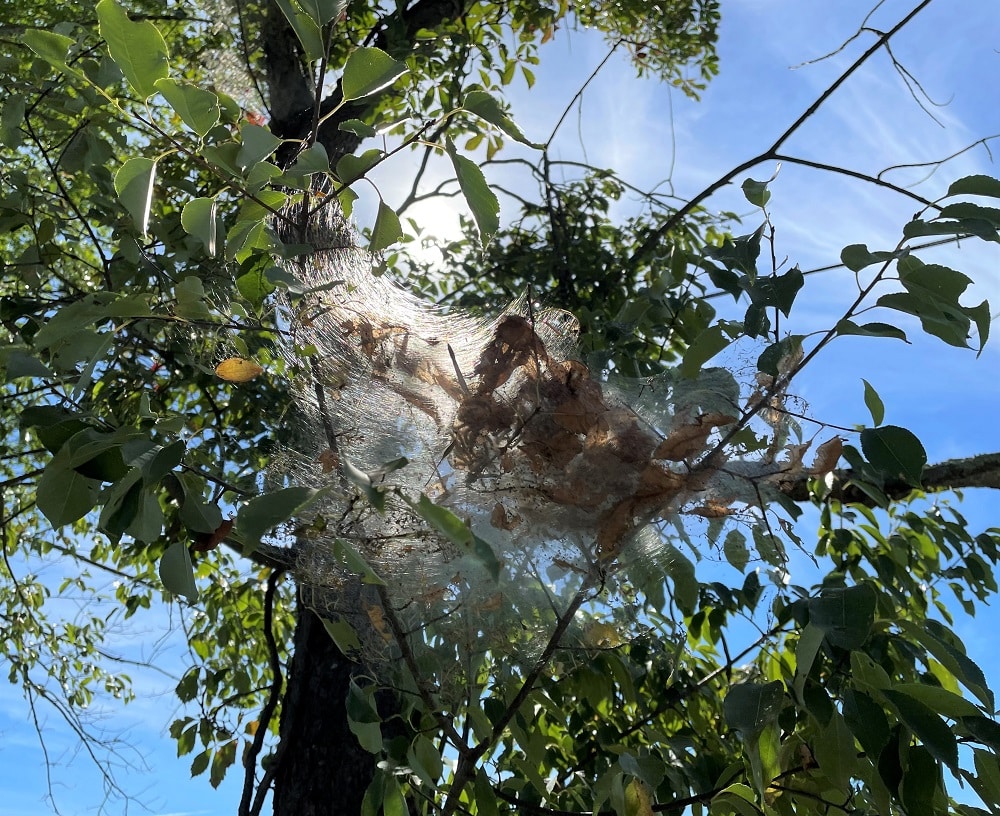
Fall webworm: Look toward the outer canopy. The web usually surrounds leaves at the tip of a branch.
Tent caterpillar: Look farther inside the canopy. The silk tent is normally built where branches divide or where a branch joins another major limb.
This distinction is often enough to identify the pest even before examining the caterpillars themselves.
What Time of Year Do They Appear?
Seasonality provides another strong clue when comparing fall webworm vs tent caterpillar.
Tent Caterpillars: Spring
Tent caterpillars generally become noticeable during spring and may remain active into early summer. Because they feed while trees are actively producing foliage, severe defoliation can place additional stress on a tree.
Fall Webworms: Late Summer and Fall
Fall webworms become prominent much later in the growing season, usually from late summer into fall. By this point, deciduous trees have already completed much of their seasonal growth and are approaching normal autumn leaf drop.
That timing is one reason fall webworm damage often looks worse than it actually is.
Do Fall Webworms Kill Trees?
In most cases, fall webworm infestations do not kill healthy, established trees. The caterpillars consume foliage, but their feeding occurs relatively late in the growing season.
A mature tree can usually tolerate a limited amount of late-season defoliation without permanent damage.
However, the situation deserves more attention when:
- Webs cover a large percentage of the canopy.
- The same tree experiences repeated infestations.
- The tree is young or recently planted.
- The tree is already stressed by drought, disease, construction damage, or another pest.
- Branches containing the webs are dead, damaged, or structurally compromised.
If you are concerned about the health or structure of an affected tree in the Billerica area, professional tree trimming in Billerica, MA can help address accessible infested branches while evaluating the overall condition of the tree.
Are Tent Caterpillars More Harmful?
Tent caterpillars can sometimes place more stress on a tree than fall webworms because they feed earlier in the year.
Heavy spring defoliation removes foliage when a tree needs its leaves for photosynthesis and active growth. Healthy trees can often produce replacement foliage, but repeated or severe defoliation may weaken trees that are already under stress.
Neither insect should automatically be treated as a tree-killing pest. The severity of the infestation and the condition of the tree matter more than the presence of a single web.
Which Trees Do Fall Webworms Attack?
Fall webworms can feed on a very wide range of deciduous trees. Common hosts include:
- Cherry
- Walnut
- Hickory
- Mulberry
- Persimmon
- Sweetgum
- Pecan
- Various fruit and ornamental trees
Tent caterpillars are commonly associated with trees in the rose family, including cherry, apple, and crabapple, although they may occur on other deciduous trees as well.
Should You Remove Fall Webworm Webs?
Small fall webworm infestations on healthy mature trees may not require treatment at all. If the webs are limited and accessible, pruning the affected branch can sometimes remove the colony before the web expands.
However, avoid excessive pruning simply to eliminate a cosmetic pest. Removing too much healthy canopy can cause more stress to the tree than the caterpillars themselves.
You should also avoid climbing a tree or attempting to reach high branches with unsafe equipment. High or difficult-to-access infestations are better evaluated by a professional tree service.
How Are Fall Webworms Controlled?
The appropriate approach depends on the size of the infestation, tree species, accessibility, and overall tree health. Common management options can include:
- Pruning small, localized infestations when appropriate.
- Physically removing accessible webs and larvae.
- Monitoring healthy mature trees when damage is primarily cosmetic.
- Using biological products such as Bacillus thuringiensis (Bt) when appropriate and while caterpillars are young.
- Having larger or difficult-to-reach infestations evaluated professionally.
Simply breaking open a web without addressing the larvae may not solve the problem. The caterpillars can continue feeding and may rebuild webbing.
When Should You Call a Tree Professional?
Consider professional evaluation when webs are high in the canopy, numerous branches are affected, significant defoliation is occurring, or the tree already shows signs of decline.
A tree care professional can also determine whether the problem is actually fall webworm larvae, tent caterpillars, another insect, or an unrelated tree-health issue.
Homeowners looking for local tree care can learn more about tree services in Billerica, MA or tree services in Chelmsford, MA.
Fall Webworm vs Tent Caterpillar: The Bottom Line
To tell these two caterpillars apart, focus on season, web location, and feeding behavior.
- If the web appears in spring and sits in a branch fork, you are probably looking at tent caterpillars.
- If the web appears in late summer or early fall and surrounds leaves at the end of a branch, it is much more likely to be fall webworm.
The good news is that neither pest usually causes serious permanent damage to a healthy, mature tree. Fall webworm infestations in particular are often more of an aesthetic problem than a threat to tree survival.
If the infestation is extensive, the tree is already stressed, or affected branches are too high to reach safely, a professional tree inspection can help determine whether pruning, treatment, monitoring, or another course of action makes the most sense.