Tree Removal in Burlington, MA
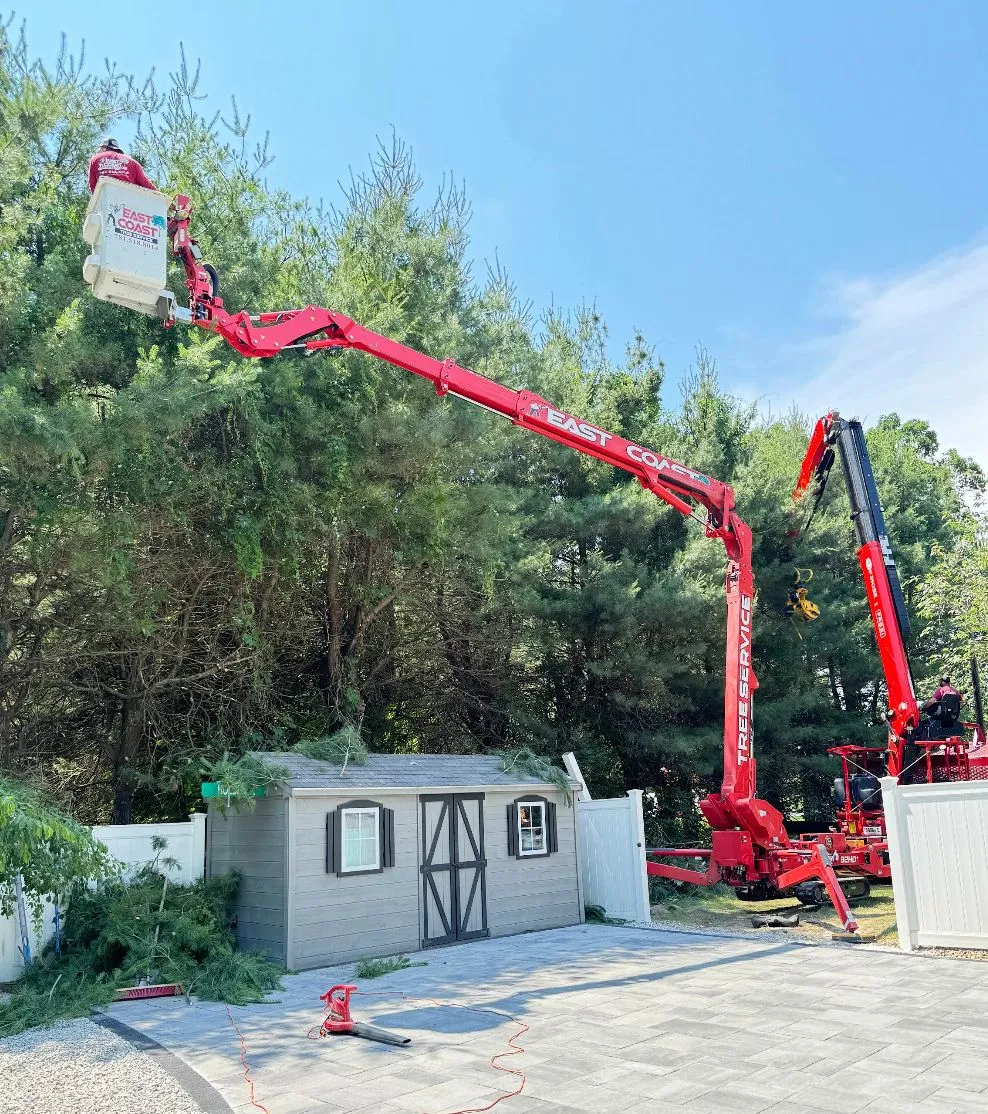
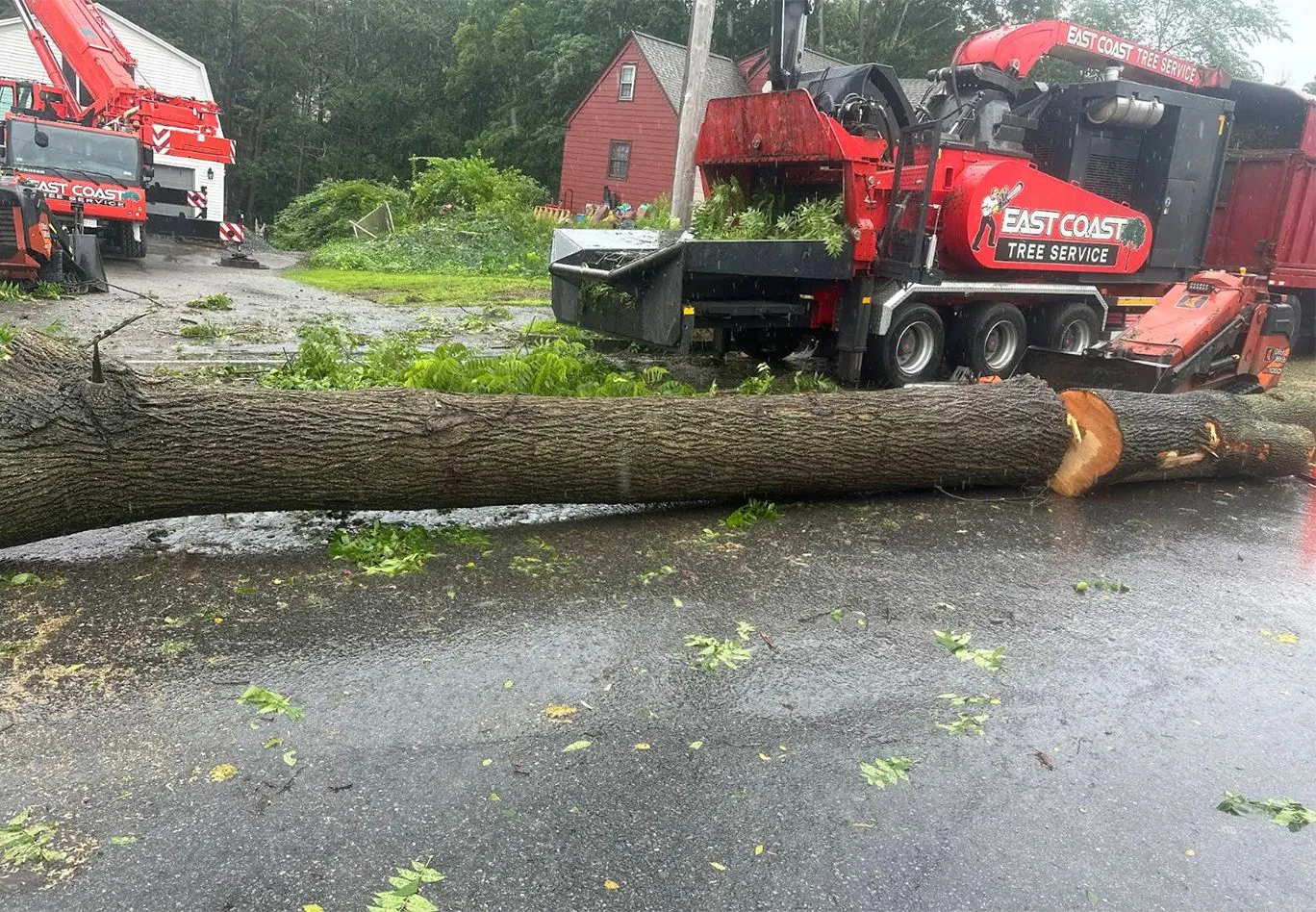
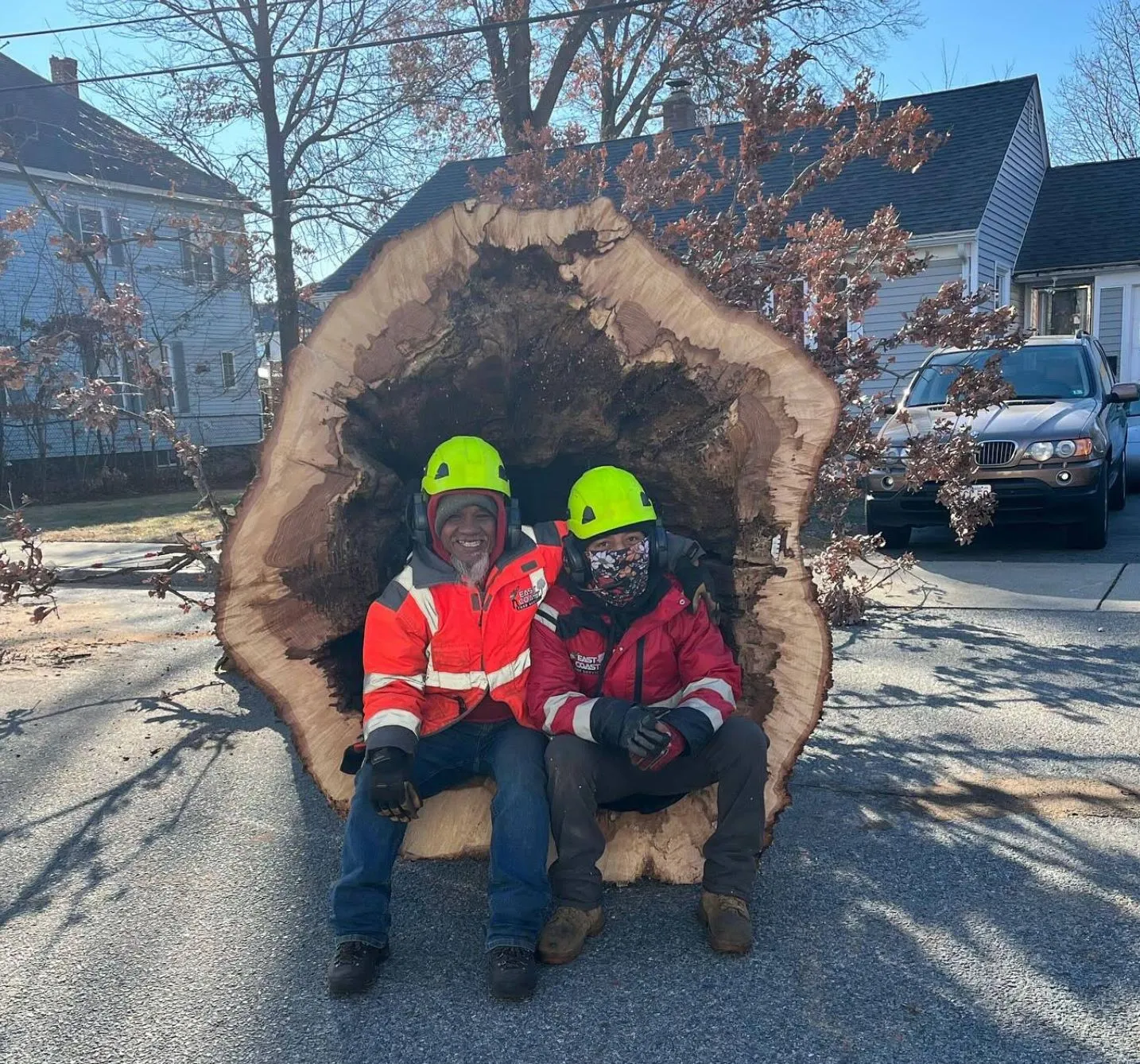
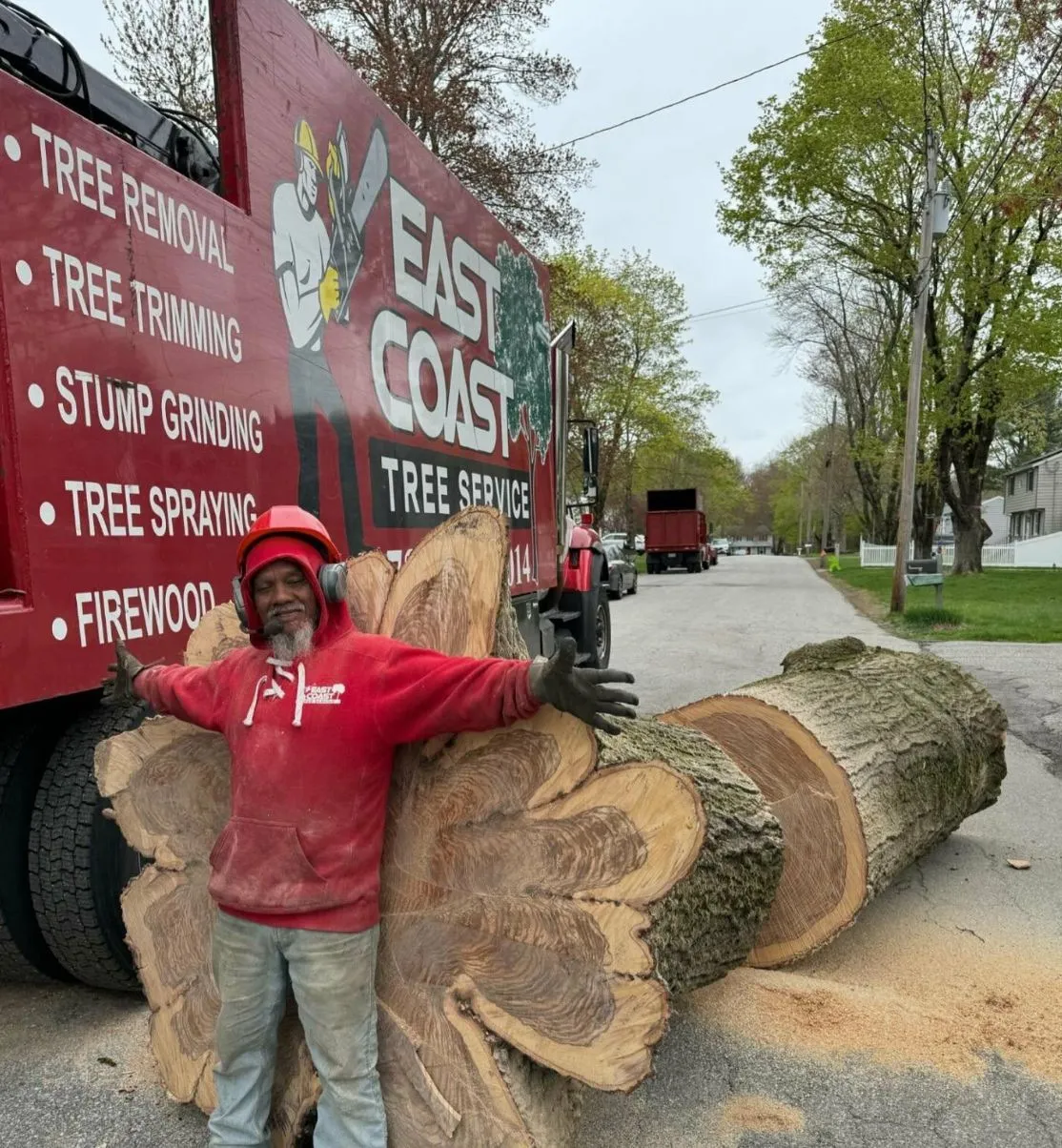
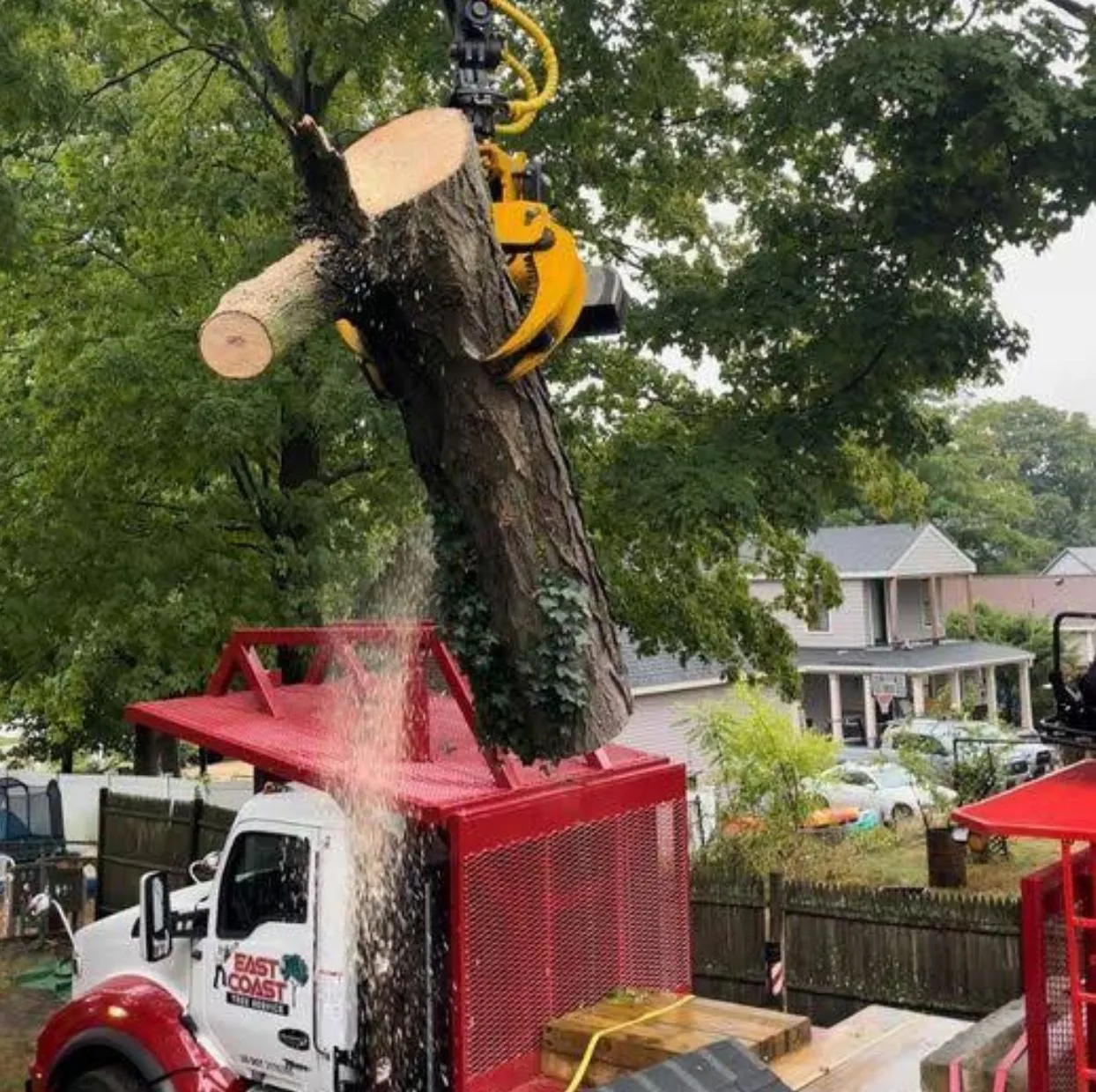
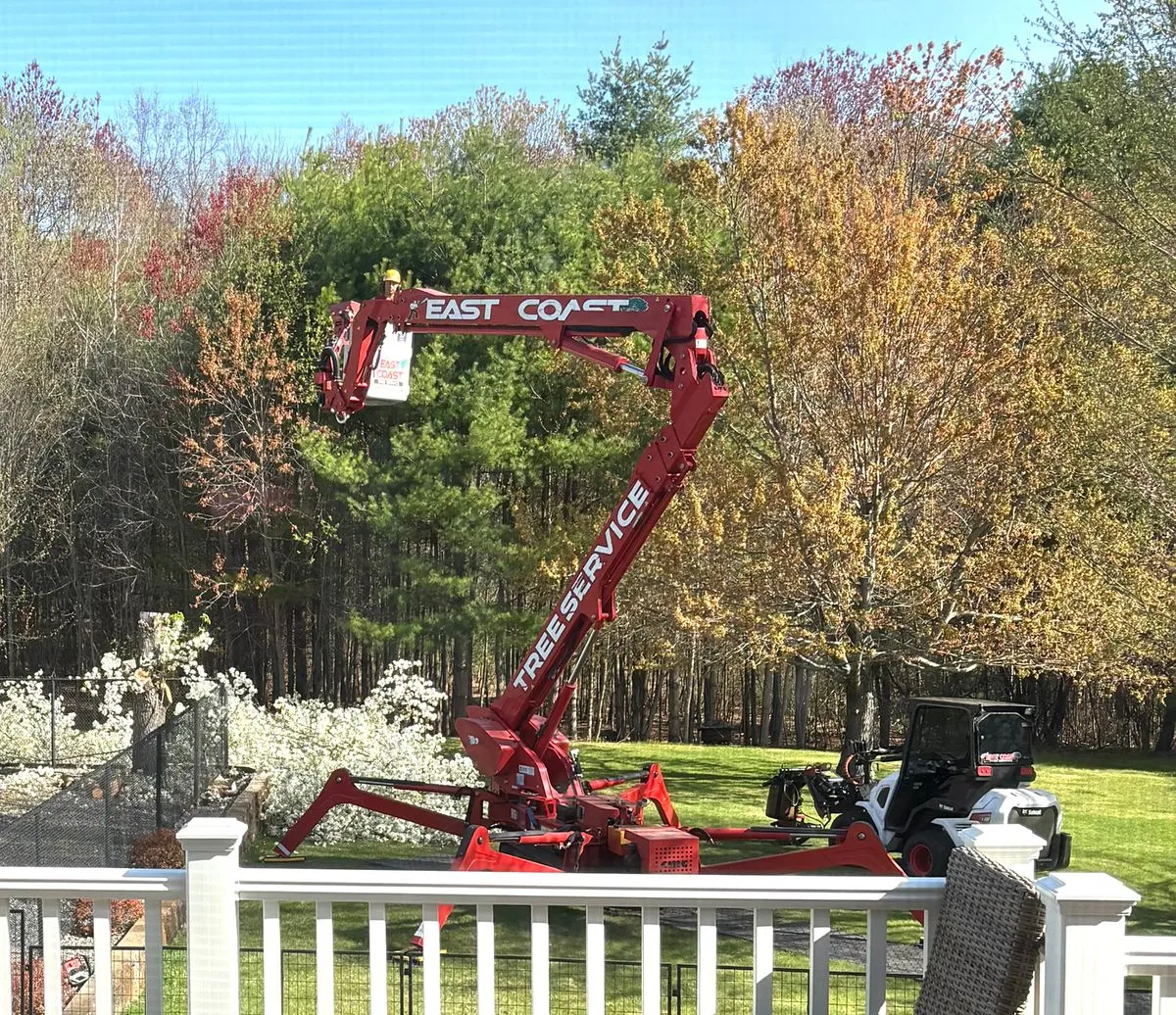
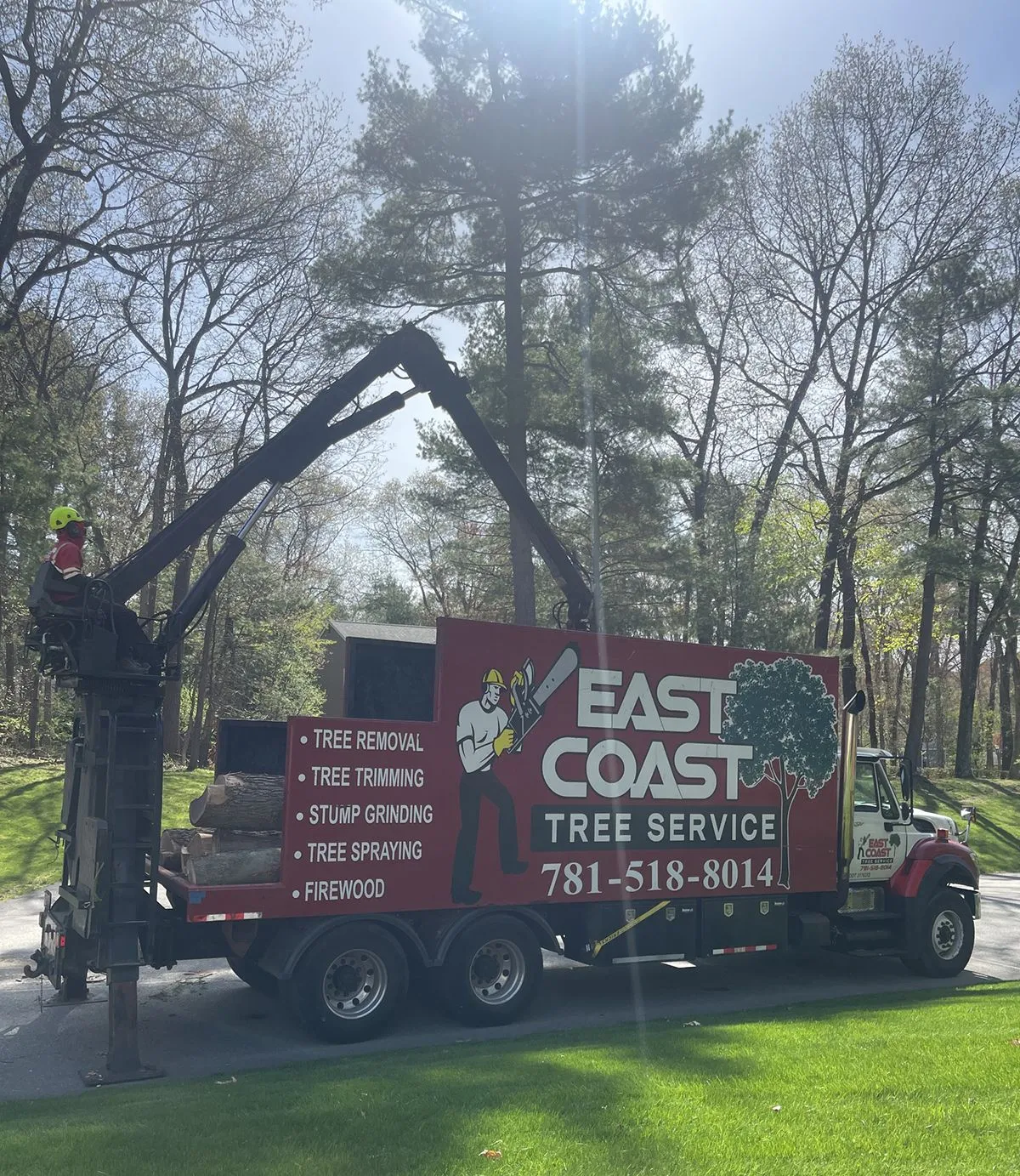
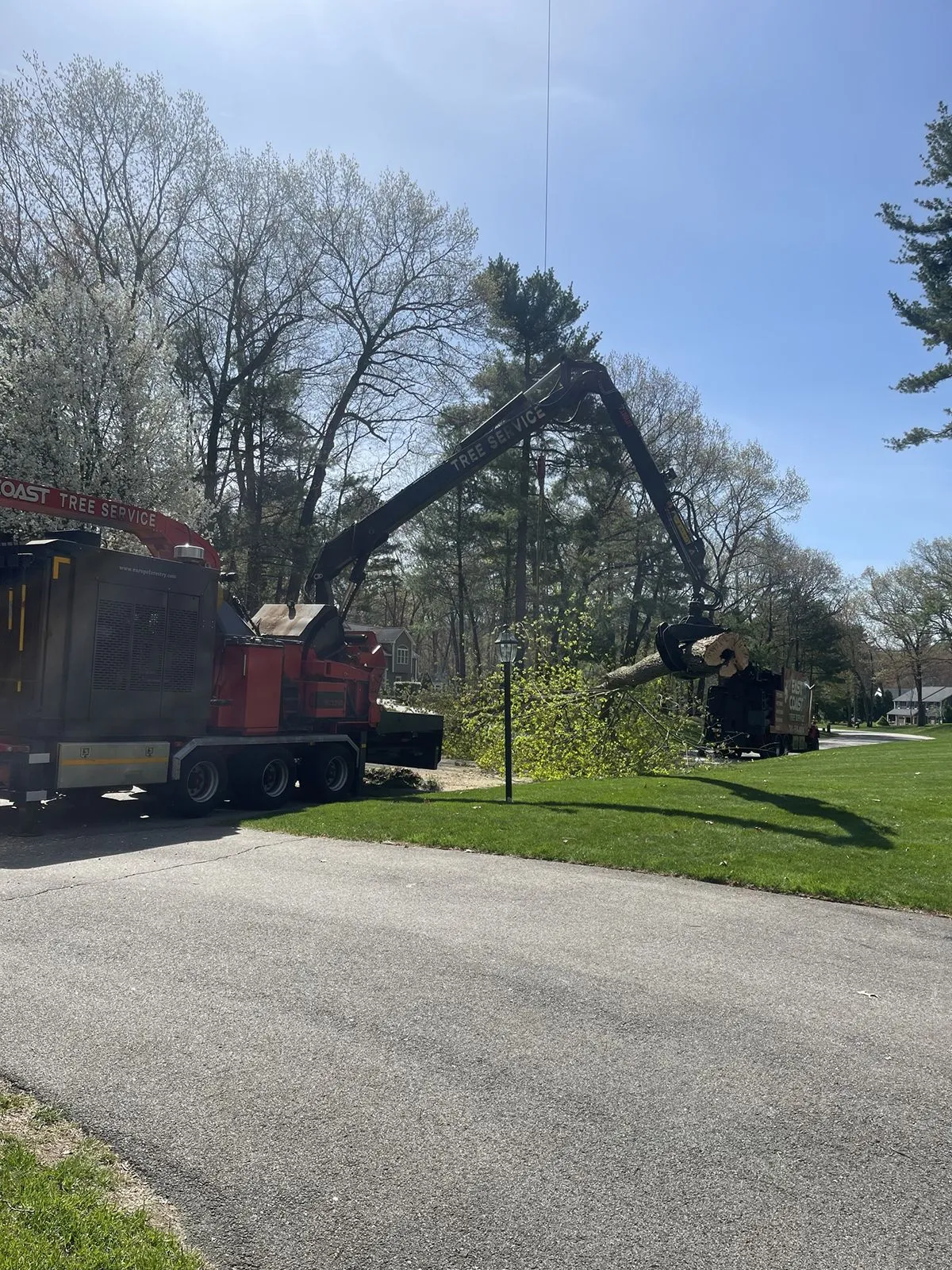
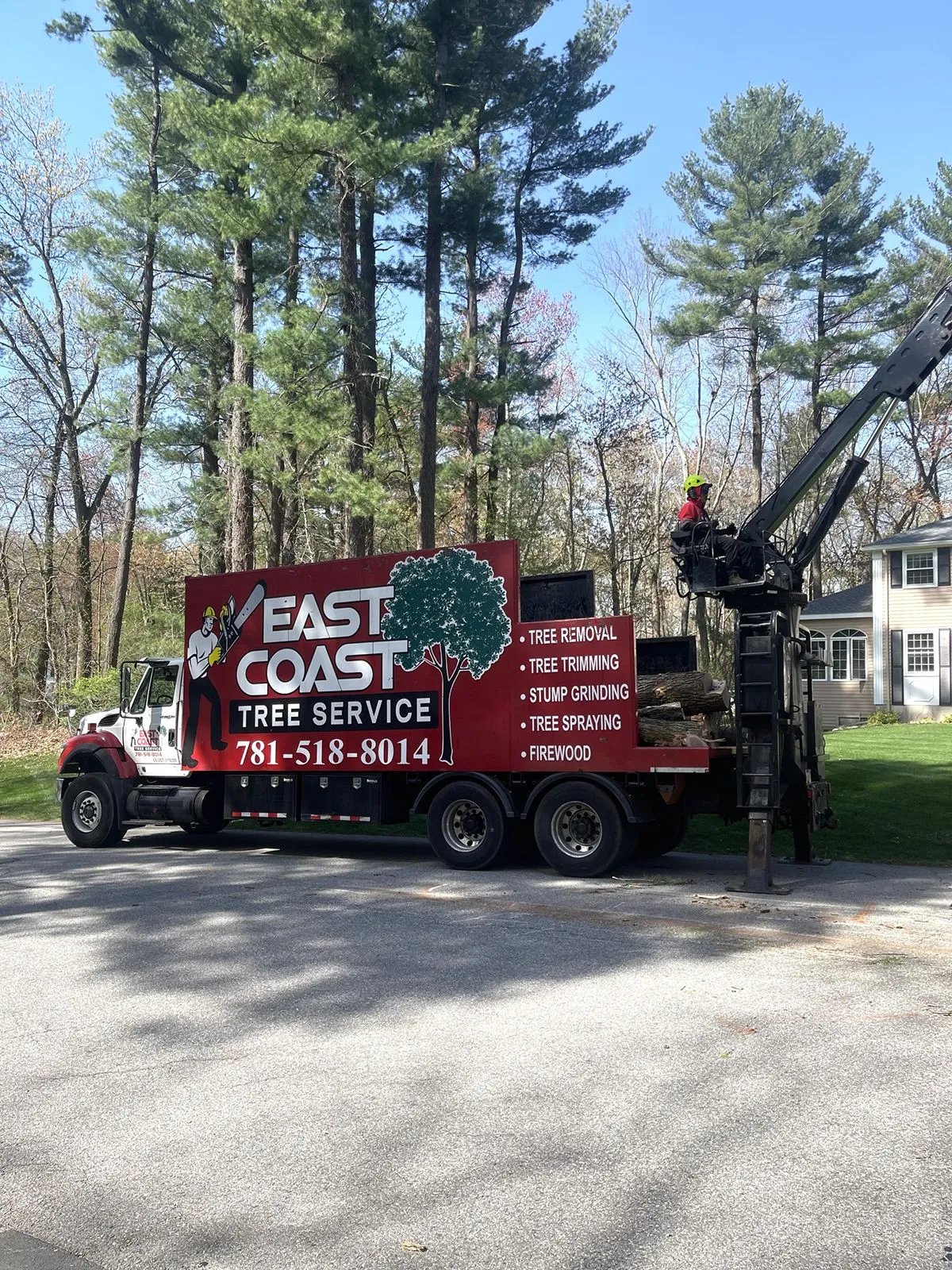
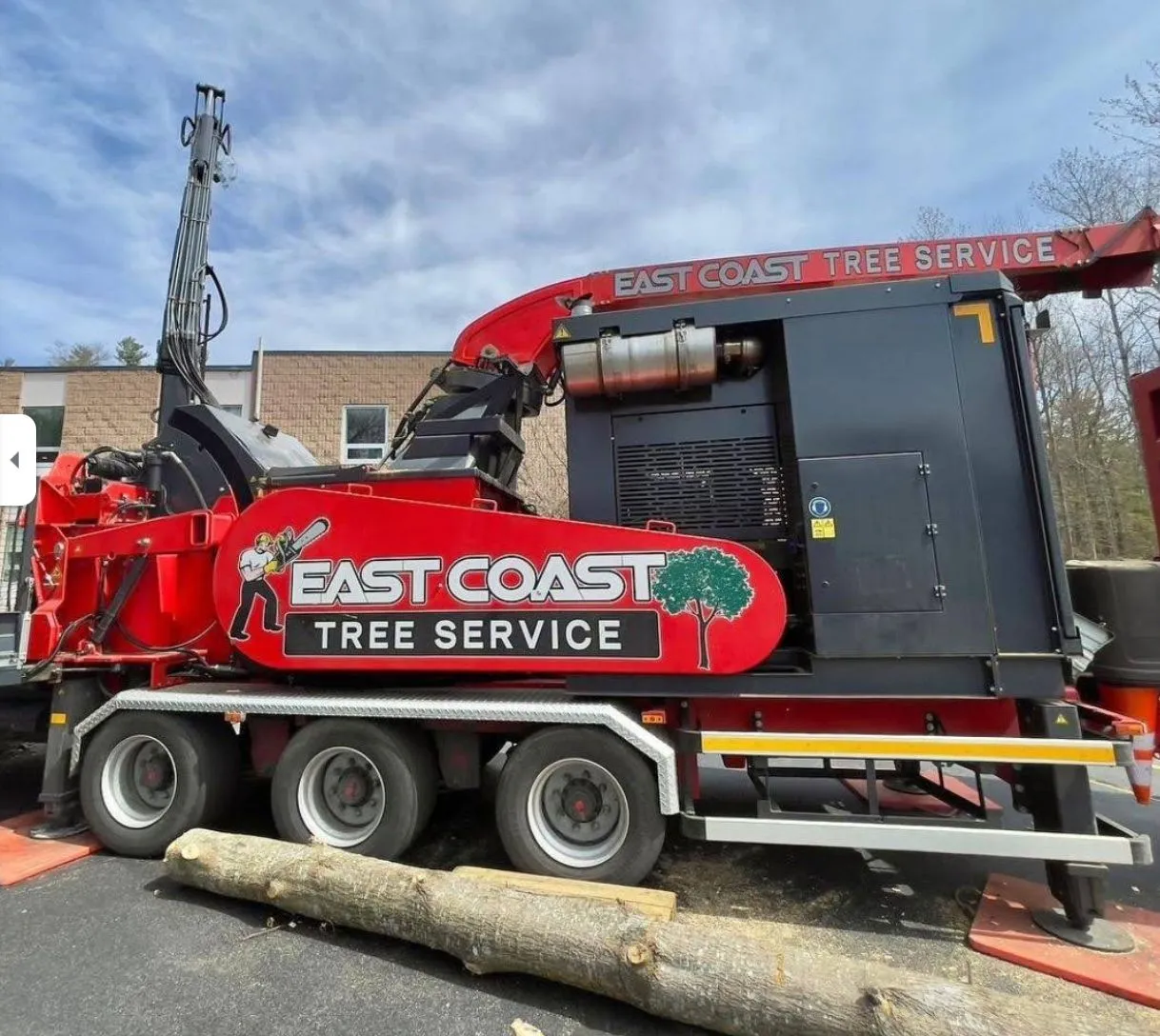
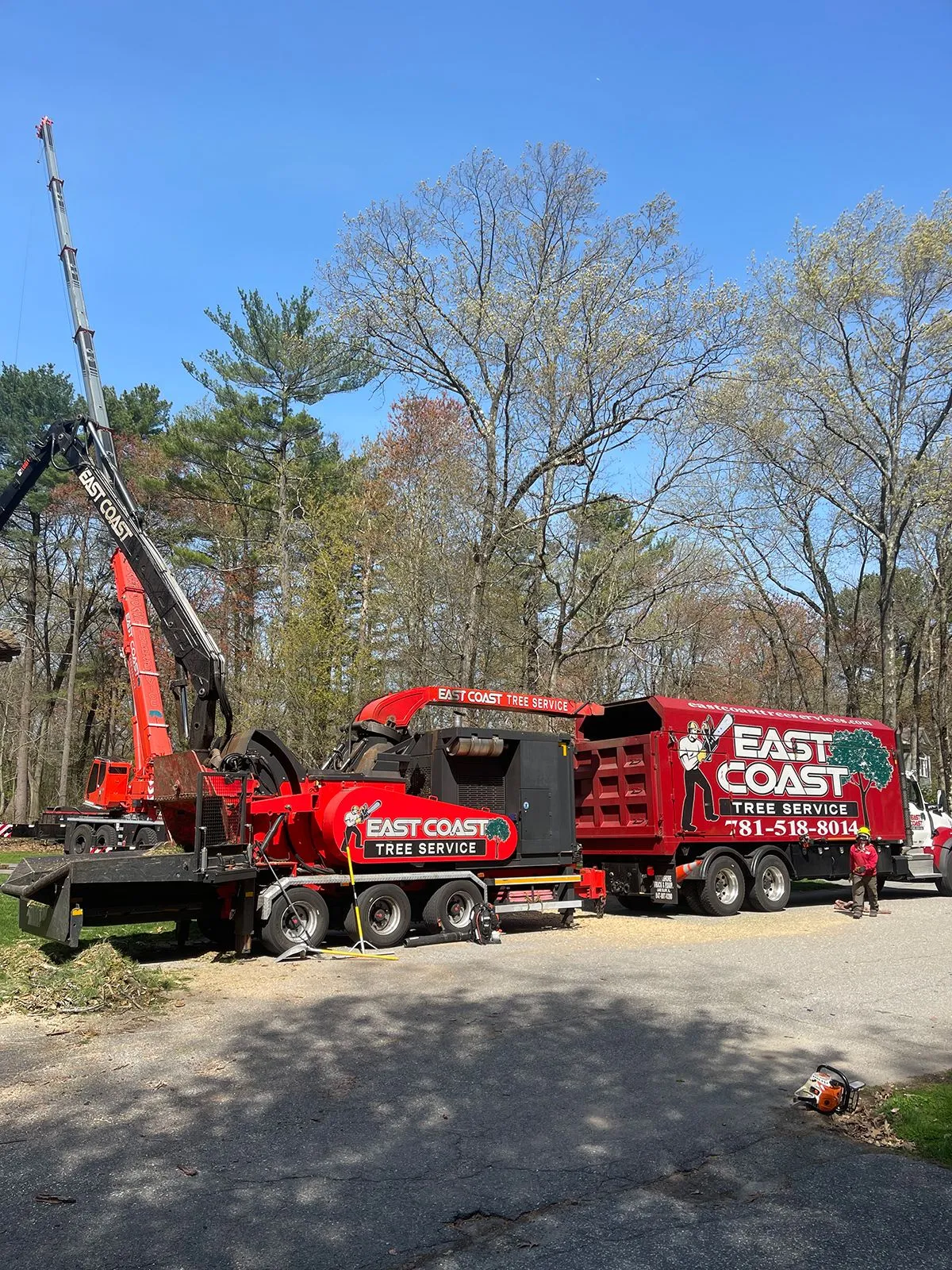
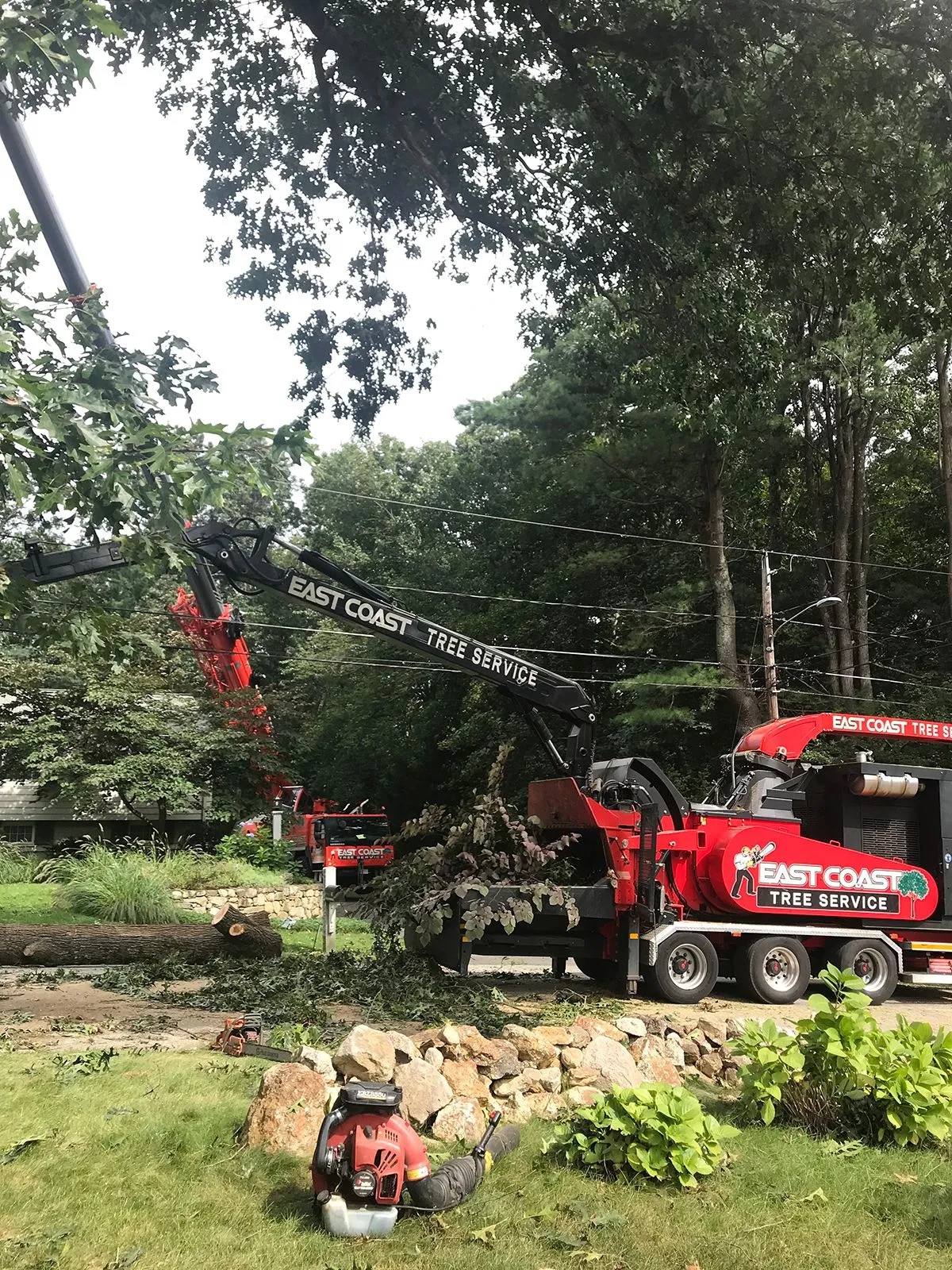
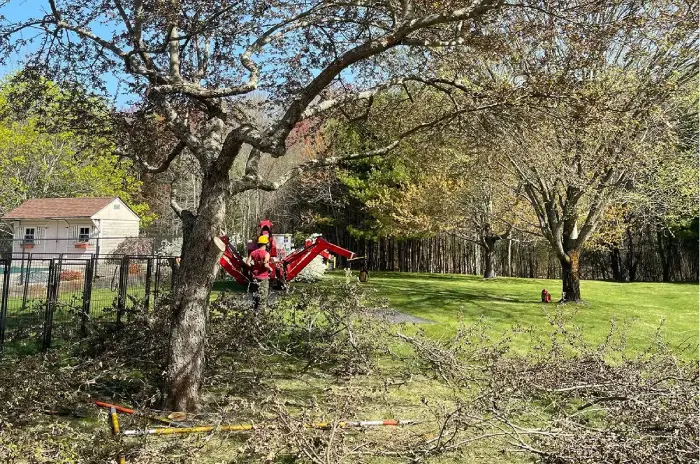
East Coast Tree Service LLC provides tree removal in Burlington, MA for dead, hazardous, storm-damaged, oversized and difficult-access trees. Our crew handles trees beside homes, garages, pools, driveways, neighboring property and overhead service lines, including removals where rigging or crane assistance gives the crew better control over heavy sections.
Our team includes multiple ISA Certified Arborists. East Coast Tree Service is a member of the Tree Care Industry Association (TCIA), is fully insured and licensed for the work it performs, offers financing, and includes full cleanup with its tree service. For urgent tree hazards in Burlington, emergency service is available 24/7 with response within up to one hour.
Call (781) 518-8014 for a free on-site tree removal estimate in Burlington.
A Large Tree and a Difficult Tree Are Not Always the Same Thing
A tall tree standing in an open section of lawn can be considerably easier to remove than a shorter tree squeezed between a house, fence and neighboring property. Burlington has both conditions: established residential streets with mature trees and heavily developed areas where usable working space is limited.
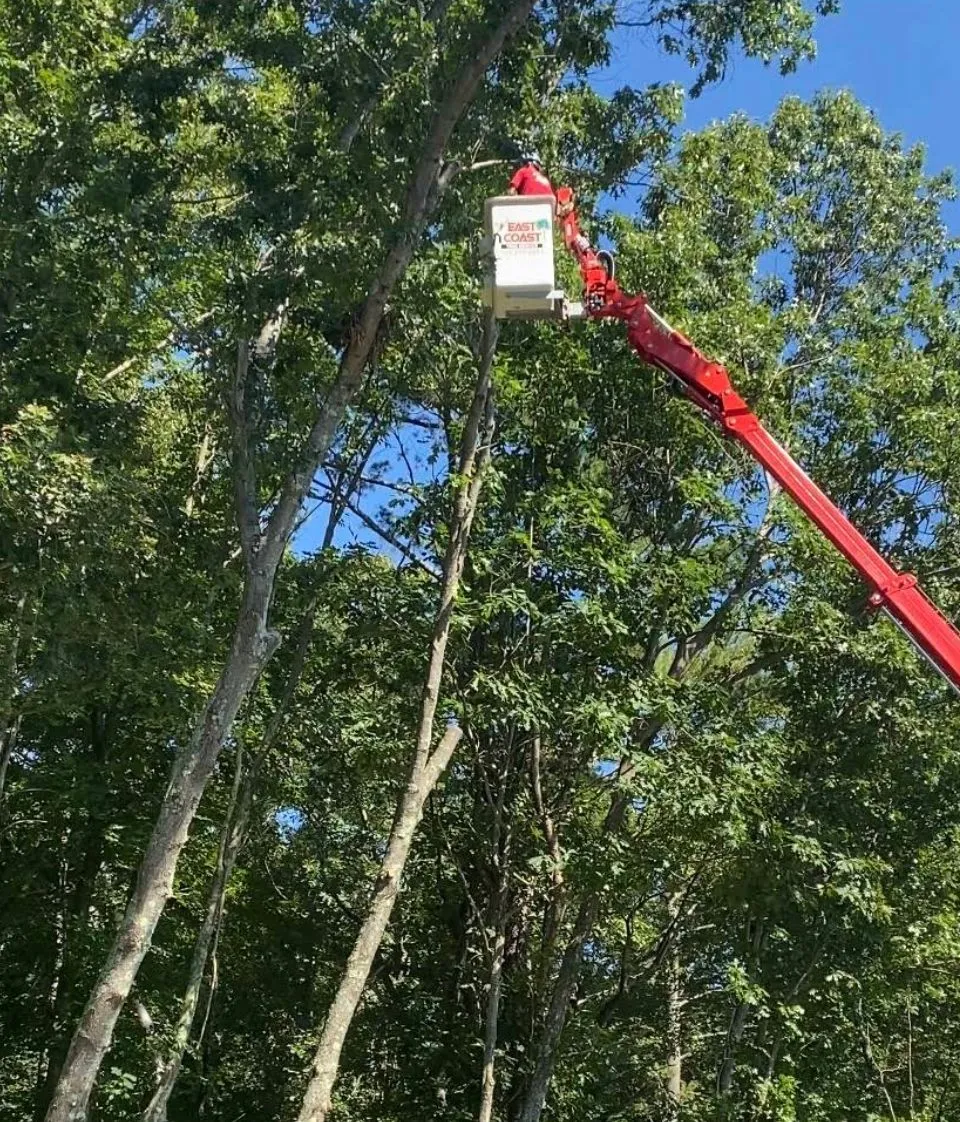
Before choosing a removal method, the crew needs to see where trucks can park, whether a bucket or crane can be positioned, what sits under the canopy, where wood can be processed and whether overhead lines interfere with the work zone.
The tree itself still matters. Lean, trunk condition, root movement, dead sections and weight distribution affect whether it can be climbed, dismantled with conventional rigging or handled more effectively with crane assistance.
What We Look at During a Free On-Site Estimate
An estimate should answer more than “how tall is the tree?” East Coast looks at the tree and the route required to get the tree off the property.
The site visit considers trunk condition, canopy weight, lean, available landing space, surrounding structures, utility lines, equipment access and whether stump grinding will be part of the scope. On difficult properties, crane setup and reach may also need to be evaluated before the removal can be priced correctly.
This is also the time to discuss what stays and what leaves. Full cleanup is included with East Coast Tree Service work, but wood preferences, stump grinding and any unusual access conditions should be agreed on before scheduling.
Crane-Assisted Removal for Trees With Almost No Drop Zone
Some Burlington properties leave very little room beneath a mature tree. Roofs, garages, pools, patios, fences and landscaping can occupy nearly the entire space under the canopy.
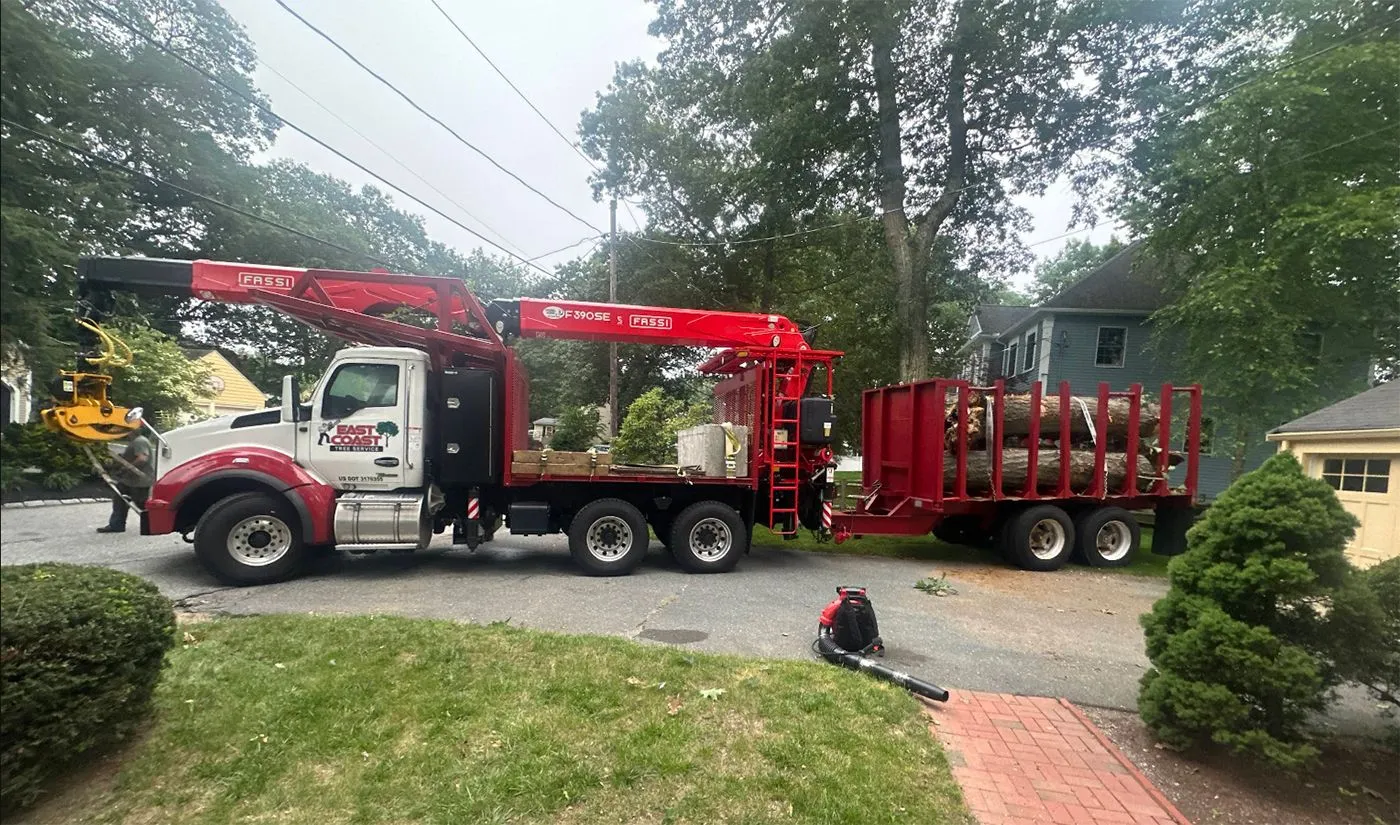
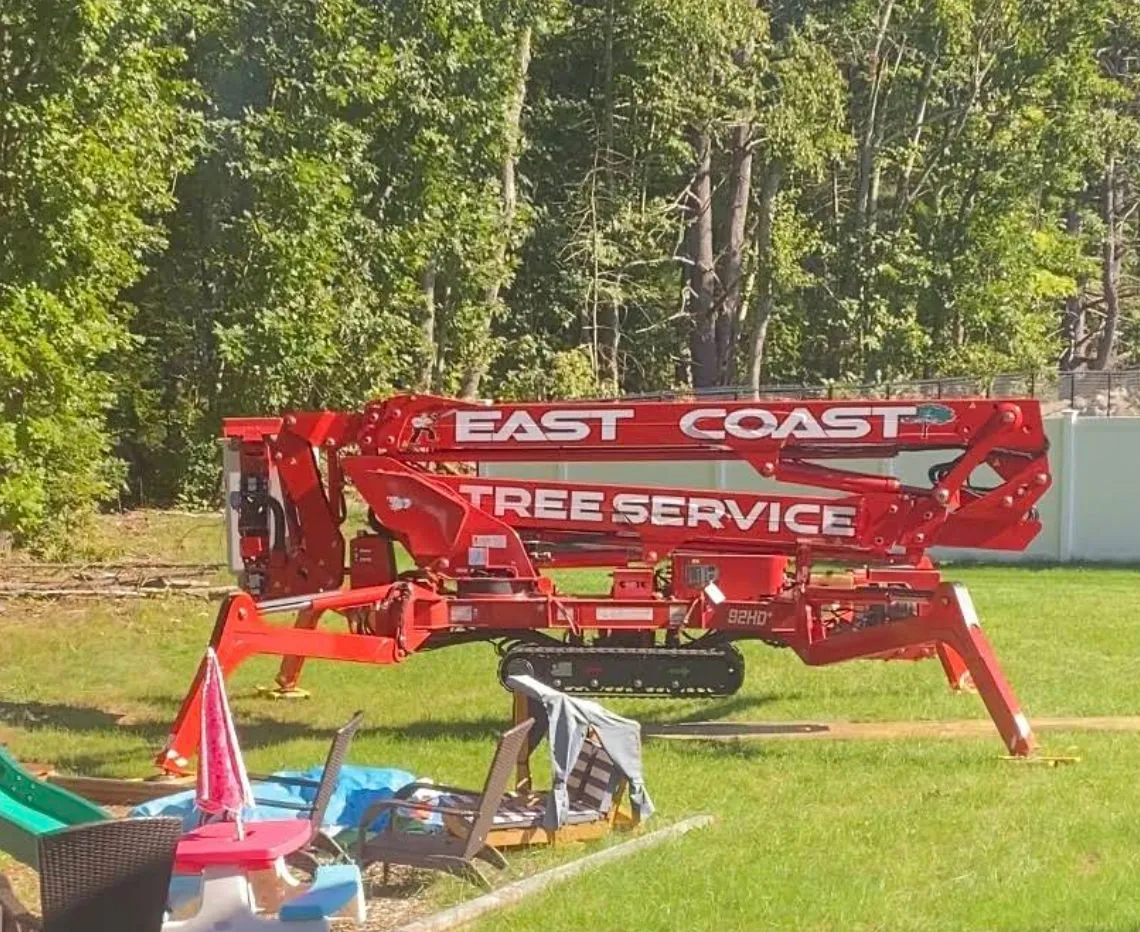
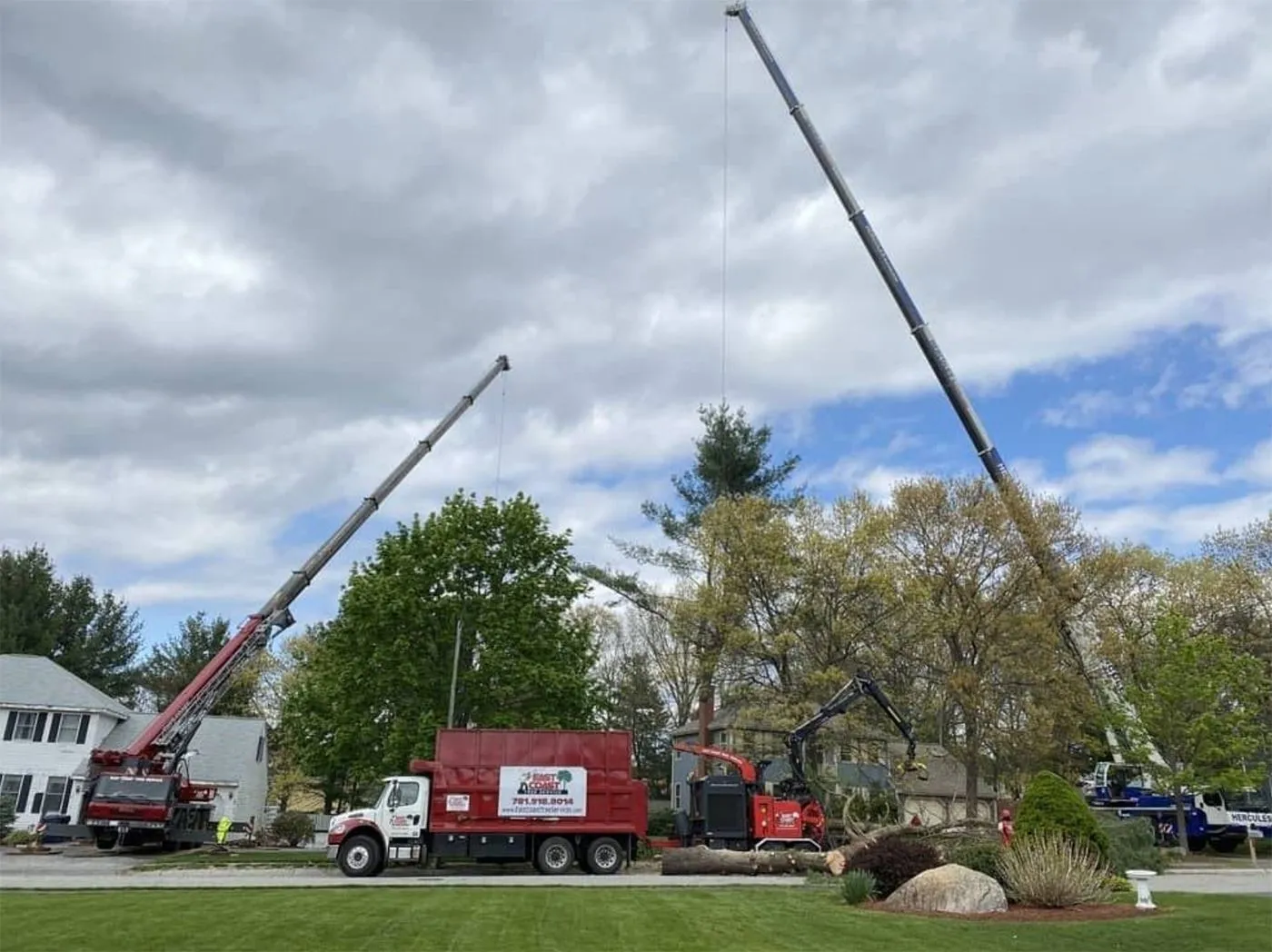
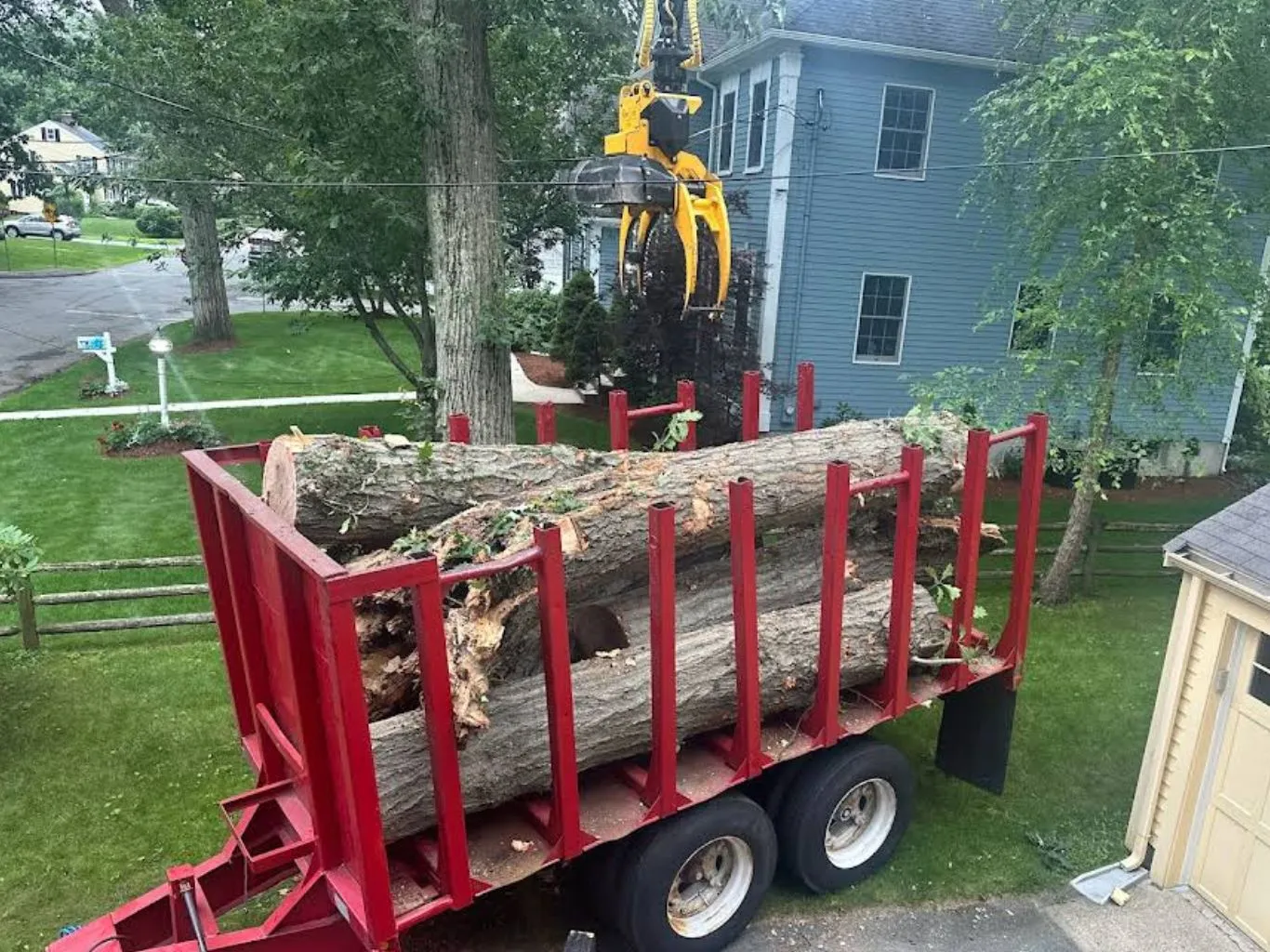
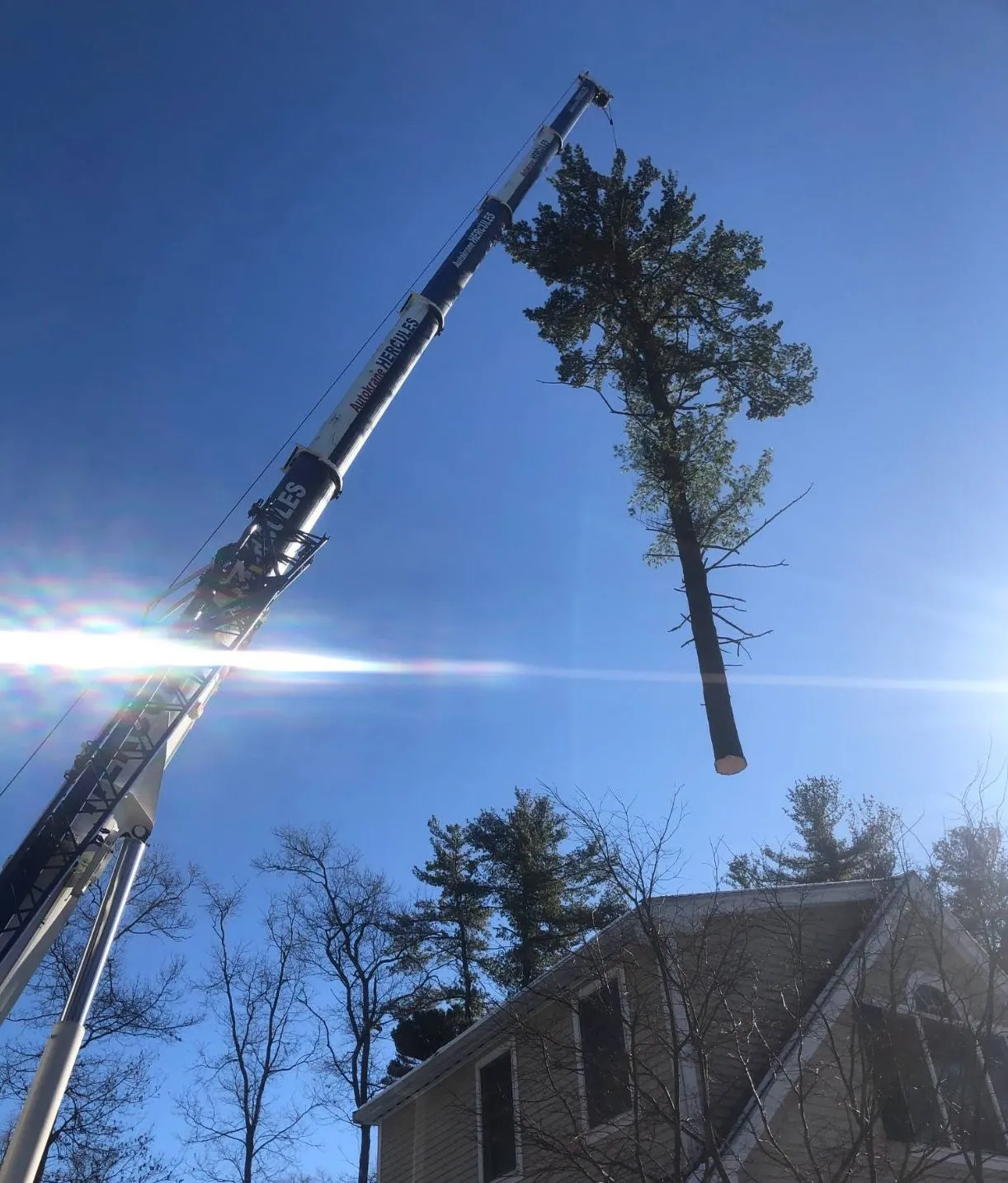
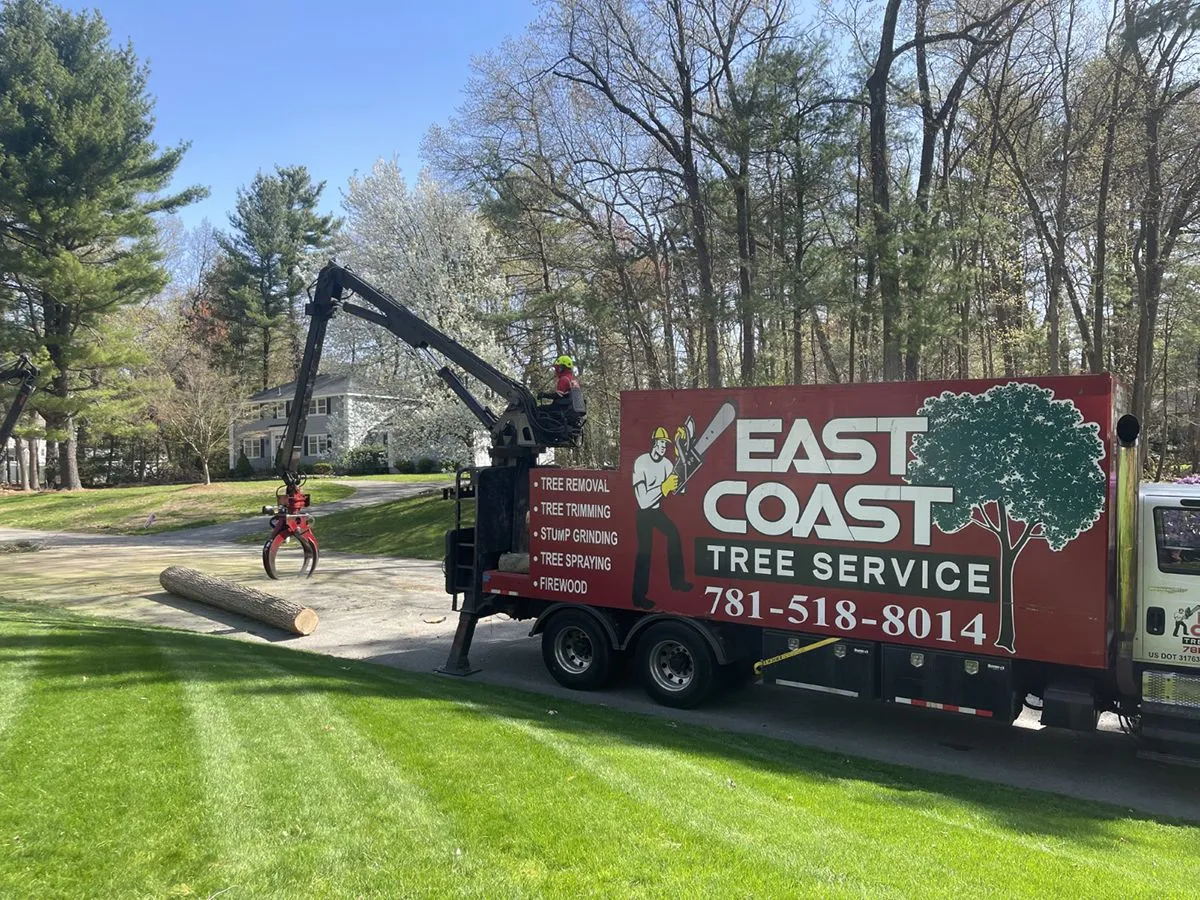
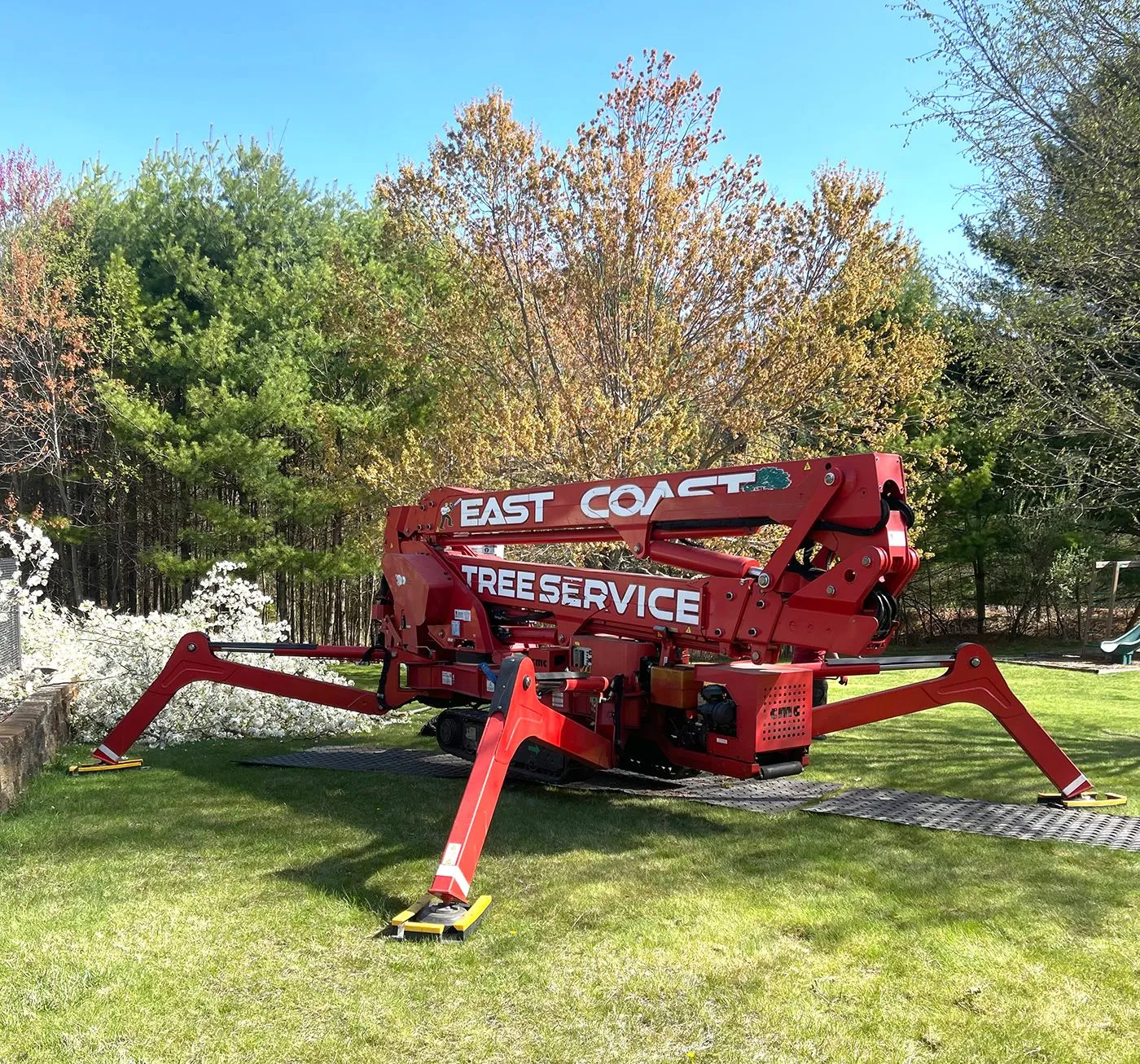
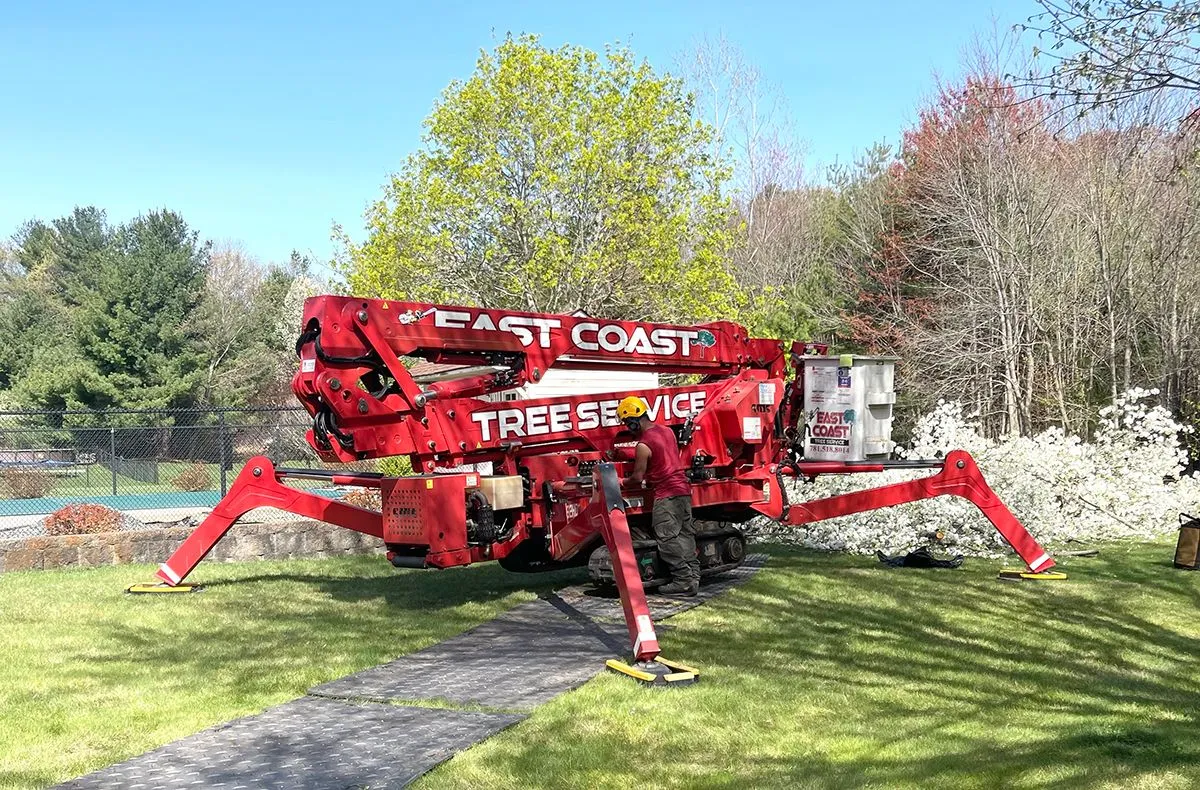
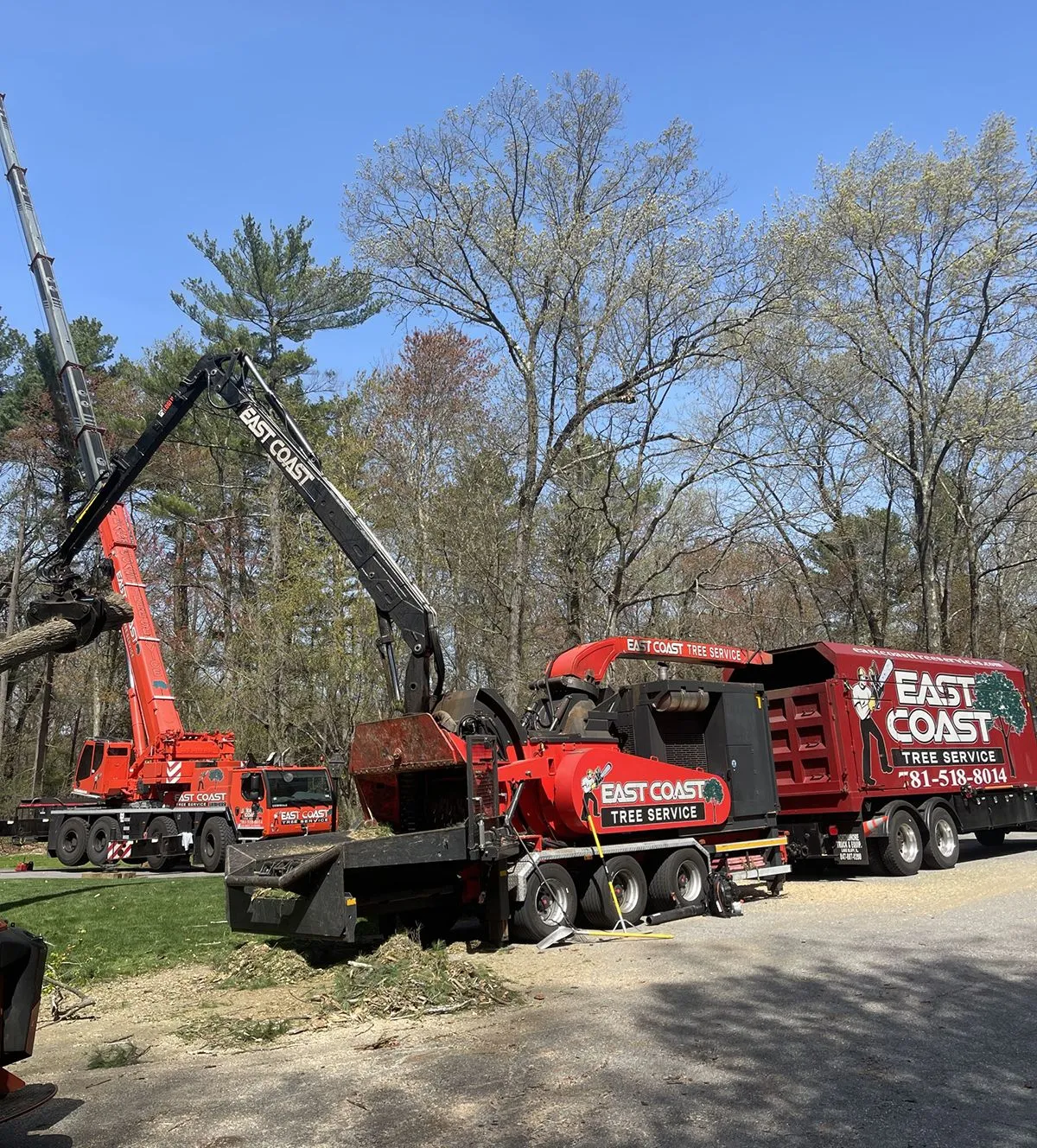
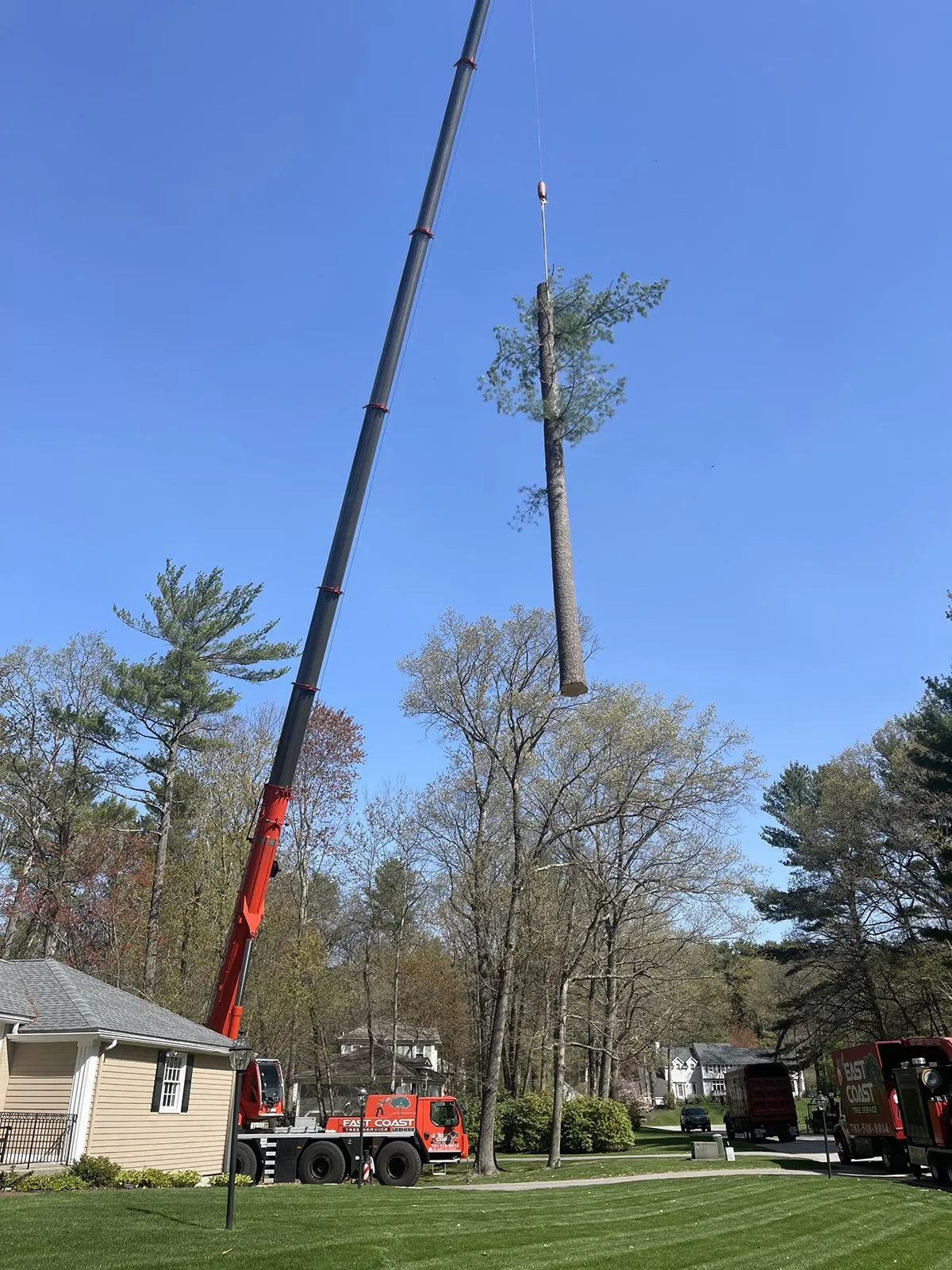
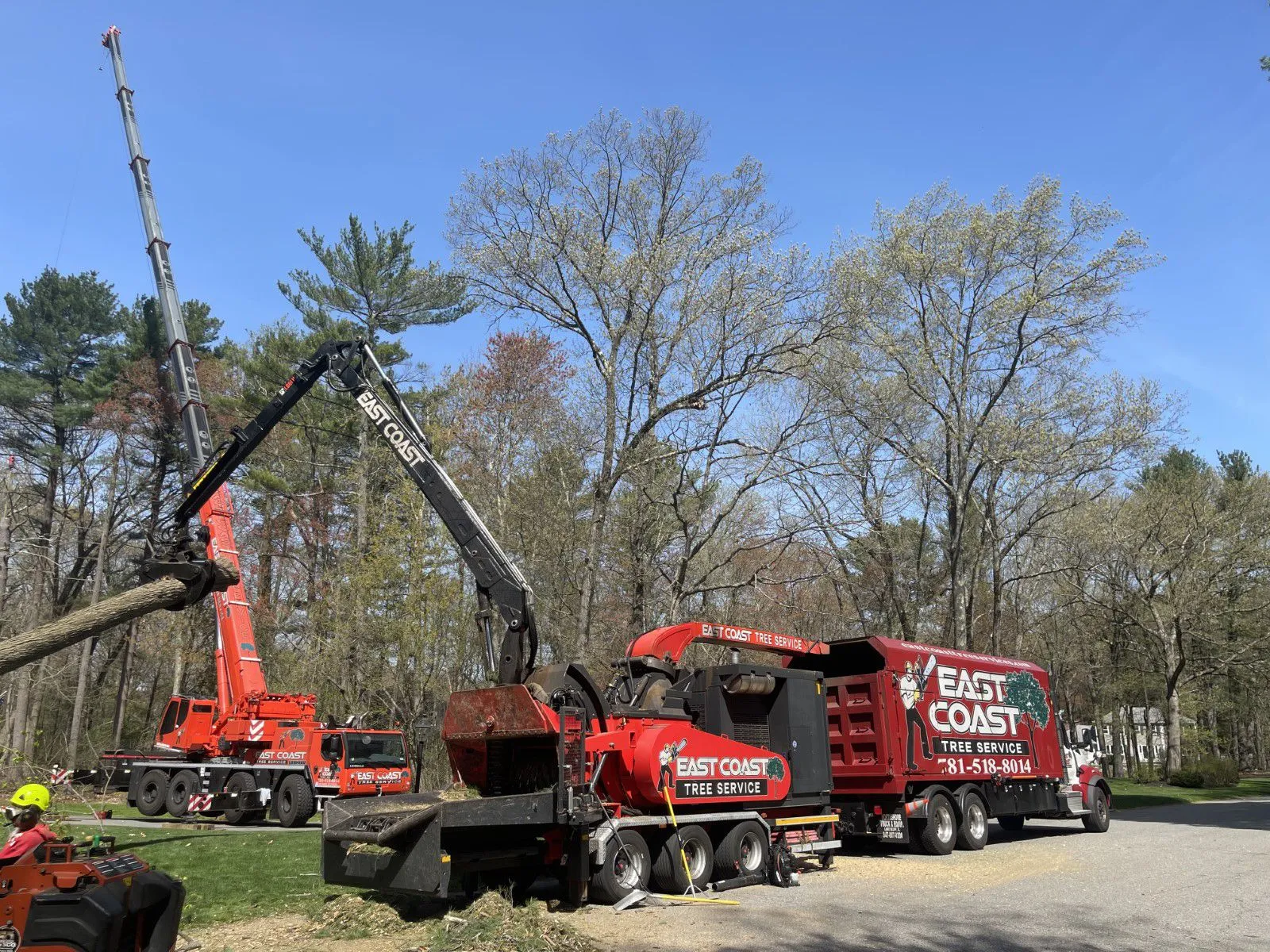
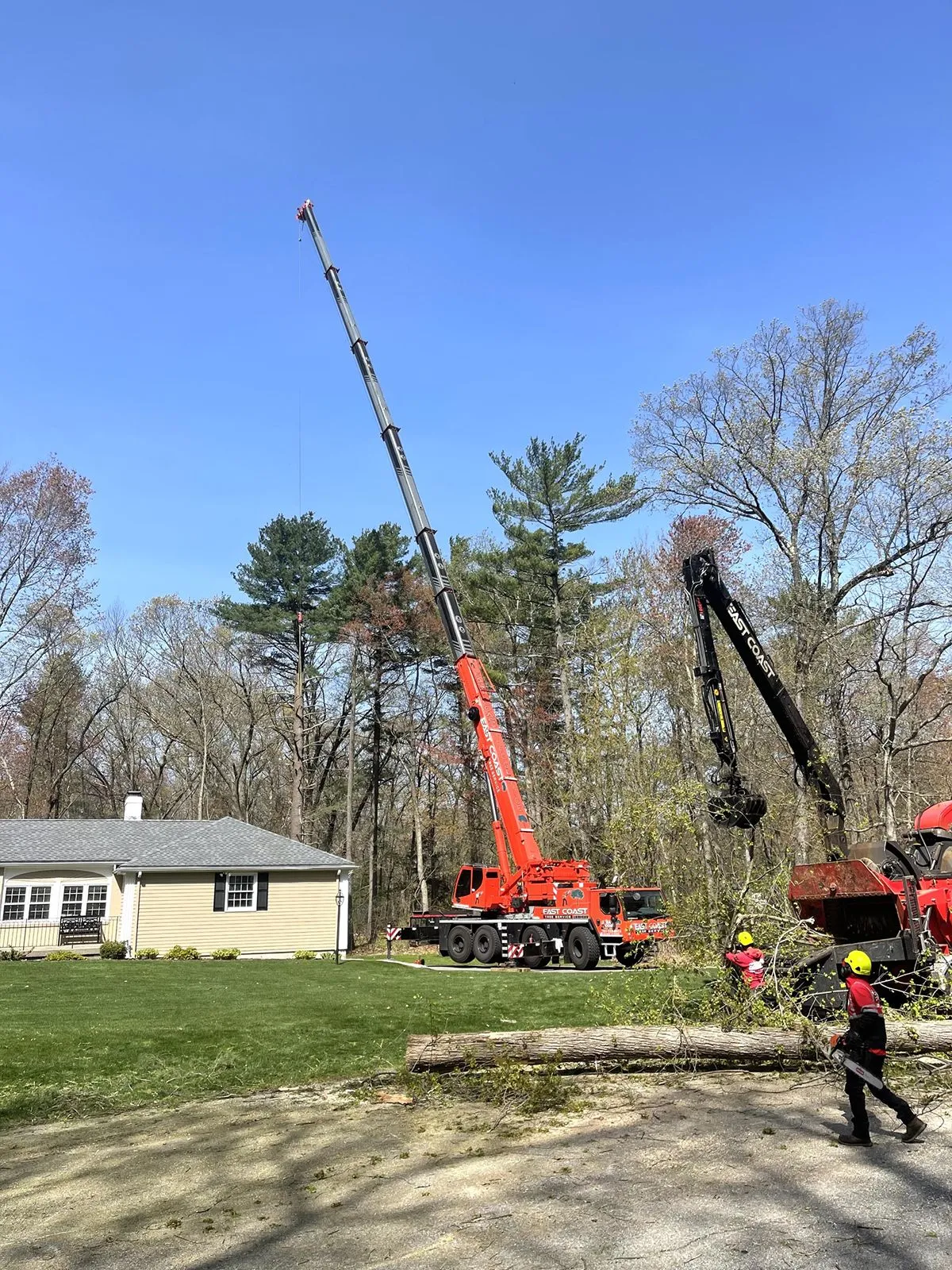
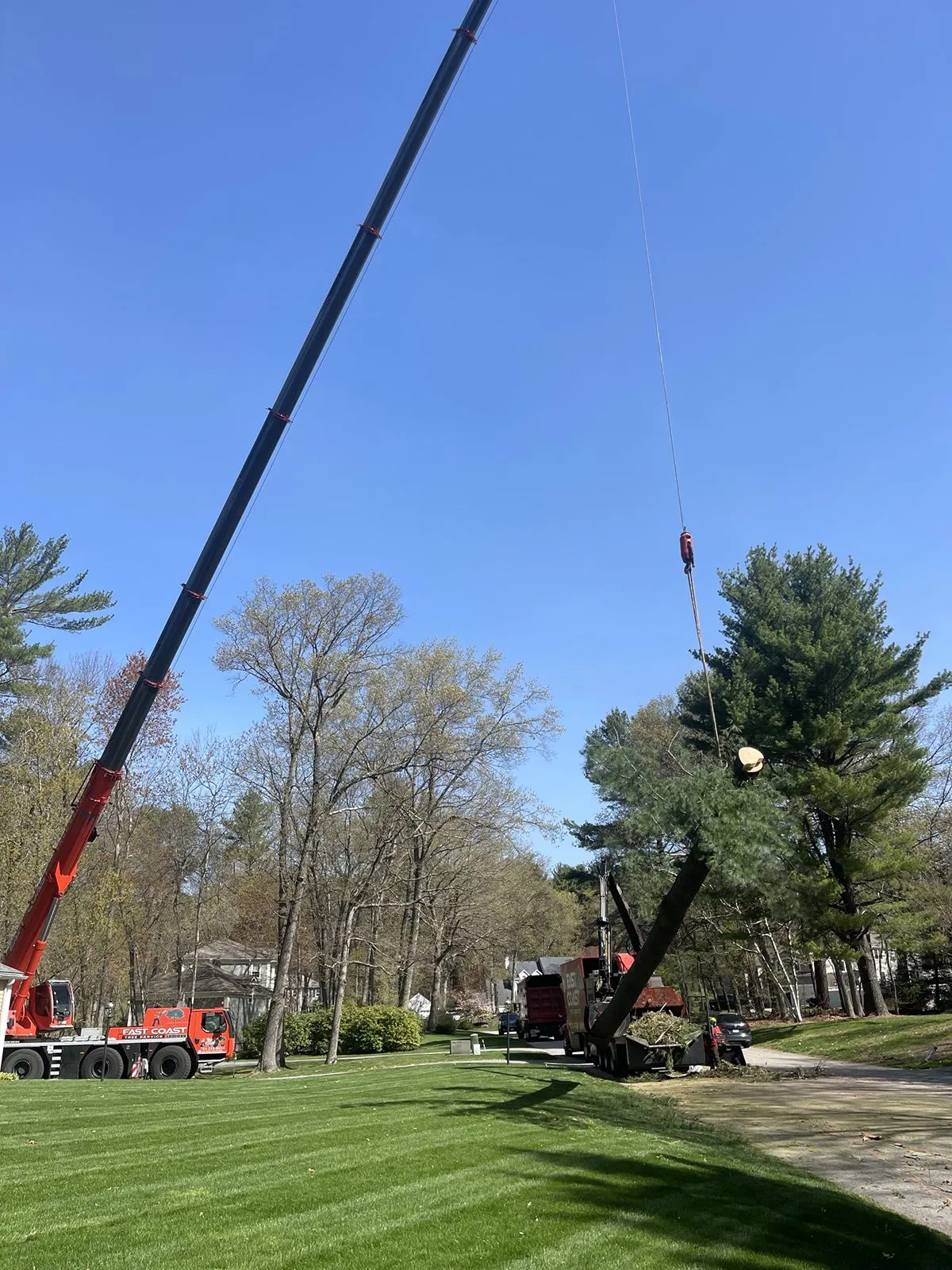
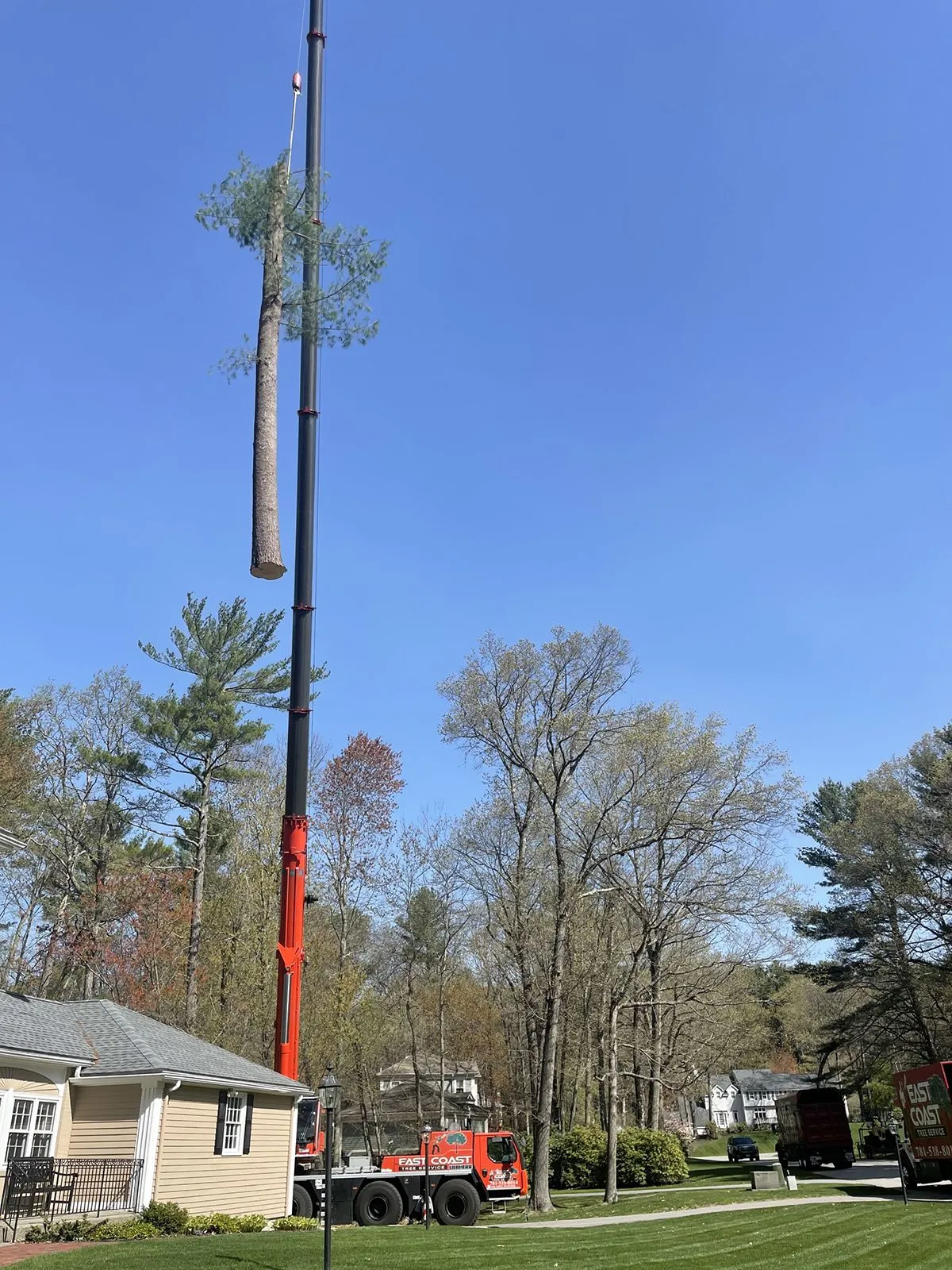
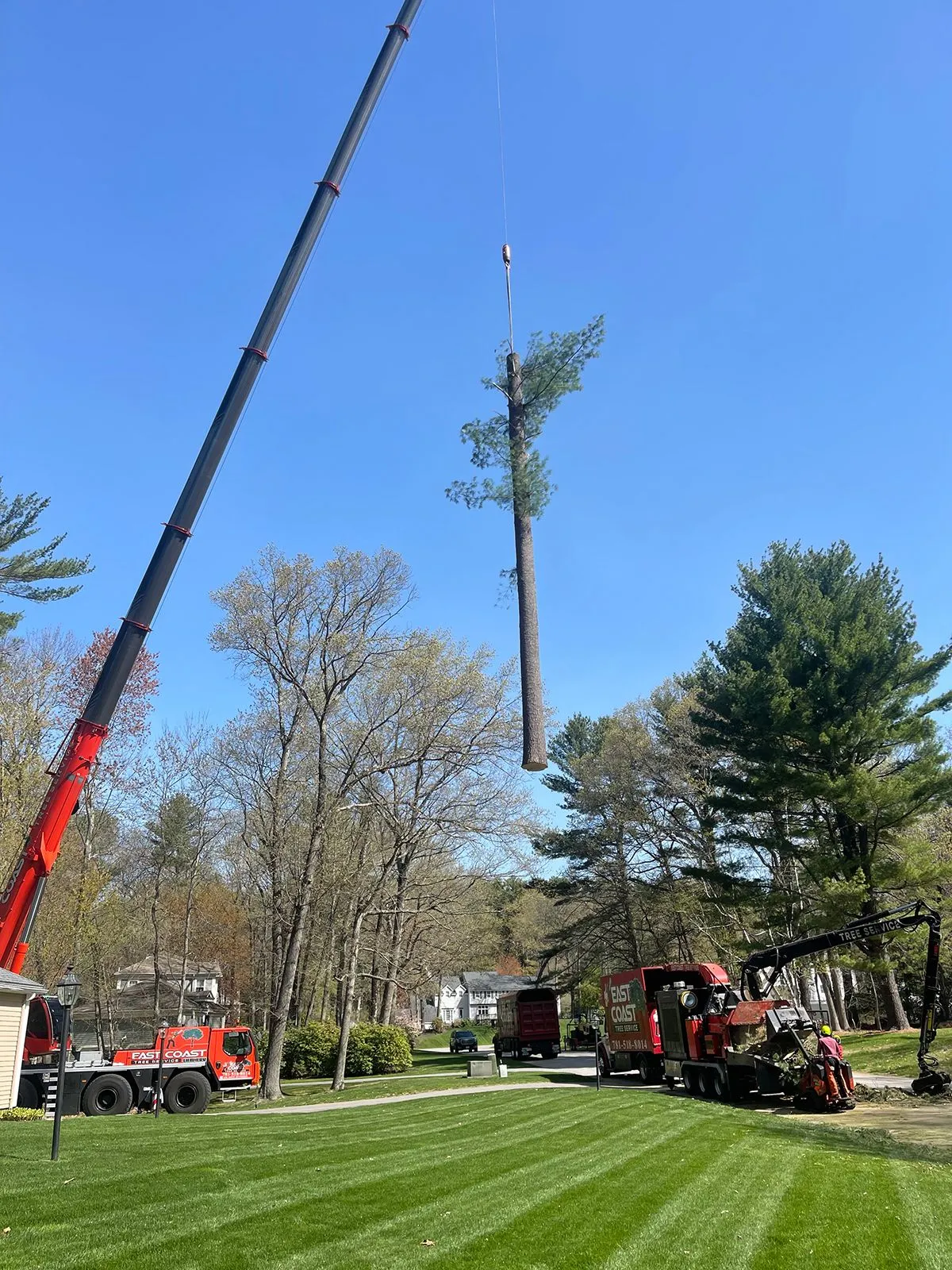
When site conditions allow it, a crane can secure a section before the cut, lift it away from the tree and transfer it to a processing area. The crew does not have to lower every heavy piece through the yard beneath it.
That does not mean every big tree should be removed with a crane. Setup space, reach, ground support, overhead obstructions, section weight and traffic around the site all affect whether crane work makes sense.
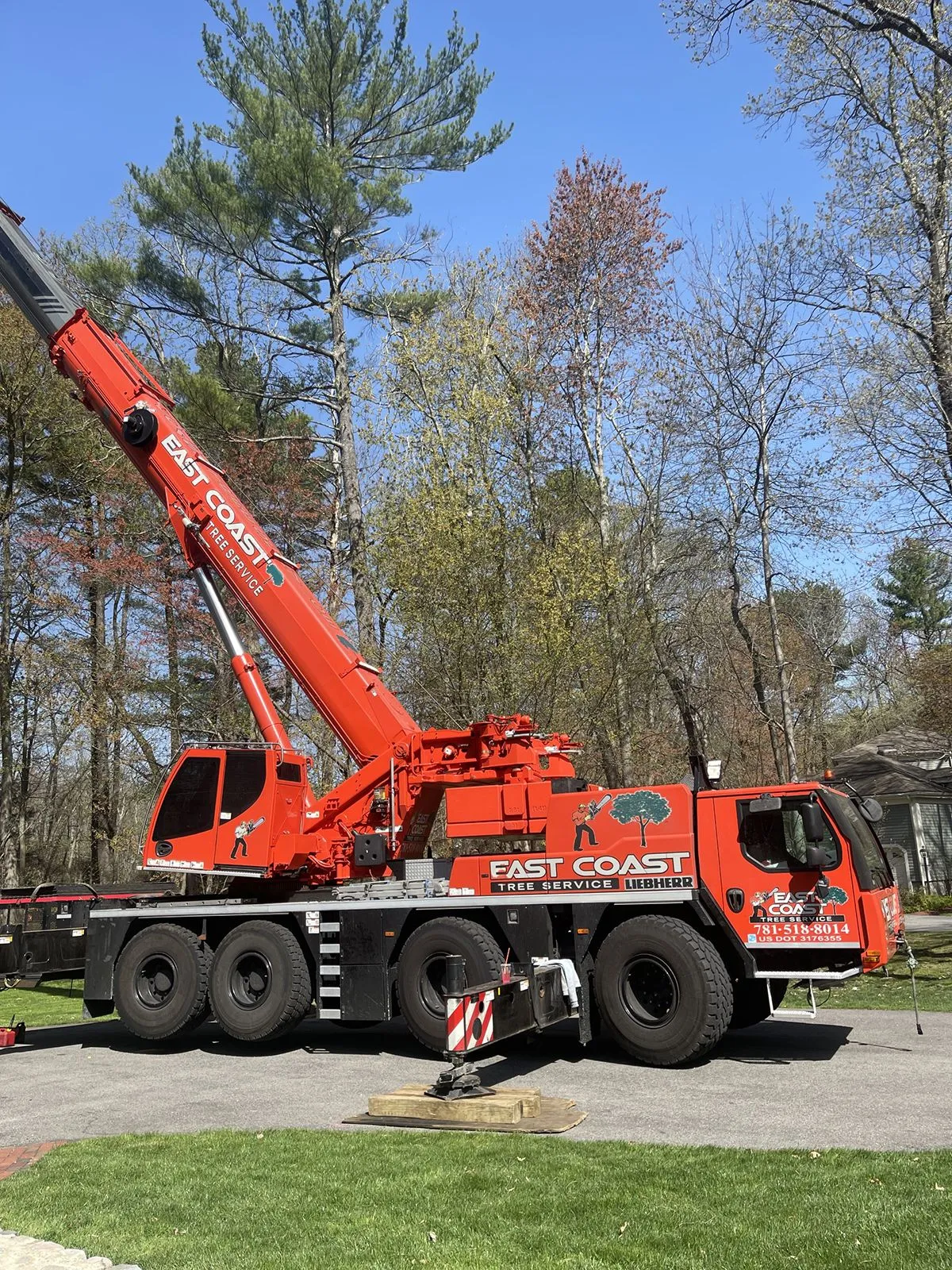
East Coast has crane capability with certified operators. You can read more about our crane services.
Burlington Tree Removal Permits: Start With the Tree’s Location
There is no single answer that applies to every tree in Burlington. A tree well inside an ordinary private upland lot is different from a tree in a public way or one close to a wetland or stream.
Wetlands and streams
Burlington requires Conservation review for regulated work within a floodplain, within 100 feet of a wetland or within 200 feet of a stream. The Town specifically asks residents planning tree cutting or trimming within those distances to contact the Conservation Department so staff can determine whether a filing is required.
Wetlands are not always obvious from the backyard. Some remain dry for part of the year, which is why the actual mapped resource area matters more than whether there is visible standing water on the day of the estimate.
Roadside and public shade trees
Public shade trees fall under Massachusetts General Laws Chapter 87 and Burlington’s Tree Warden. Burlington’s DPW Superintendent serves in that role, and the Town uses a Tree Removal Permit Application and public hearing process where required for affected public trees.
If a front-yard tree stands close to the street and you are not sure whether the trunk is inside the private parcel or public way, resolve that question before scheduling removal.
See the Town’s Conservation permit guidance and East Coast’s Massachusetts tree removal permit guide for more context.
Removing a Tree Near National Grid Lines
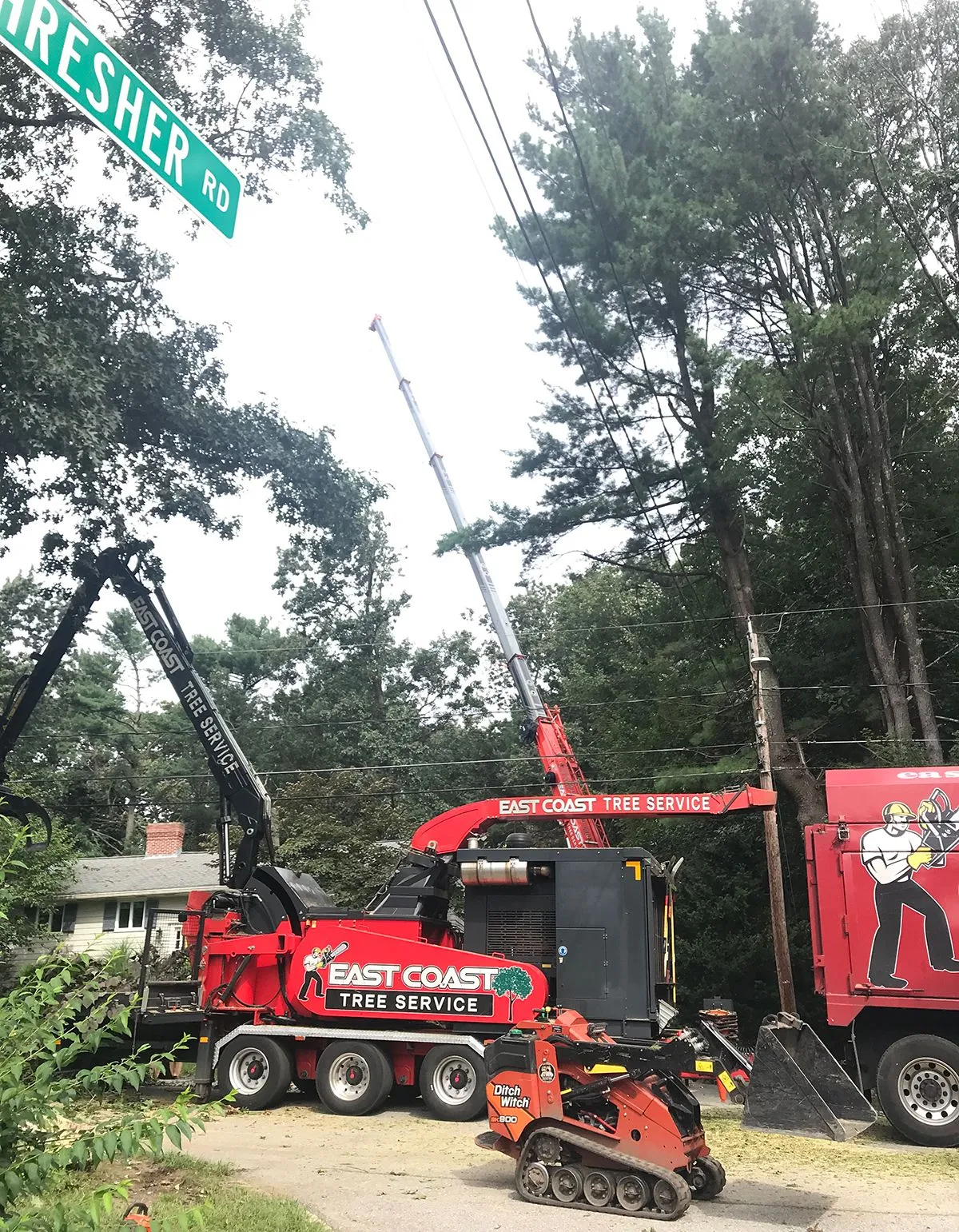
There is an important difference between a tree that happens to be near wires and a tree whose work zone enters the electrical hazard area.
National Grid performs routine vegetation management around its high-voltage lines. Homeowners are generally responsible for trees around the lower-voltage service drop that connects the utility system to an individual house.
When contractor work has to occur close to a residential service line, National Grid may be able to cover the line or temporarily disconnect service. The utility advises that tree work within 10 feet of electrical hazards be handled by workers trained for electrical-line hazards.
If a tree or branch is already touching a downed line, stay away. Do not try to move the tree first and deal with the wire afterward.
Current utility guidance is available through National Grid’s tree and electric service FAQ.
What Does Tree Removal Cost in Burlington, MA?
Current third-party Burlington pricing data puts many medium-tree removals at roughly $598 to $810. That is useful as a local reference point, but it is not a quote from East Coast Tree Service and it does not represent a large mature oak beside a house.
For larger trees, broader 2026 Eastern Massachusetts pricing guides place many 60- to 80-foot removals in approximately the $1,500 to $3,500 range. Restricted access, crane work, electrical hazards, decay or exceptionally heavy wood can push a job outside general market ranges.
An oak with a broad crown above a roof can take more planning and controlled handling than a taller but lighter tree with an open landing area. The final estimate is driven by the actual removal method rather than species or height in isolation.
East Coast provides free on-site estimates so the quote reflects the tree, access, cleanup, stump work and equipment required for that property.
When Removal Is the Right Call — and When It May Not Be
A large tree does not need to be removed simply because it is large. A healthy tree with a localized dead limb or a manageable roof-clearance problem may be better addressed with pruning.
The removal conversation becomes different when the problem involves the whole tree: extensive decay, root instability, a major trunk split, severe storm damage, substantial dieback or a location where the remaining structure presents an unacceptable risk.
That distinction matters when getting estimates. If one contractor recommends removal, ask what condition in the tree supports that recommendation rather than accepting size alone as the reason.
Two Different Insurance Questions Matter Before a Removal
First, ask whether the tree company is insured. East Coast Tree Service carries general liability and workers’ compensation coverage. Those coverages deal with the contractor’s operations and should be verified before hiring a company for heavy tree work.
The second question is whether your homeowners policy will pay for the tree removal. That usually depends on why the tree fell and what it damaged. Homeowners policies often provide some removal coverage when a tree falls because of a covered event and strikes an insured structure. Some policies may also help when a fallen tree blocks a driveway or required access.
Preventive removal is different. A standing dead, leaning or deteriorating tree normally remains a maintenance expense for the homeowner rather than an insurance claim simply because it could fail later.
If storm damage may become a claim, photograph the conditions if it is safe to do so and contact your carrier or adjuster. Coverage, deductibles and debris-removal limits vary by policy.
Burlington’s Trees: Hardwoods, Pines and Wet-Ground Species
Burlington’s own open-space inventory documents a much broader tree population than a generic “oak and maple” list. Species recorded locally include northern red oak, white oak, swamp white oak, red maple, sugar maple, Eastern white pine, eastern hemlock, white ash, green ash, birches and black cherry.
Those differences matter during removal. Mature oaks carry dense, heavy wood and can have long lateral limbs. White pine can create substantial working height and long trunk sections. Red maple can develop different stem forms depending on where it grew. Ash decline can leave wood and canopy conditions that need closer assessment before climbing.
Wetland areas support a different vegetation mix from dry residential uplands. Burlington’s protected land includes extensive wetlands and wooded conservation areas, which is one reason soil saturation and Conservation jurisdiction cannot be reduced to a townwide rule.
Burlington Weather Can Change the Problem Overnight
A Burlington tree that looks unchanged through summer can show a different problem after the first heavy wet snow. Snow and ice add canopy weight; winter wind adds movement at branch unions; repeated freeze-thaw cycles change ground and trunk conditions.
Spring brings another pattern. Thawed ground and extended rain can leave lower areas saturated. If a tree already has poor root anchorage, fresh soil cracking or movement around the root plate after wind deserves attention.
Summer thunderstorms bring short periods of high wind and sudden branch failure. Autumn and winter nor’easters add longer periods of wind and precipitation. Weather itself does not make every tree unsafe, but it can reveal defects that were already developing.
What Burlington Looks Like From a Tree Crew’s Point of View
Burlington sits about 12 miles northwest of Boston in Middlesex County, bordered by Bedford, Billerica, Lexington, Wilmington and Woburn. The town changed rapidly after Route 128 was completed in the 1950s, and that contrast is still visible today: older residential roads and historic properties sit only a short distance from some of Greater Boston’s busiest commercial corridors.
I-95/Route 128 and U.S. Route 3 define the major regional approach to Burlington. Middlesex Turnpike serves the commercial district around Burlington Mall, while Cambridge Street/Route 3A runs through another heavily traveled north-south corridor. For tree crews, that mix can mean everything from a quiet side-street removal to a property where truck placement, traffic and access need to be considered before equipment arrives.
The Town Common area offers a very different view of Burlington. Grandview Farm/Marion Tavern sits near the historic center and reflects Burlington’s agricultural past. The Burlington Historical Museum and older properties around Center, Bedford and Lexington Streets show how much of the town existed before Route 128 changed local development. Cambridge Street/Route 3A provides a main approach to the center from north and south.
For natural open space, the Landlocked Forest covers roughly 250 acres between Routes 62, 3 and 128, with public access from Turning Mill Road on the Lexington side. The area contains about 13 miles of maintained trails. The setting is a useful reminder that Burlington still contains large wooded areas despite its commercial development.
Mary Cummings Park occupies more than 200 acres along the Burlington-Woburn border. Burlington also manages numerous smaller conservation parcels, including Little Brook, Vine Brook, Sandy Brook and Longmeadow Brook areas. Trees near those wet systems can face very different soil and regulatory conditions from trees around Burlington Mall or a dry residential ridge.
The older Francis Wyman House on Francis Wyman Road is another local landmark, dating to the 17th century. Properties in this northern part of town transition toward Billerica and Wilmington, while southern Burlington connects quickly into Lexington and Woburn. Those neighboring service areas are close enough that the same crews routinely encounter similar mature oaks, pines, maples and tight suburban access conditions from one town line to the next.
Cleanup, Stump Grinding and What Happens After the Last Cut
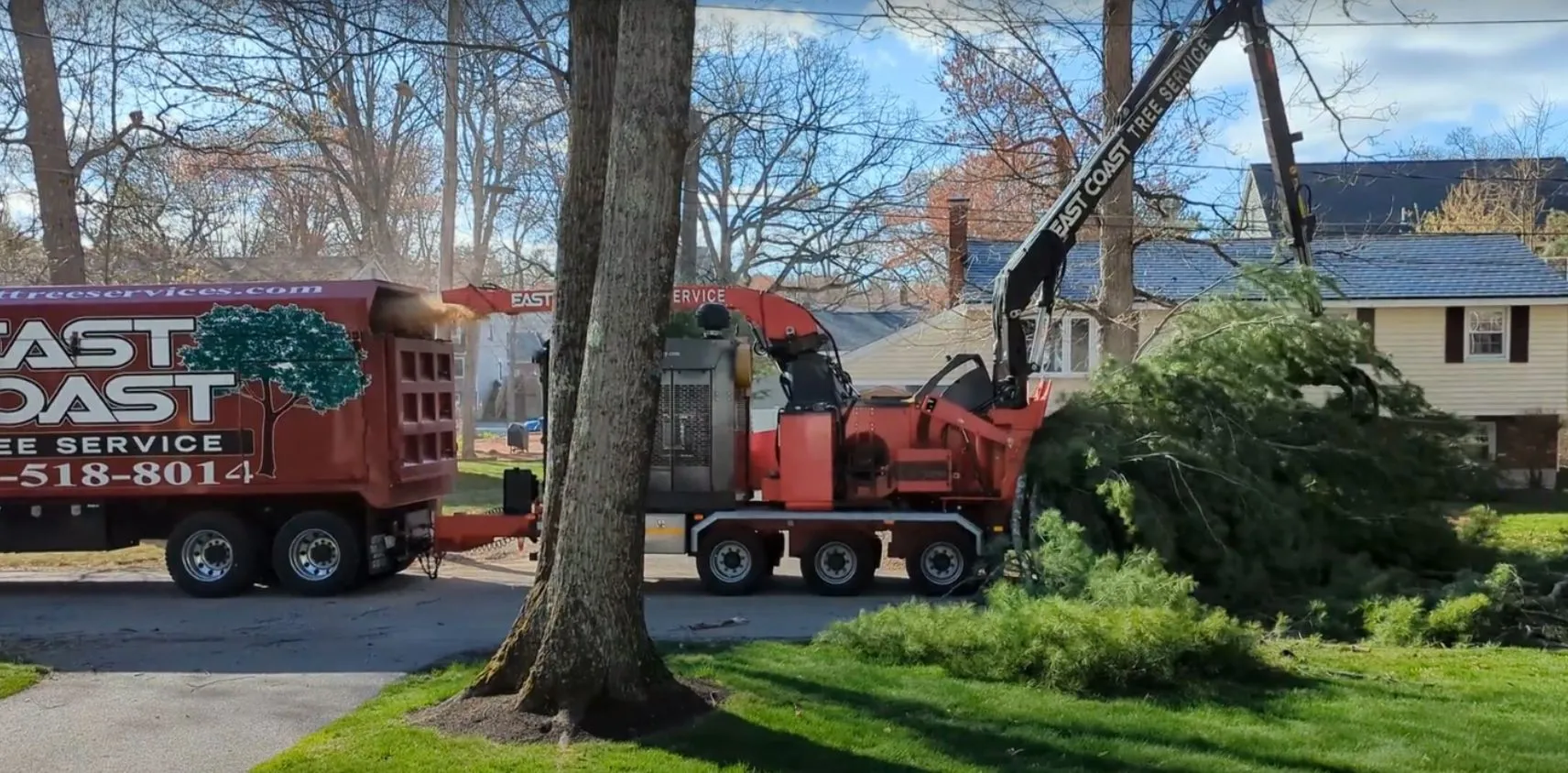
Full cleanup is included with East Coast Tree Service work. Branches and debris included in the agreed scope are processed and the work area is cleaned before the job is considered finished.
A stump is a separate part of the decision. If it interferes with mowing, construction or future landscaping, ask for stump grinding during the original estimate so access and equipment can be planned with the removal.
East Coast provides stump grinding services. Final planting, sod, irrigation repair or other landscape reconstruction should be discussed separately rather than assumed to be part of tree removal.
Financing Is Available When the Tree Cannot Wait
A planned removal and a storm-damaged tree create very different budgeting situations. East Coast Tree Service offers financing options for qualifying projects when spreading the cost is more practical than paying the entire job at once.
Financing approval, available terms and payment conditions depend on the current program, so ask about those options while scheduling the estimate rather than waiting until after the work has been priced.
24/7 Emergency Tree Removal in Burlington
A tree across the driveway, a heavy limb on the roof, a partially uprooted tree or a split trunk next to an occupied area should not be treated like a routine appointment.
East Coast Tree Service provides 24/7 emergency tree service in Burlington with response within up to one hour.
When calling, tell us whether the tree is blocking access, resting on a structure, still partially standing or involved with utility wires. That information helps determine what equipment and precautions may be needed before the crew arrives.
Learn more about our tree removal and emergency service.
Nearby Tree Service Areas Around Burlington
Burlington shares town lines or close road connections with several East Coast Tree Service areas. North of Burlington, we provide tree service in Billerica, MA and tree service in Wilmington, MA. Our Tewksbury base also supports tree service in Tewksbury, MA.
South and east of Burlington, East Coast serves Woburn, MA, Reading, MA and Stoneham, MA. To the southwest, property owners can find our Lexington tree service information.
For tree-removal-specific information in the neighboring northwest corridor, see our Billerica tree removal page. East Coast also serves Chelmsford, MA and communities throughout Middlesex County.
For pruning, storm cleanup and other services beyond removal, visit our broader Burlington tree service page.
Request a Free Tree Removal Estimate in Burlington
If the tree is close to the house, beside utility lines, showing root movement, damaged after a storm or simply too large to understand from a photograph, schedule an on-site look.
We will evaluate the tree, access, surrounding property, removal method, cleanup and stump work before providing the quote.
Call (781) 518-8014 for a free tree removal estimate in Burlington, MA.
For immediate hazards, emergency service is available 24/7 with response within up to one hour.