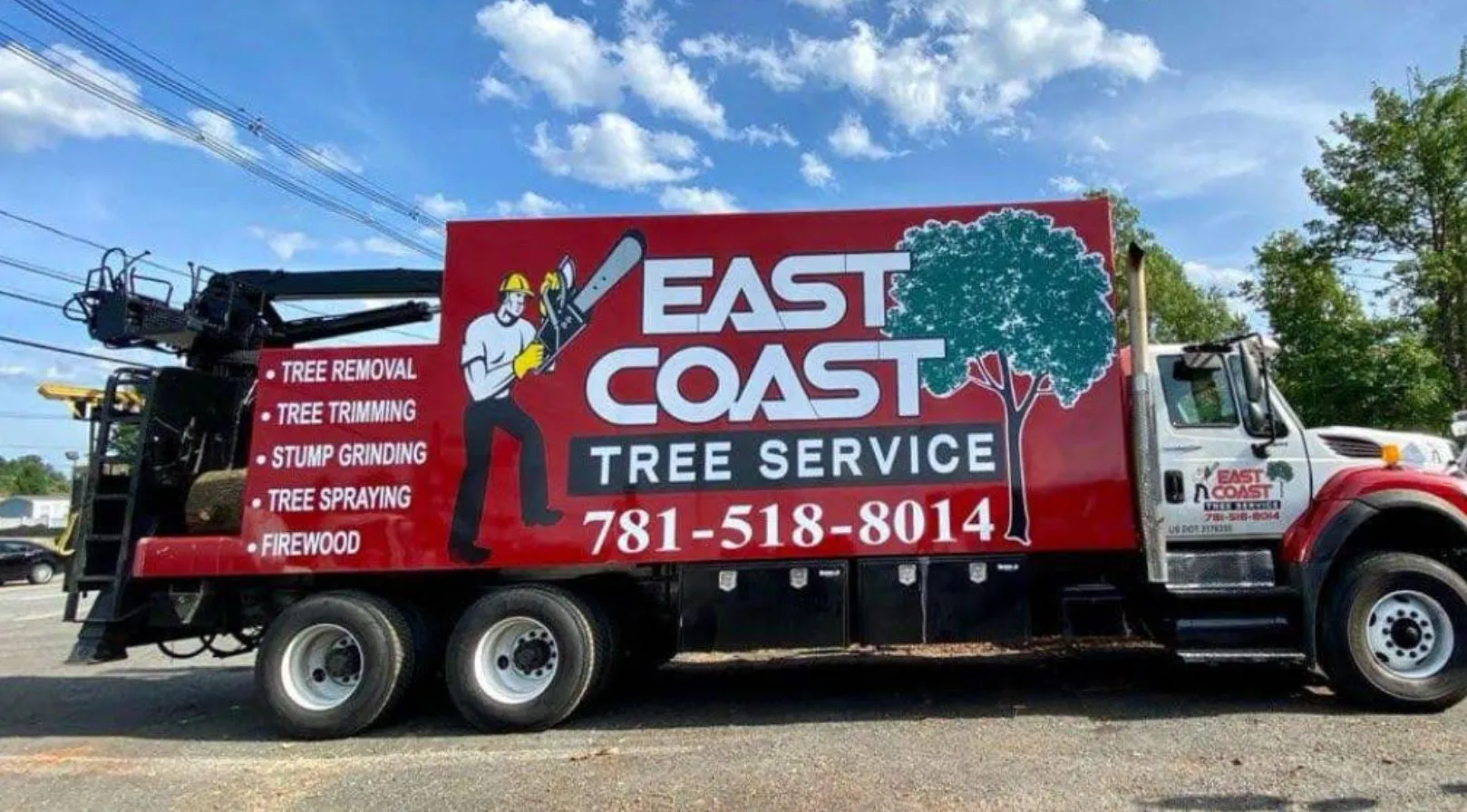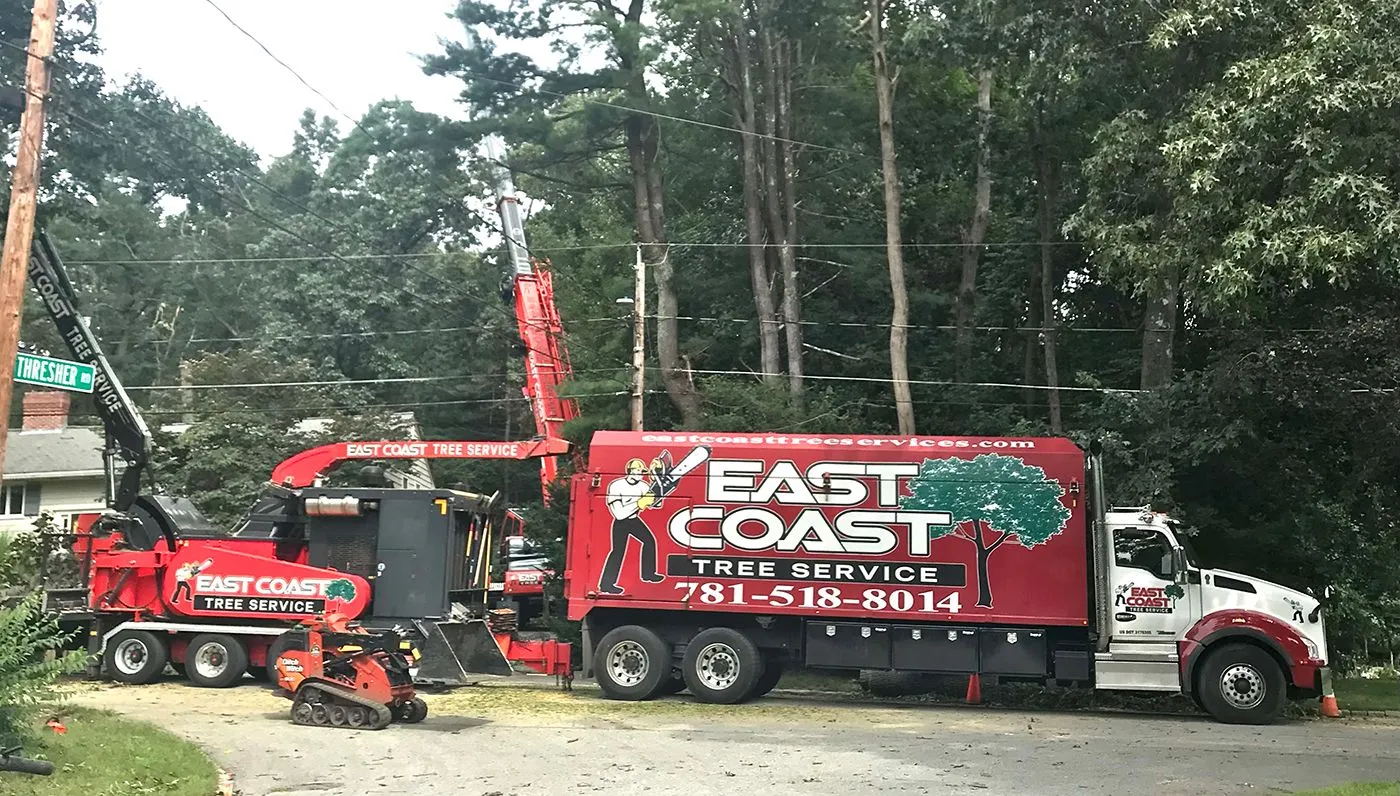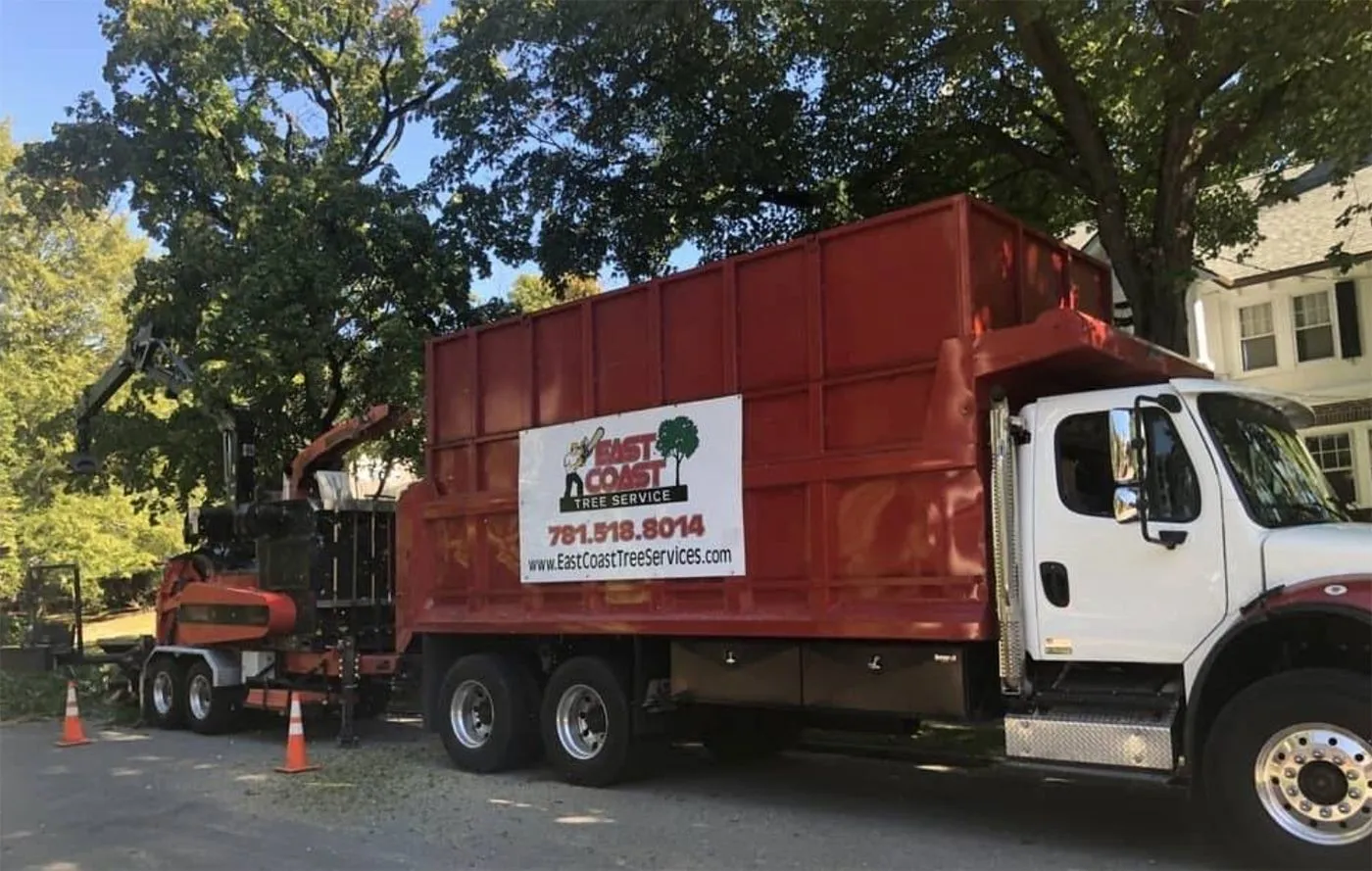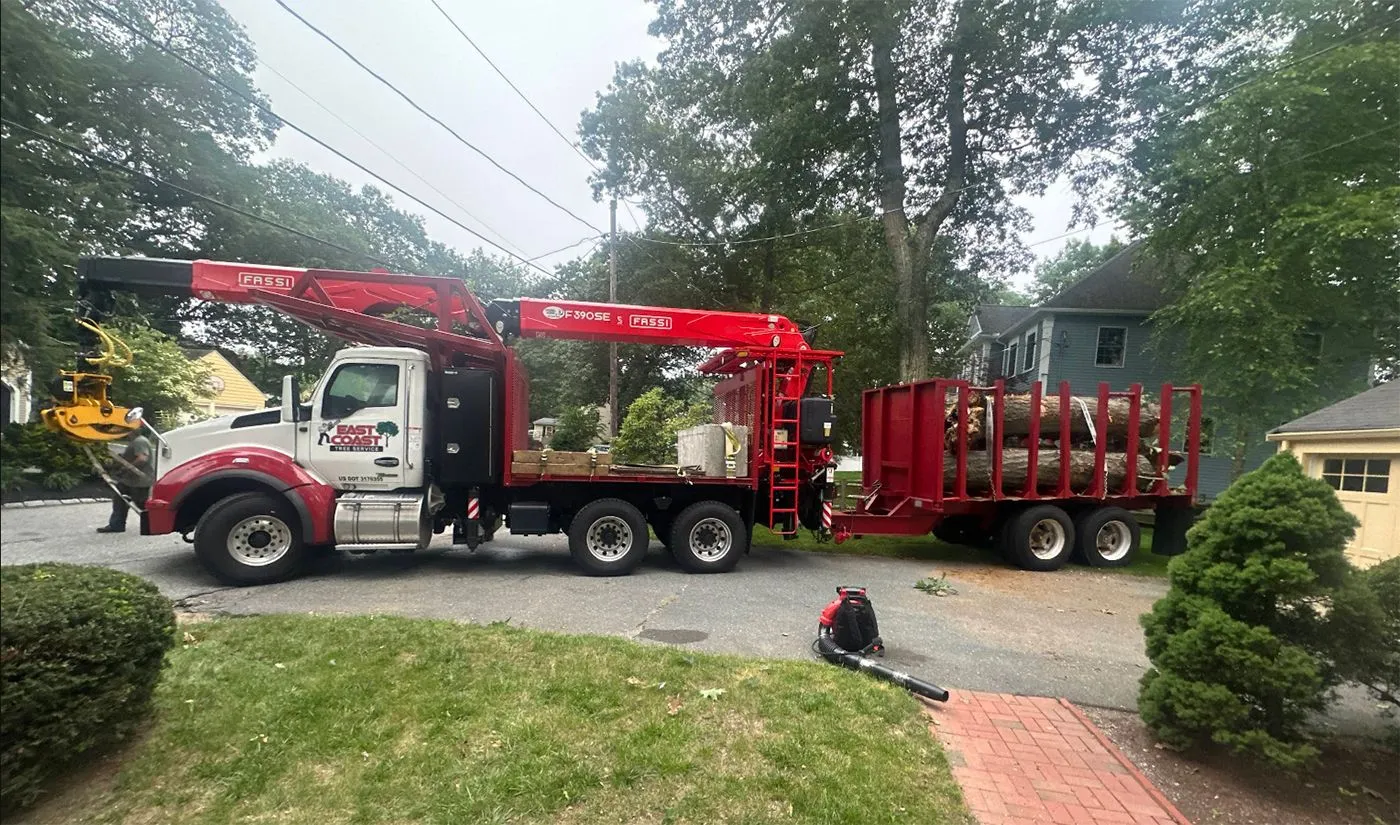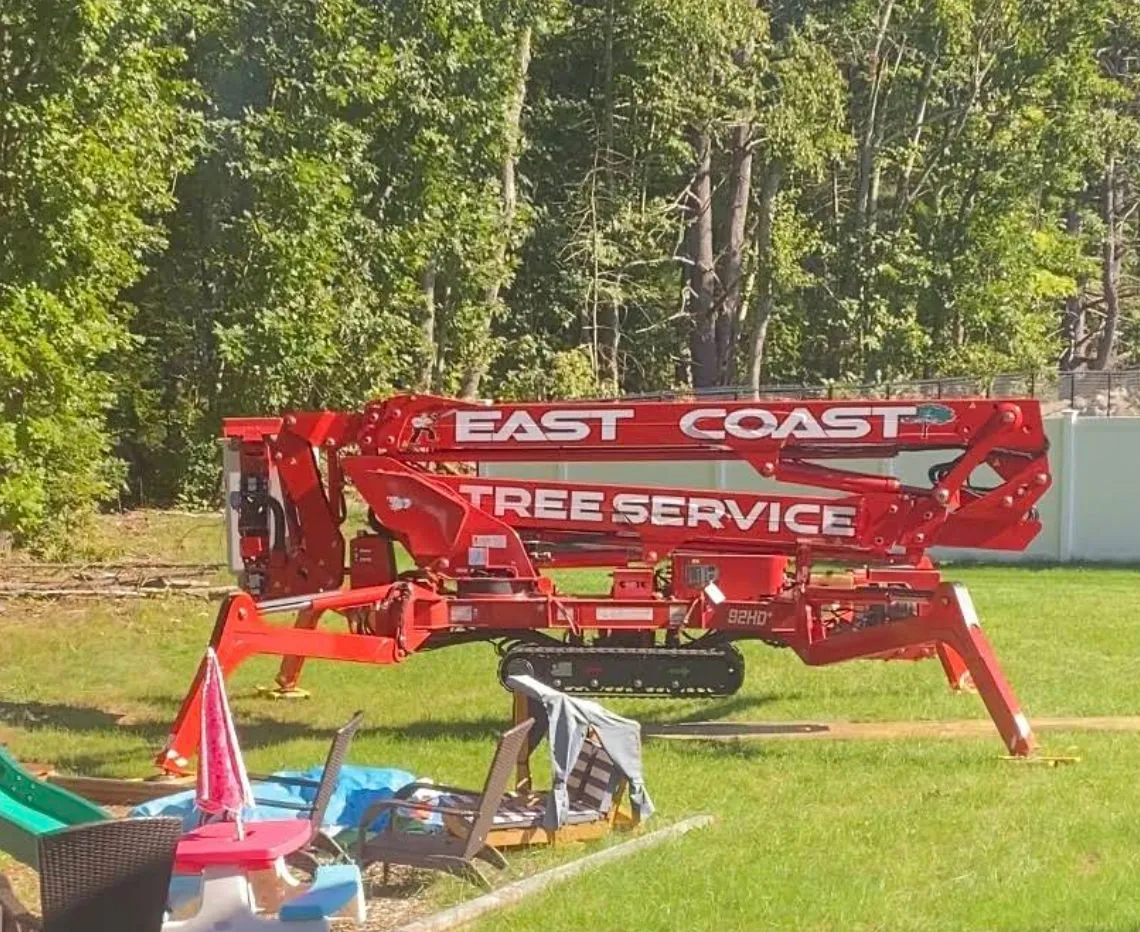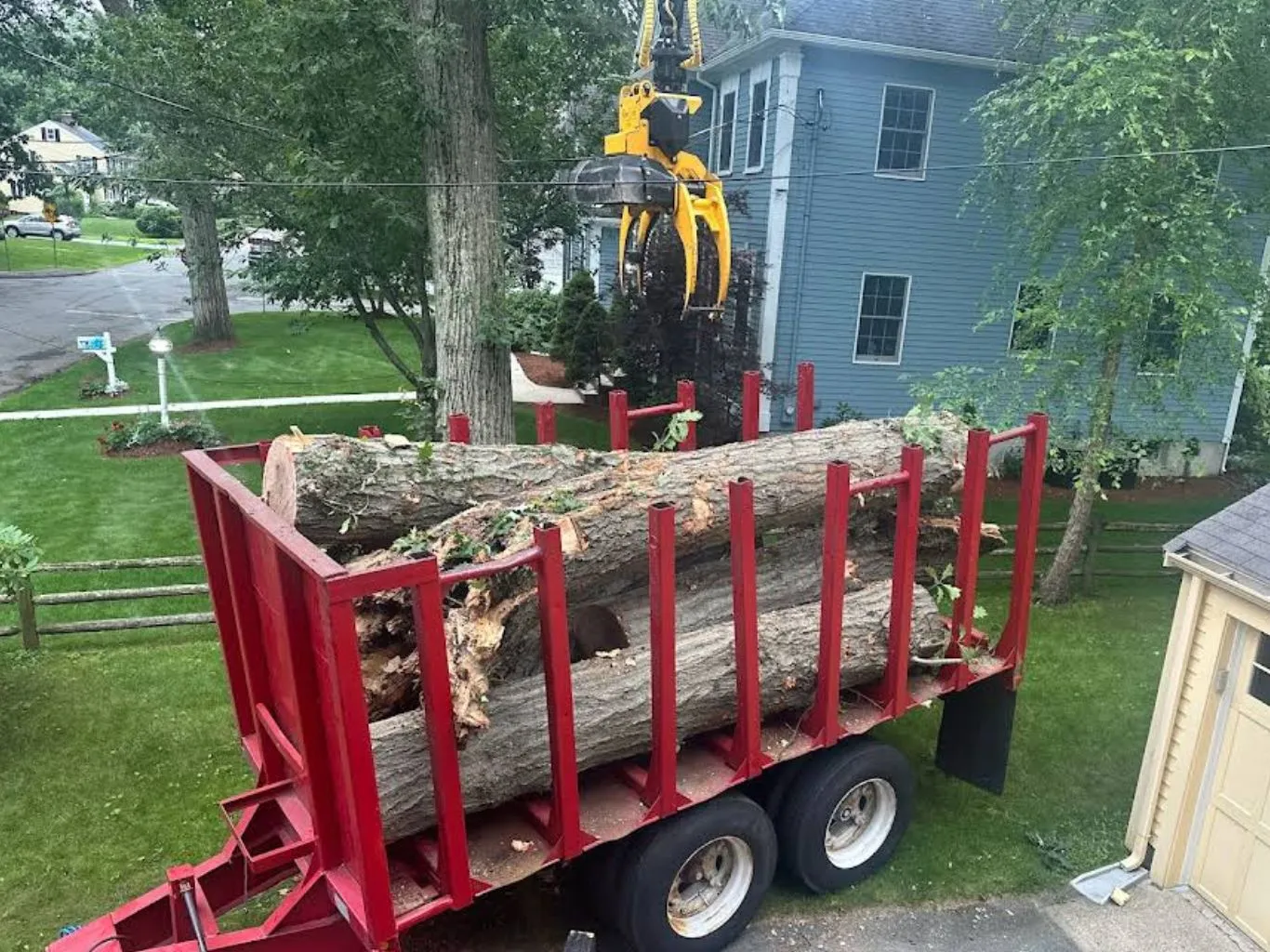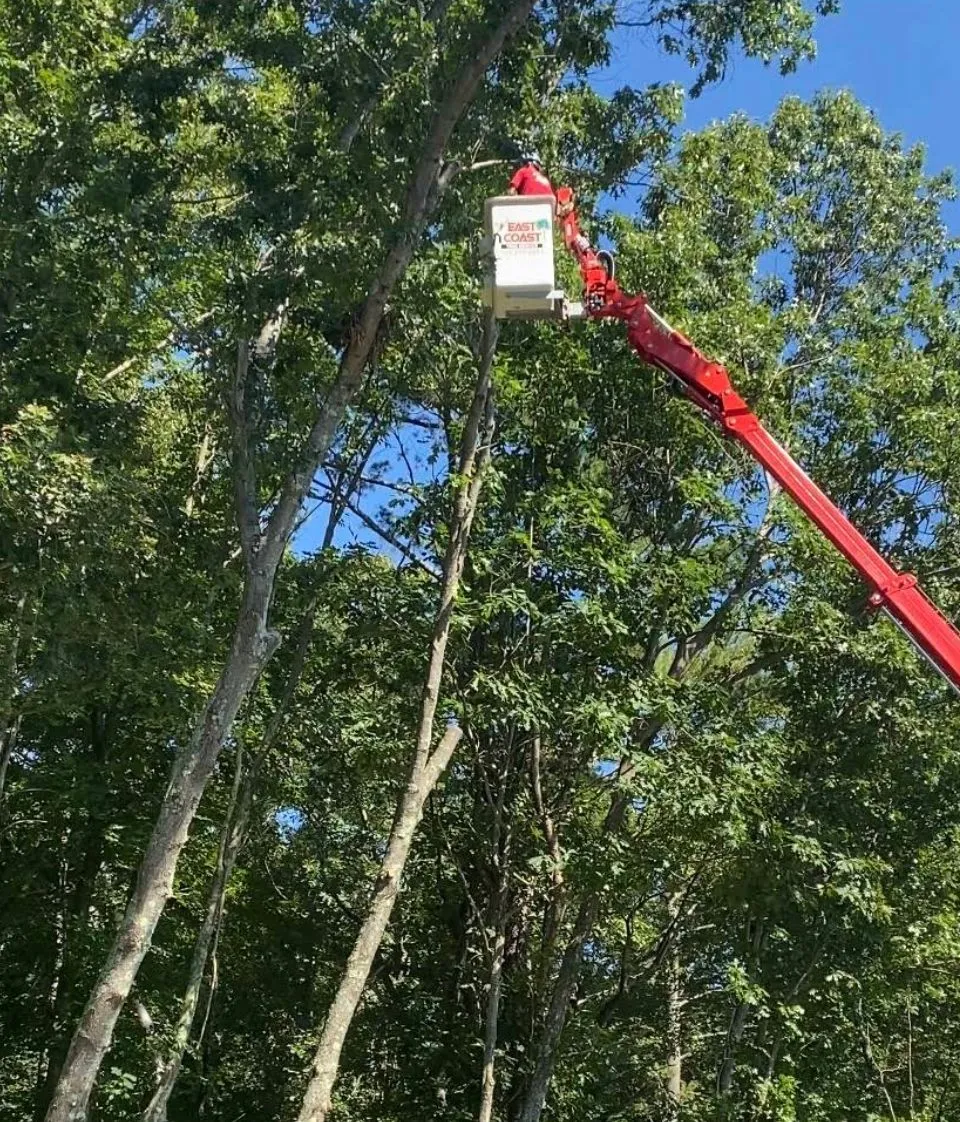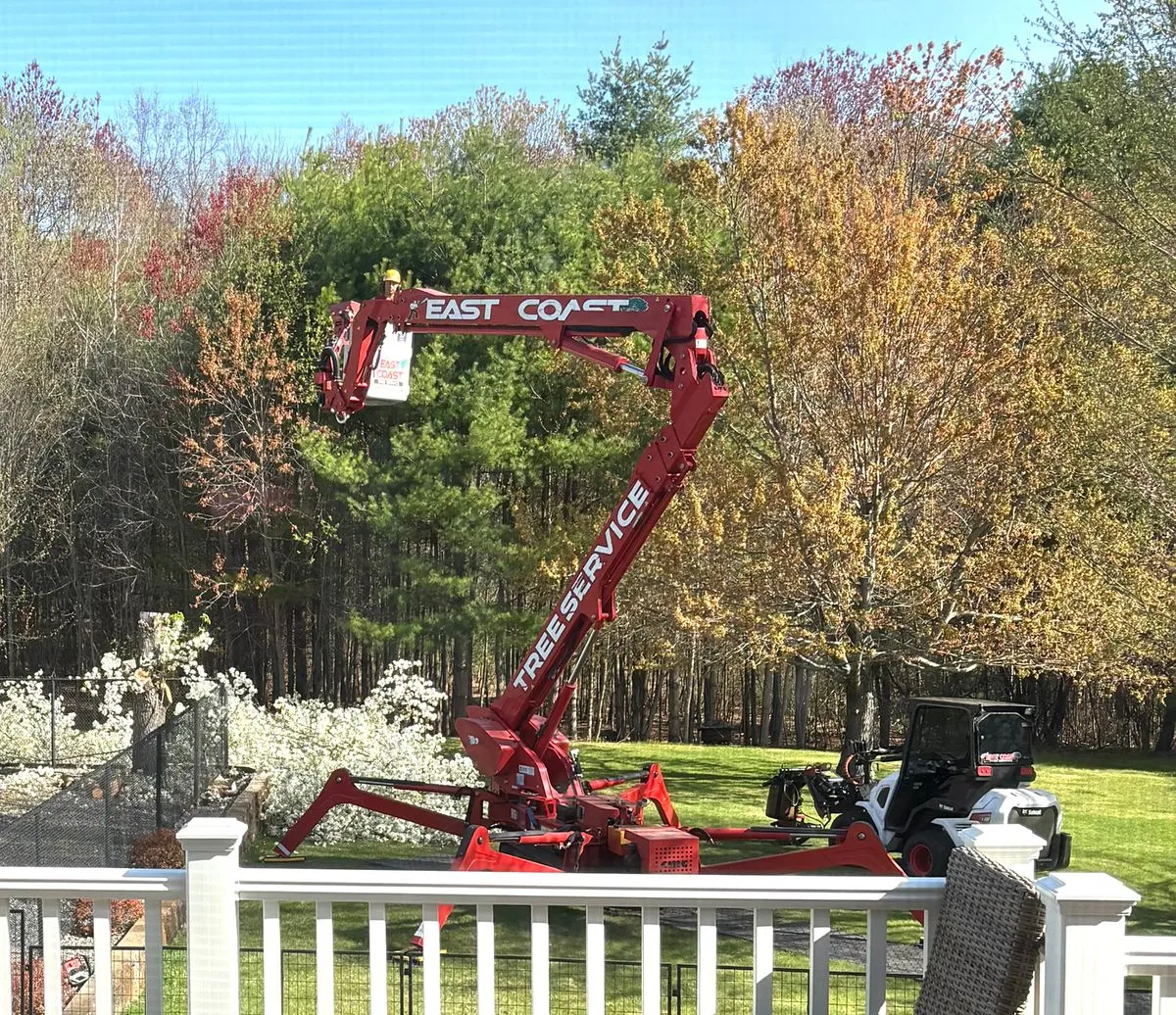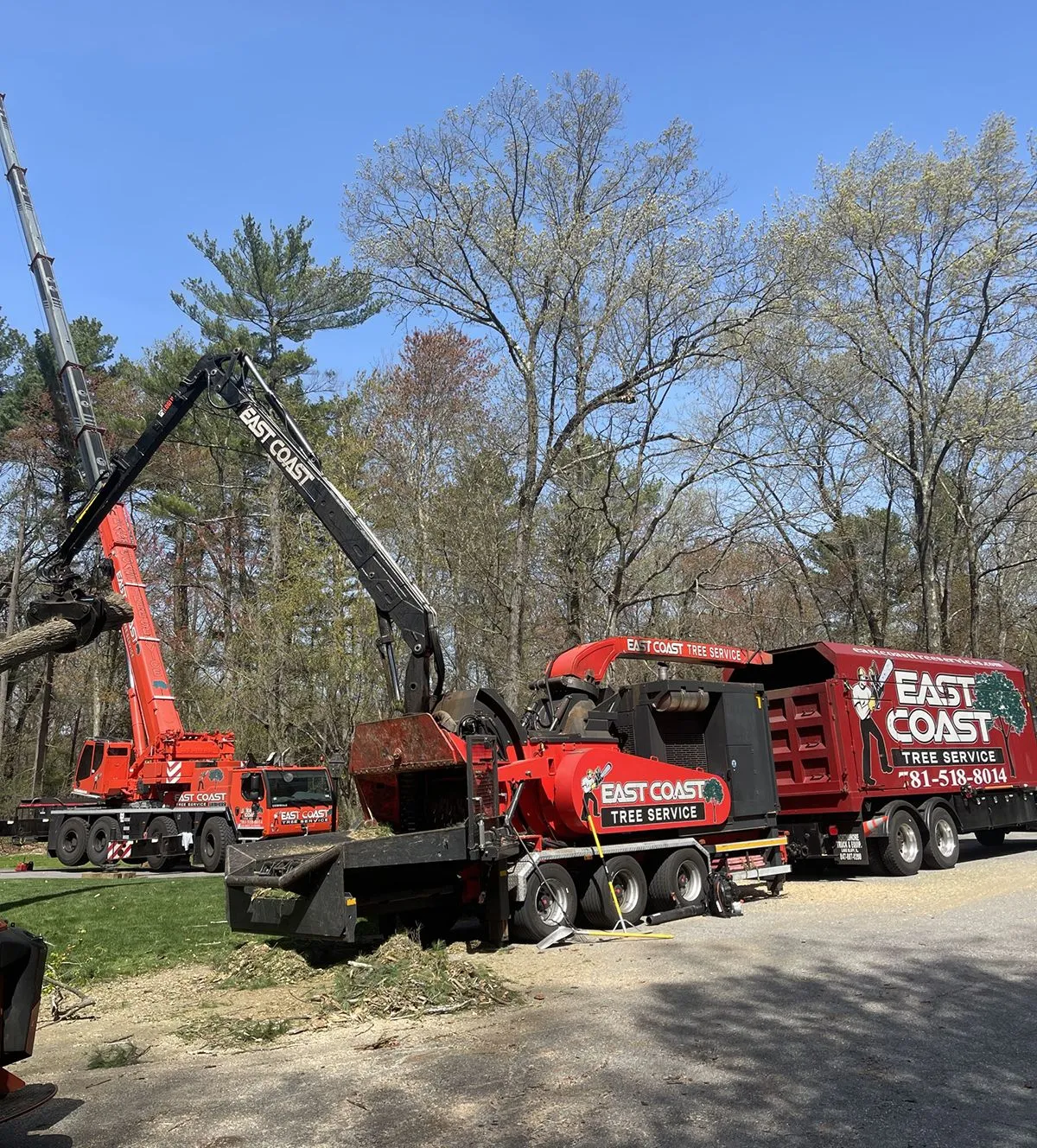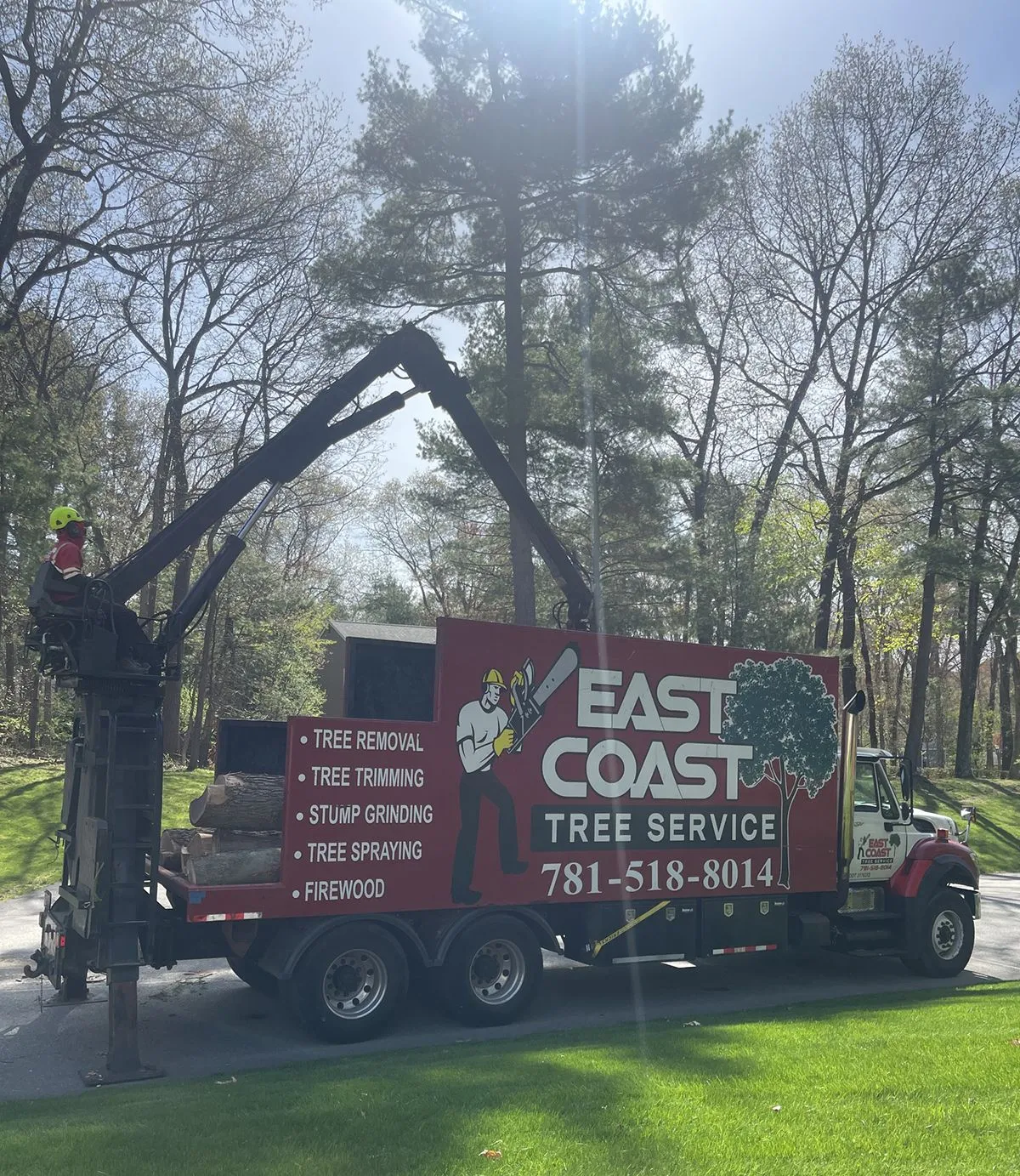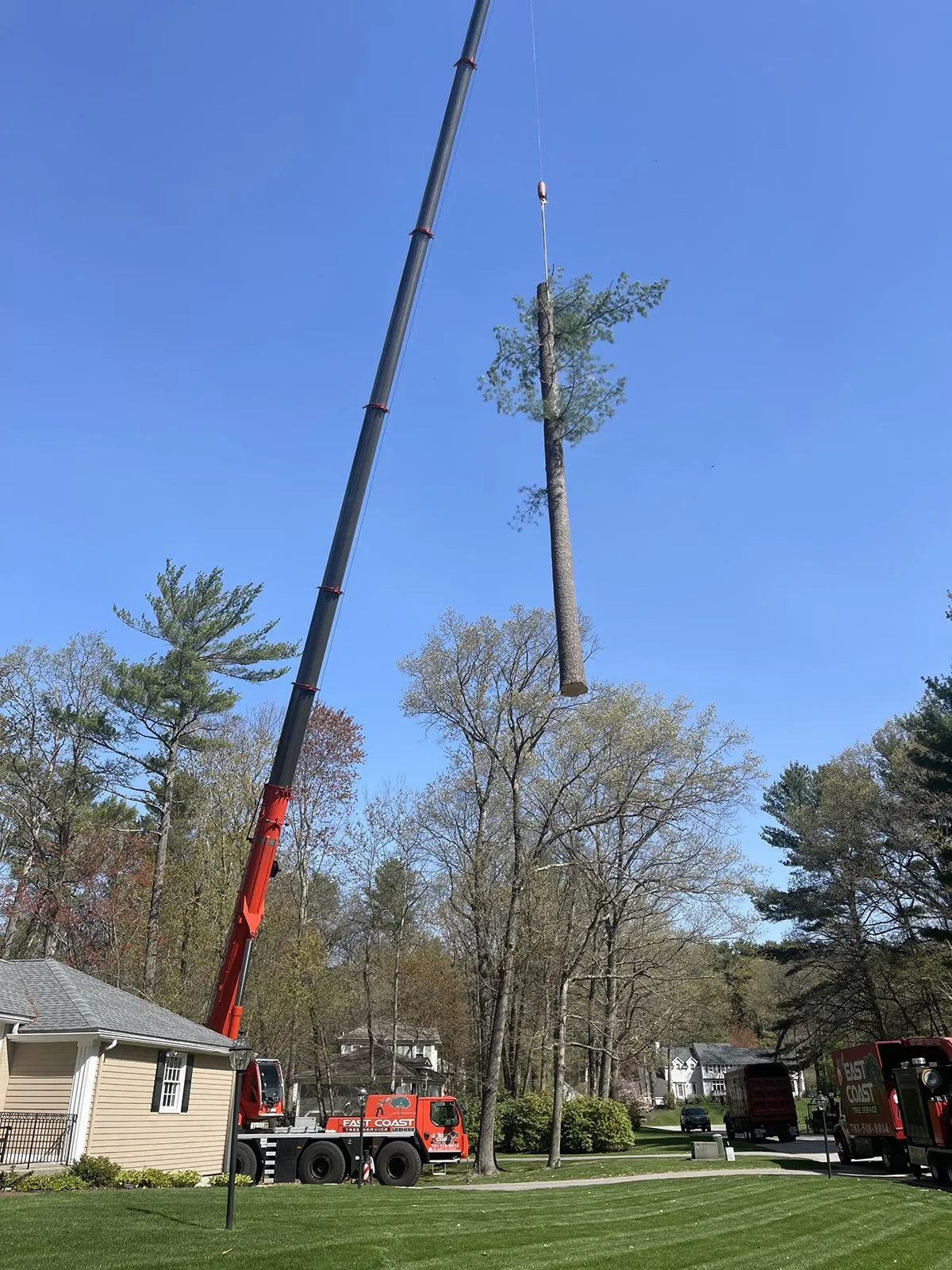
Our team includes multiple ISA Certified Arborists. East Coast Tree Service is a TCIA member and is fully licensed and insured for the work we perform, with general liability coverage and workers’ compensation insurance. Full cleanup is included, financing is available for qualifying projects, and emergency calls receive a response within up to 1 hour.
Call (781) 518-8014 for a free on-site estimate in Winchester.
Tree Removal, Trimming, Stump Grinding, and Emergency Service in Winchester
A tree does not need the same service every time something looks wrong. Dead or storm-broken wood may call for pruning. A mature tree with workable structure may be retained. Removal becomes more likely when decay, root movement, severe storm damage, major structural failure, or location creates a risk that cannot reasonably be managed by pruning.
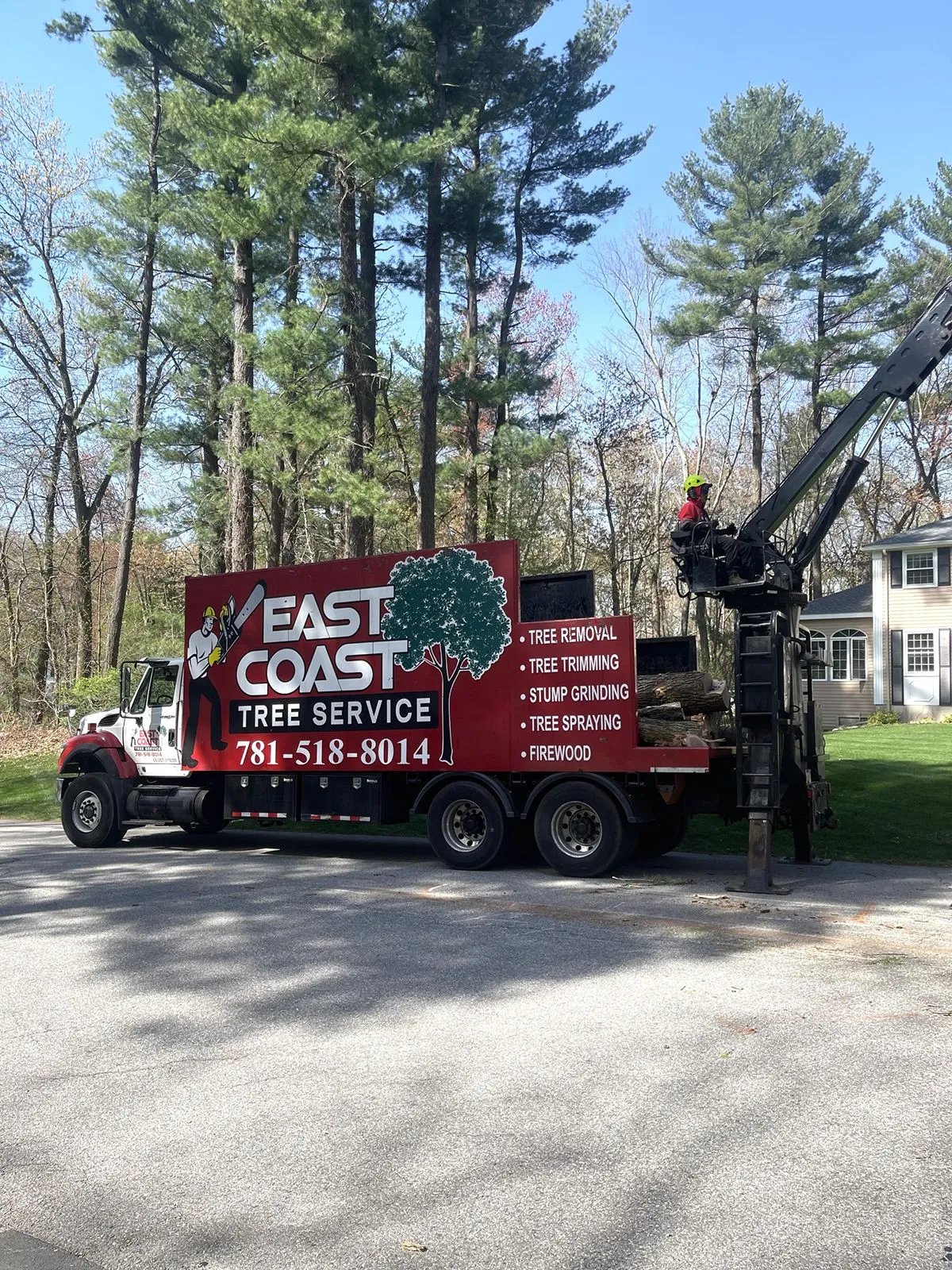
East Coast handles tree removal, tree trimming and pruning, stump grinding, storm cleanup, crane-assisted removals, and 24/7 emergency tree service.
For larger trees, the first useful question is usually not “Which machine will you use?” The estimator first needs to see tree condition, access, the house, neighboring property, utility lines, the available landing area, driveway and lawn conditions, and where wood can be handled after it is cut.
Meet Our ISA Certified Arborist Team Serving Winchester
East Coast’s team includes multiple ISA Certified Arborists. We do not claim that a Certified Arborist is physically present on every job or that every estimate is performed by one. Free on-site estimates are handled by the sales team.
ISA certification is a professional arboriculture credential covering areas such as tree biology, diagnosis, pruning, risk, soil, installation, and safe work practices. It is different from the Massachusetts Certified Arborist, or MCA, credential associated with the Massachusetts Arborists Association. East Coast is not a member of the Massachusetts Arborists Association and is not presented as holding the MCA credential.
Founder Tom FitzPatrick adds another layer of company experience. Tom founded East Coast Tree Service in 2016, has more than 25 years in the tree-care industry, and holds an Associate of Science in Arboriculture and Community Forest Management from the Stockbridge School of Agriculture at UMass Amherst. More information is available on the East Coast Tree Service About page.
Winchester’s Urban Forest: Mature Canopy, Waterways, and Local Tree Species
Winchester has more tree cover than its proximity to Boston might suggest. The Town’s tree-canopy assessment measured approximately 47% urban tree canopy in 2023. It also found a net loss of roughly 90 acres of canopy between 2012 and 2023, which helps explain why the Town maintains an active Permanent Street Tree Committee and treats public-tree protection seriously.
There is no single “Winchester tree.” Local municipal documents identify red oak, sugar maple, red maple, silver maple, pin oak, river birch, black cherry, slippery elm, yellow birch, paper birch, white pine, Canadian hemlock, and other species in town planting and conservation materials.
The Brooks-Parkhurst Town Forest adds another piece of the picture. Winchester describes the forest as a mix of evergreen and deciduous woodland and documents a stand of hemlocks estimated at roughly 300 years old. In wetter locations, the Conservation Commission’s native plant materials include red and silver maple, river birch, red oak, white pine, hemlock, Atlantic white cedar, and other trees suited to wetland or riparian settings.
Those differences affect tree work. A broad oak can put substantial weight into large lateral limbs. White pine can create height and wind-exposure problems over a house. Mature maples can develop large spreading crowns. Hemlocks can face pest pressure. Ash deserves closer attention because Emerald Ash Borer is established across Massachusetts.
Winchester Property Types We Serve: Historic Homes, Tight Lots, and Established Landscapes
Winchester’s housing pattern is old enough that tree access varies sharply from one property to another. The Historical Commission maintains an inventory of buildings constructed before 1917, and the Town notes that many individual houses and neighborhoods are listed on the National Register of Historic Places.
Historic properties around Winchester Center, Church Street, Main Street, Cambridge Street, Washington Street, Grove Street, and older residential areas can have mature trees growing surprisingly close to houses, porches, stonework, narrow drives, neighboring yards, and overhead utilities.
Sanborn House and Wright-Locke Farm are two of Winchester’s better-known historic properties. The Griffin Museum and Town Common help define the central cultural area. These references matter to tree work because Winchester contains a mix of historic architecture, established landscaping, mature shade canopy, and streets that were laid out long before modern tree equipment existed.
Properties farther from the center can present a different problem: larger trees, wooded edges, slopes, conservation land, wet areas, or longer equipment routes through the property. The plan has to fit the site rather than the ZIP code.
Getting Around Winchester: Main Street, Cambridge Street, the Aberjona River, and the Mystic Lakes
Main Street is Route 38 and runs north-south through Winchester. Cambridge Street is Massachusetts Route 3, connecting the Arlington side of town with Woburn. Washington Street is another long local corridor, while Mystic Valley Parkway follows the lower part of town near the Mystic Lakes and the river system.
The Aberjona River runs through Winchester and historically shaped the town’s industrial development. Horn Pond Brook feeds into the Aberjona from the Woburn side. Wedge Pond, the Mystic Lakes, Sawmill Brook, and other waterways create more wetland and floodplain conditions than a visitor might expect from a built-out suburb.
The 6.63-mile Tri-Community Greenway is another useful way to understand Winchester. It starts at Wedgemere Station, runs roughly parallel to the Aberjona through downtown, passes Winchester High School and Davidson Park, follows Washington Street north toward Woburn, and continues through Stoneham. That route connects residential neighborhoods, parks, water, and the town center in a way that also explains why tree work here often happens close to roads, paths, streams, and neighboring property.
Crane-Assisted Tree Removal Over Winchester Homes
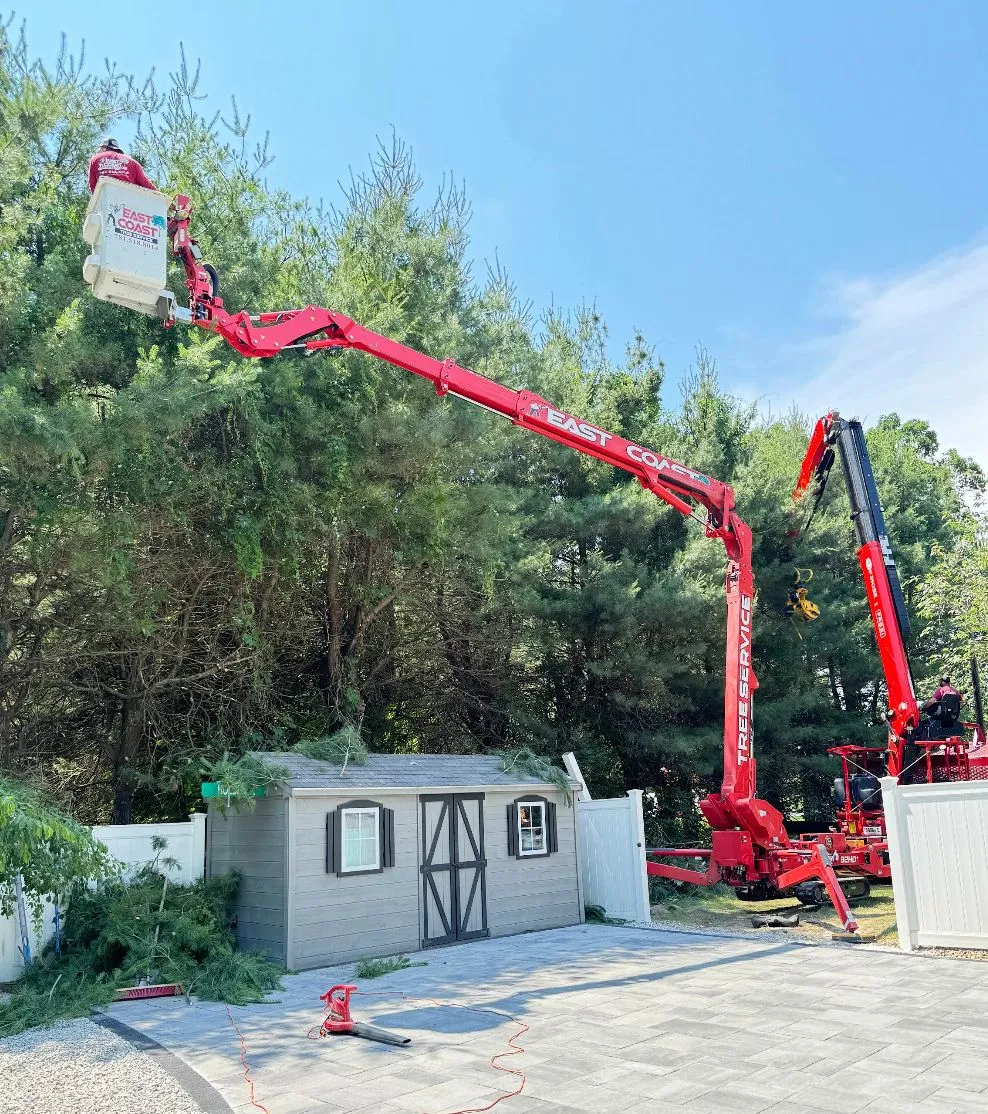
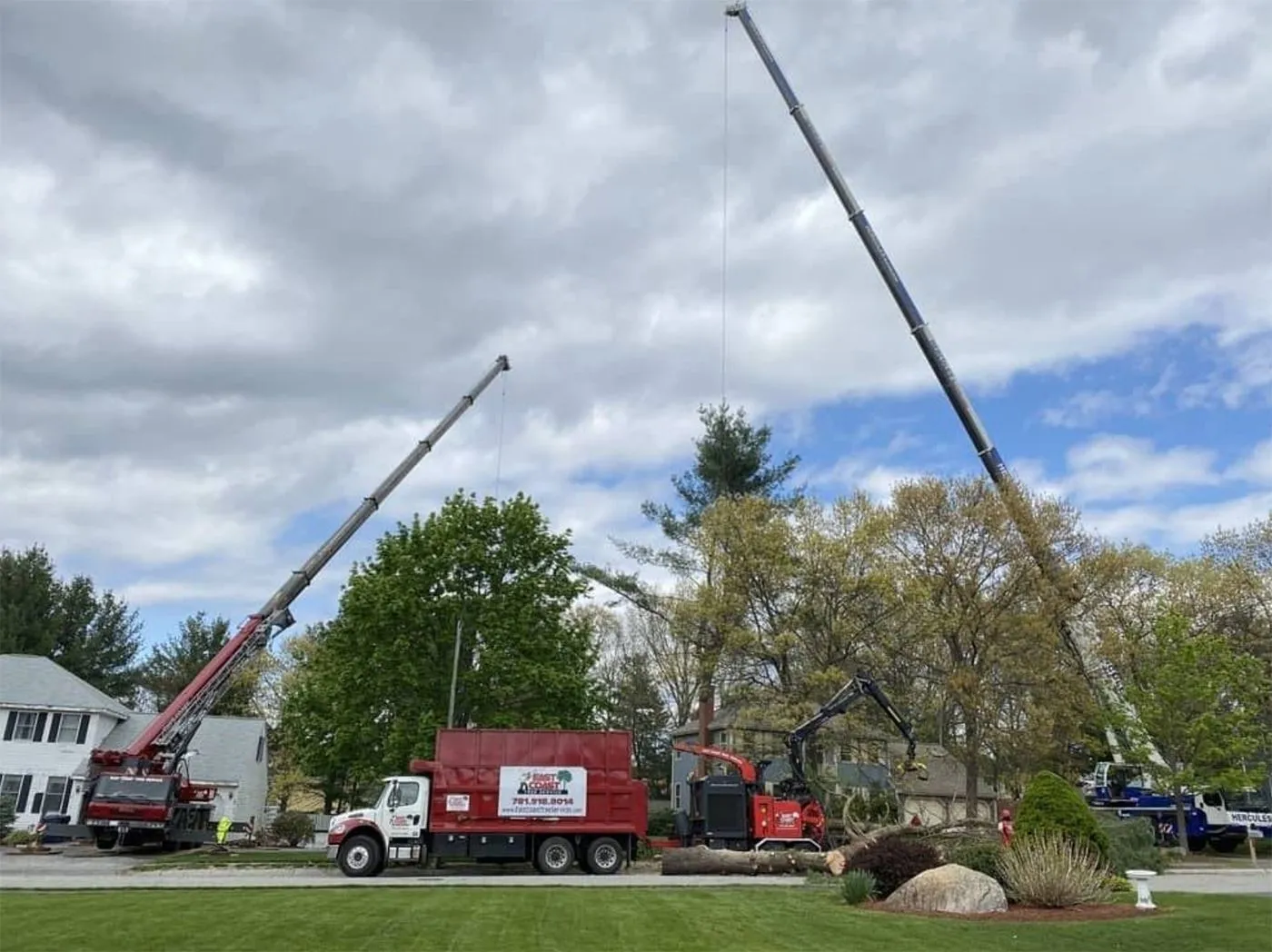
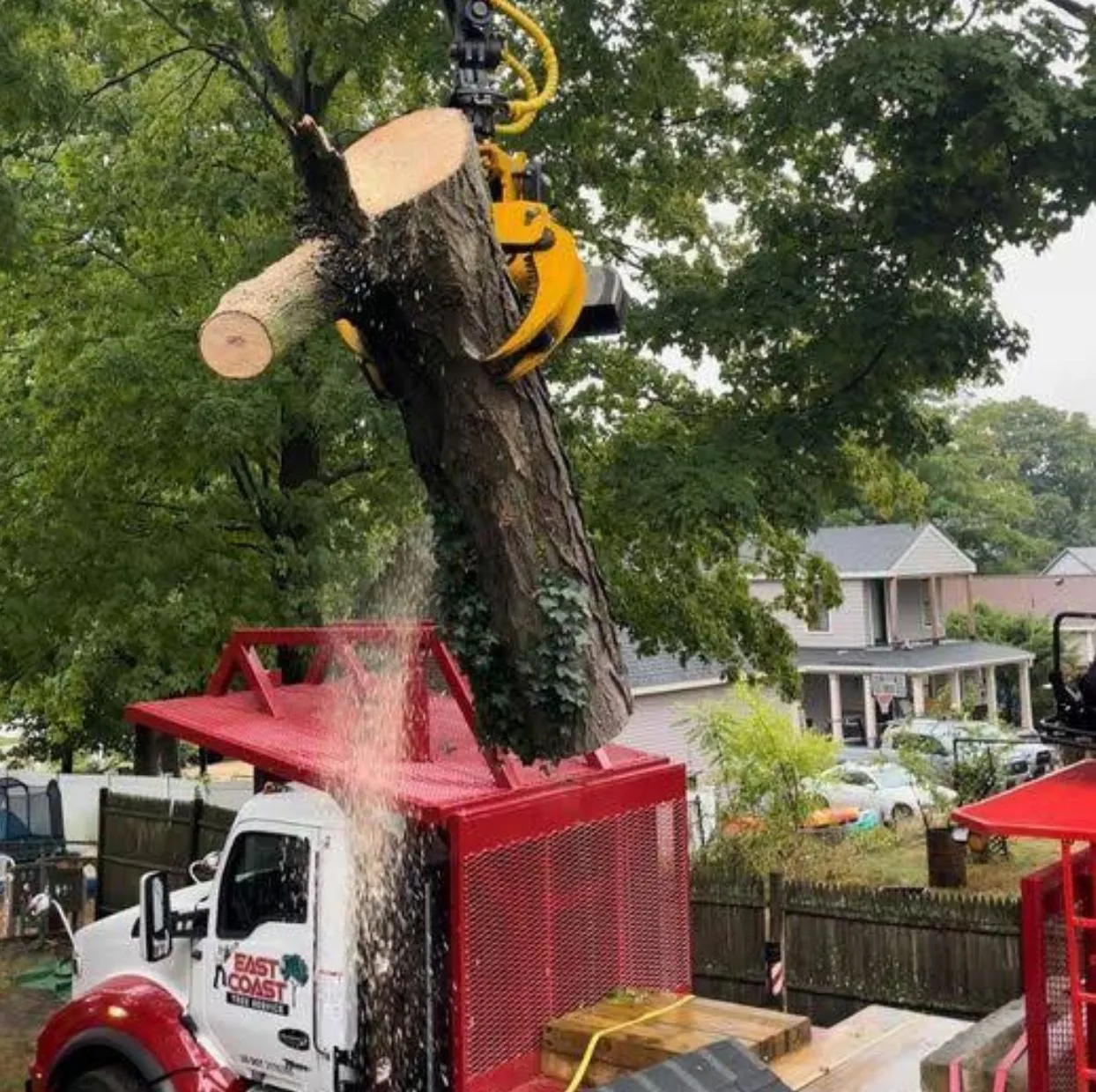
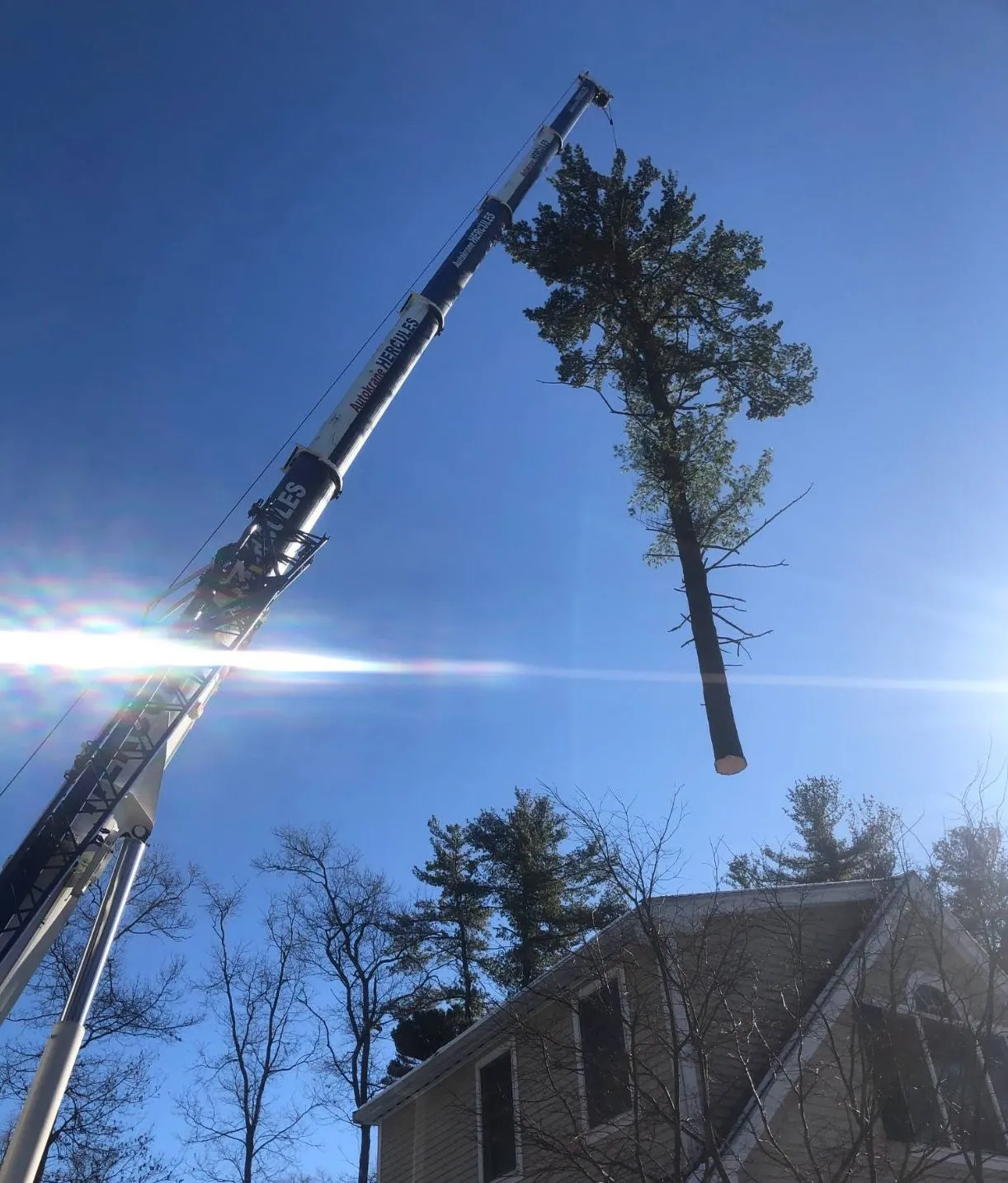
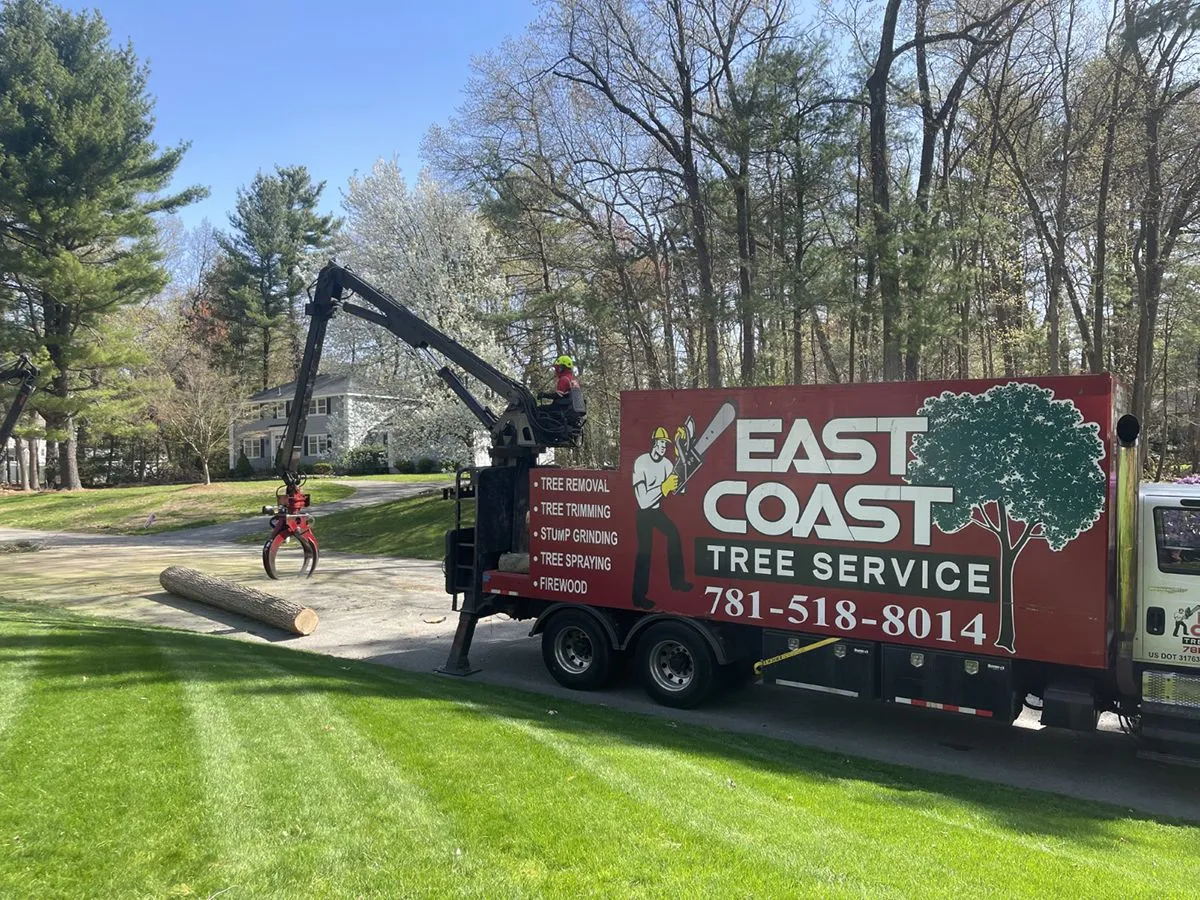
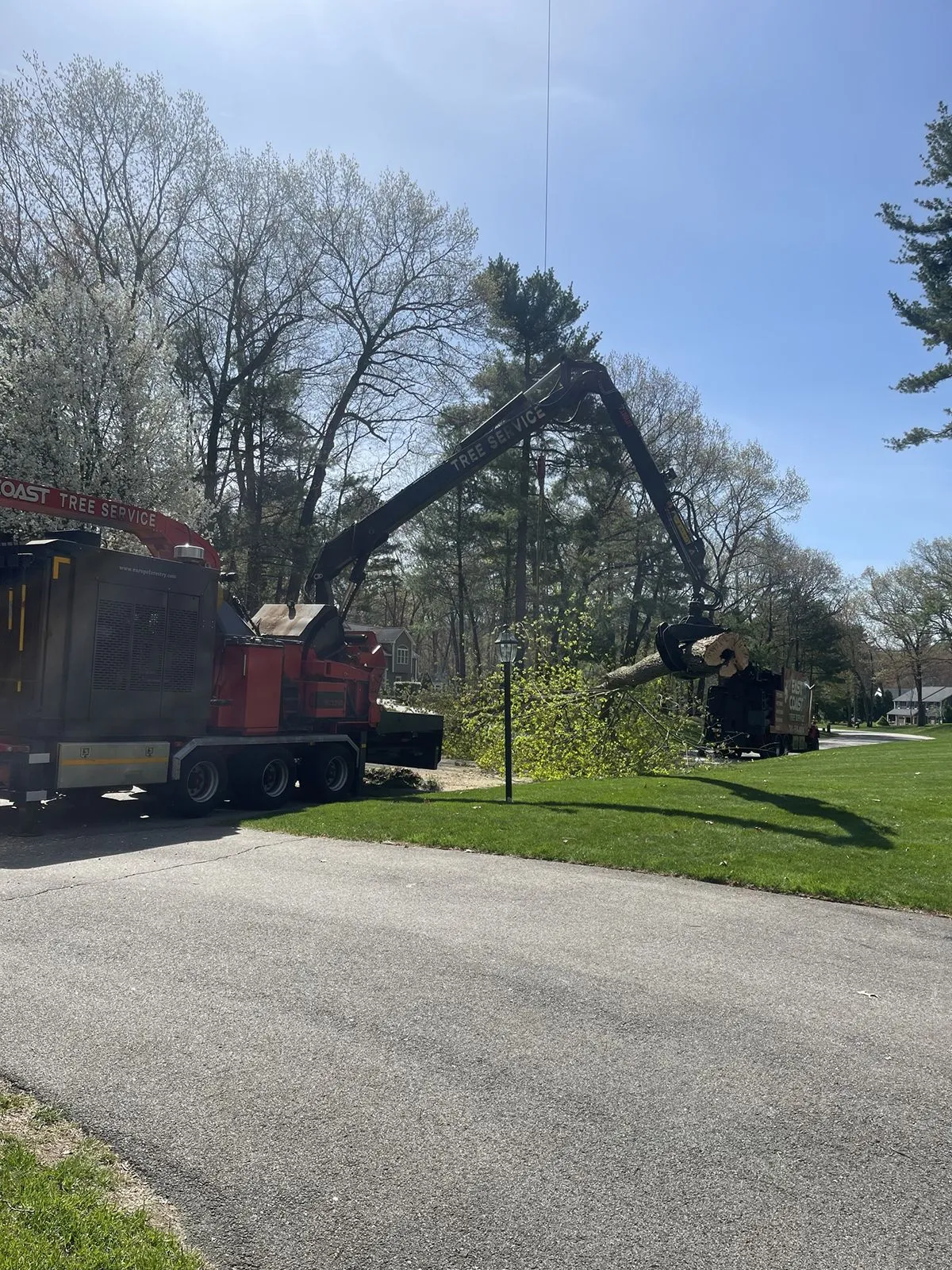
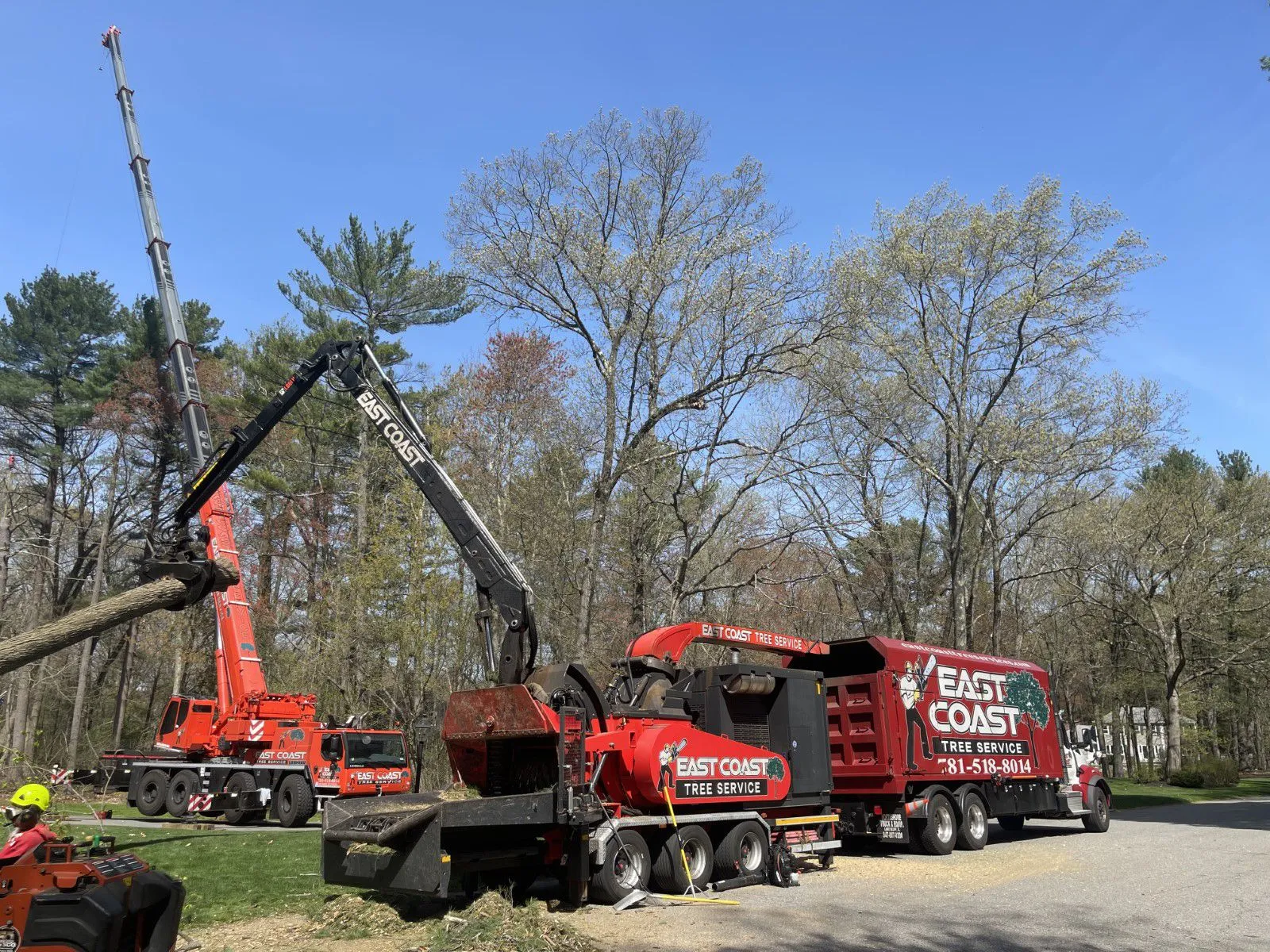
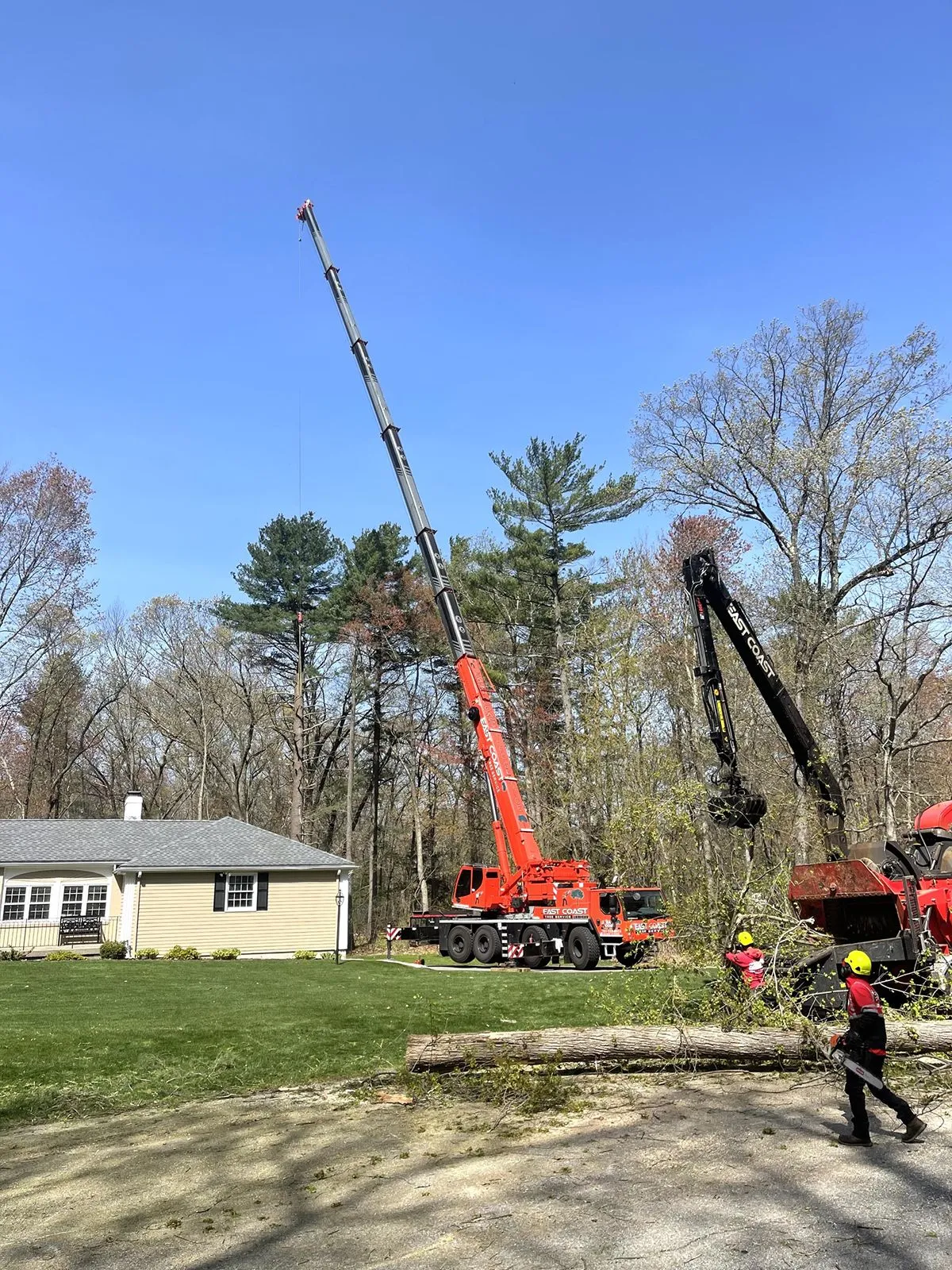
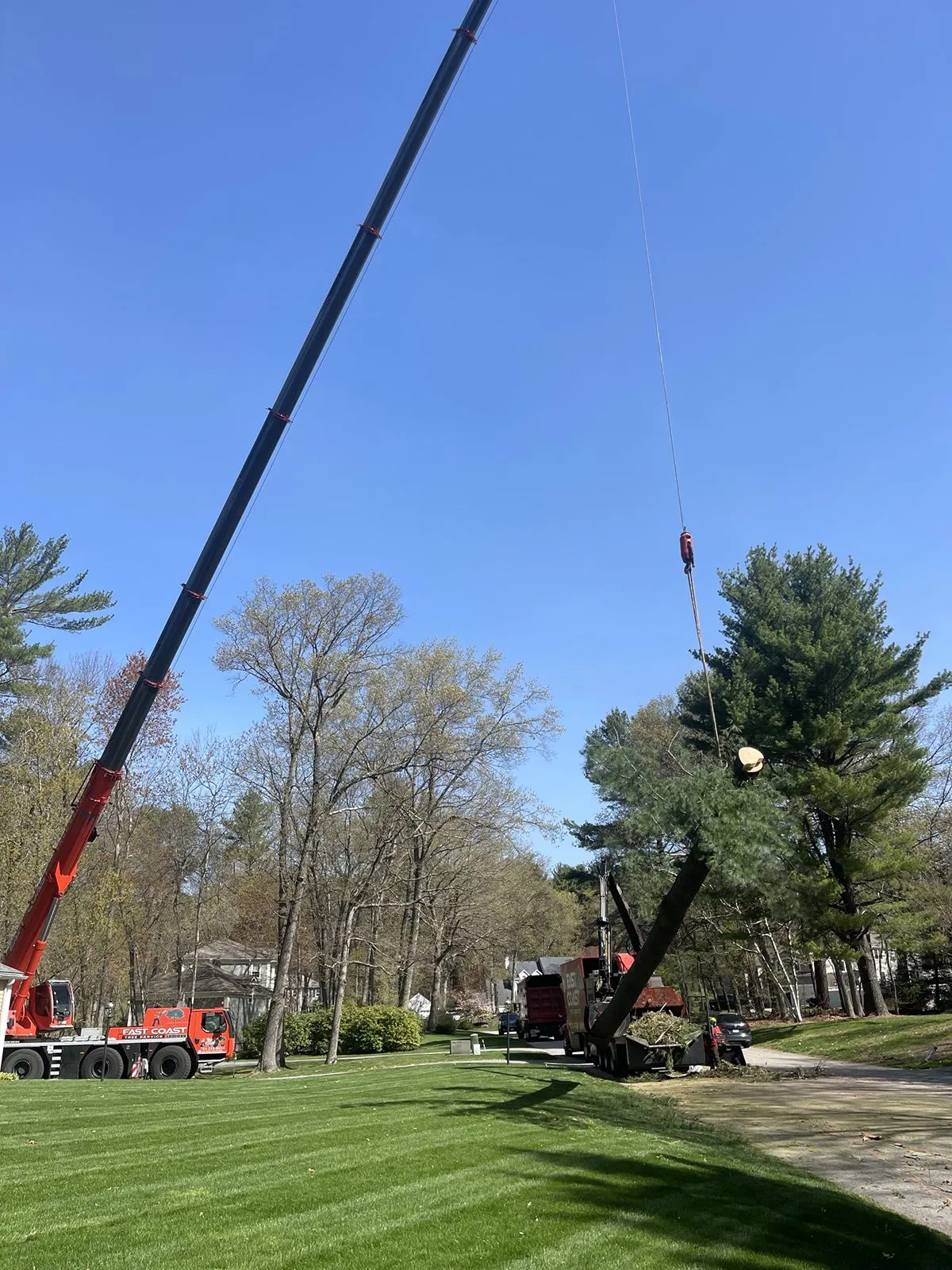
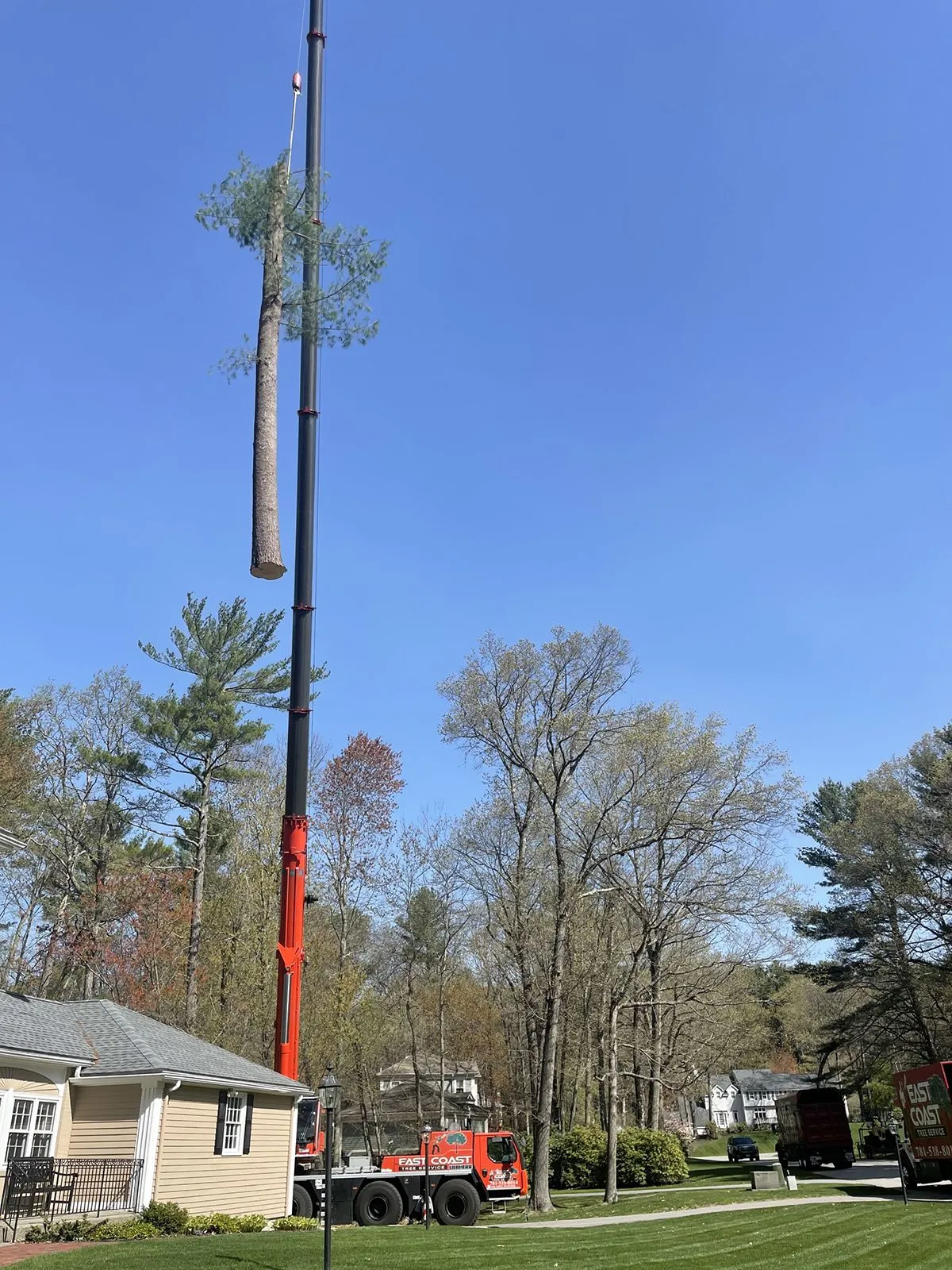
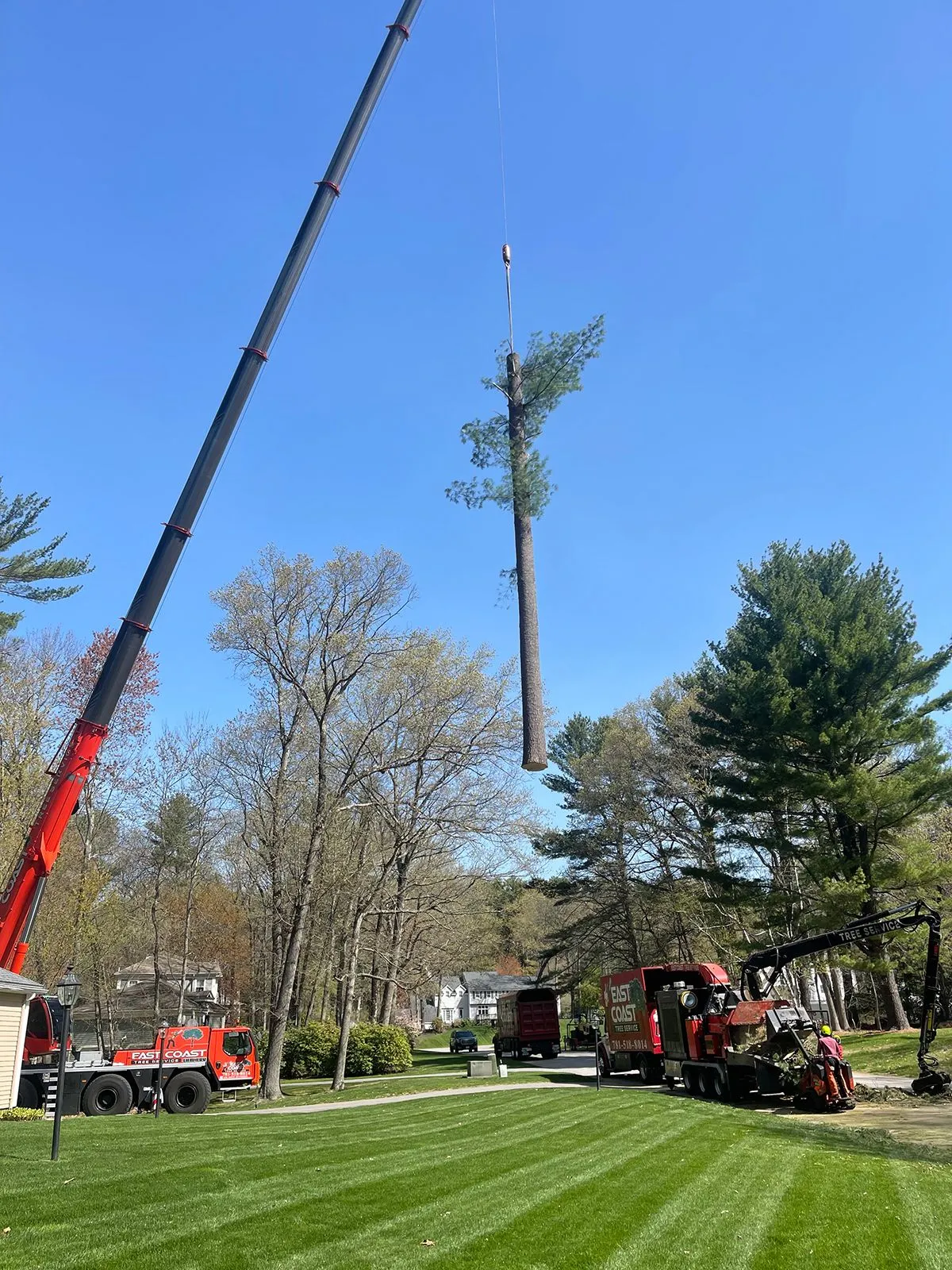
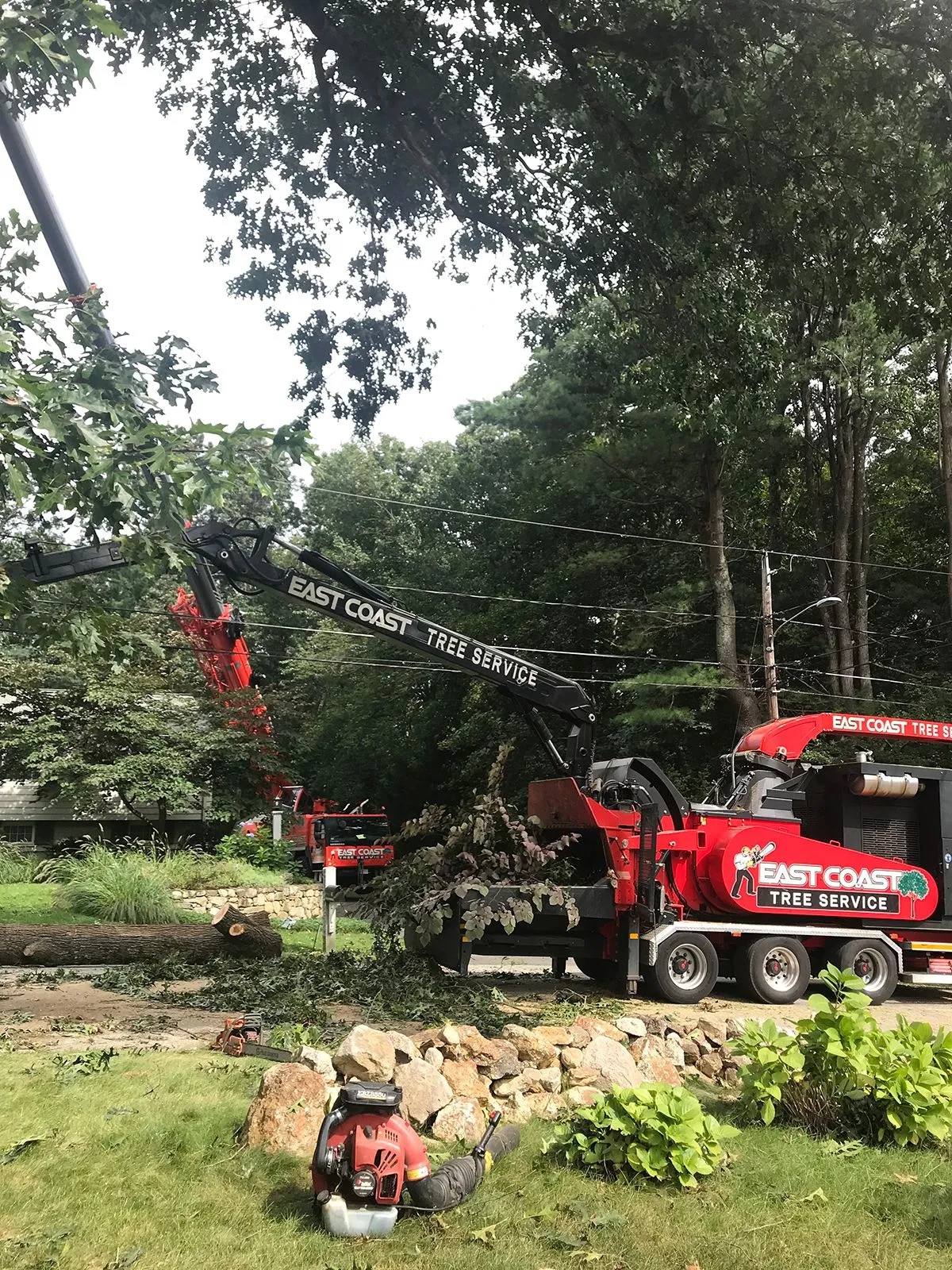
A large tree over a Winchester house, garage, pool, driveway, or neighboring yard may offer very little safe drop space. In those situations, crane-assisted tree removal can allow sections to be secured, cut, lifted, and transferred away from the structure.
A crane is not automatically required because a tree is large. Setup room, reach, tree weight, ground conditions, electrical conductors, driveway access, neighboring structures, and the location of the crane relative to the tree all affect the decision.
On a tight property, crane assistance can reduce the amount of wood that has to be lowered through a narrow backyard. On another property, conventional rigging or climbing may be the better choice. The method is determined after seeing the site.
How We Protect Your Winchester Lawn and Property During Tree Work
Property protection starts before cutting. The free on-site estimate looks at the route equipment and crew members would use, driveway conditions, lawn and soil conditions, landscaping, retaining walls, patios, pools, fences, nearby roofs, and the place where limbs or logs can be processed.
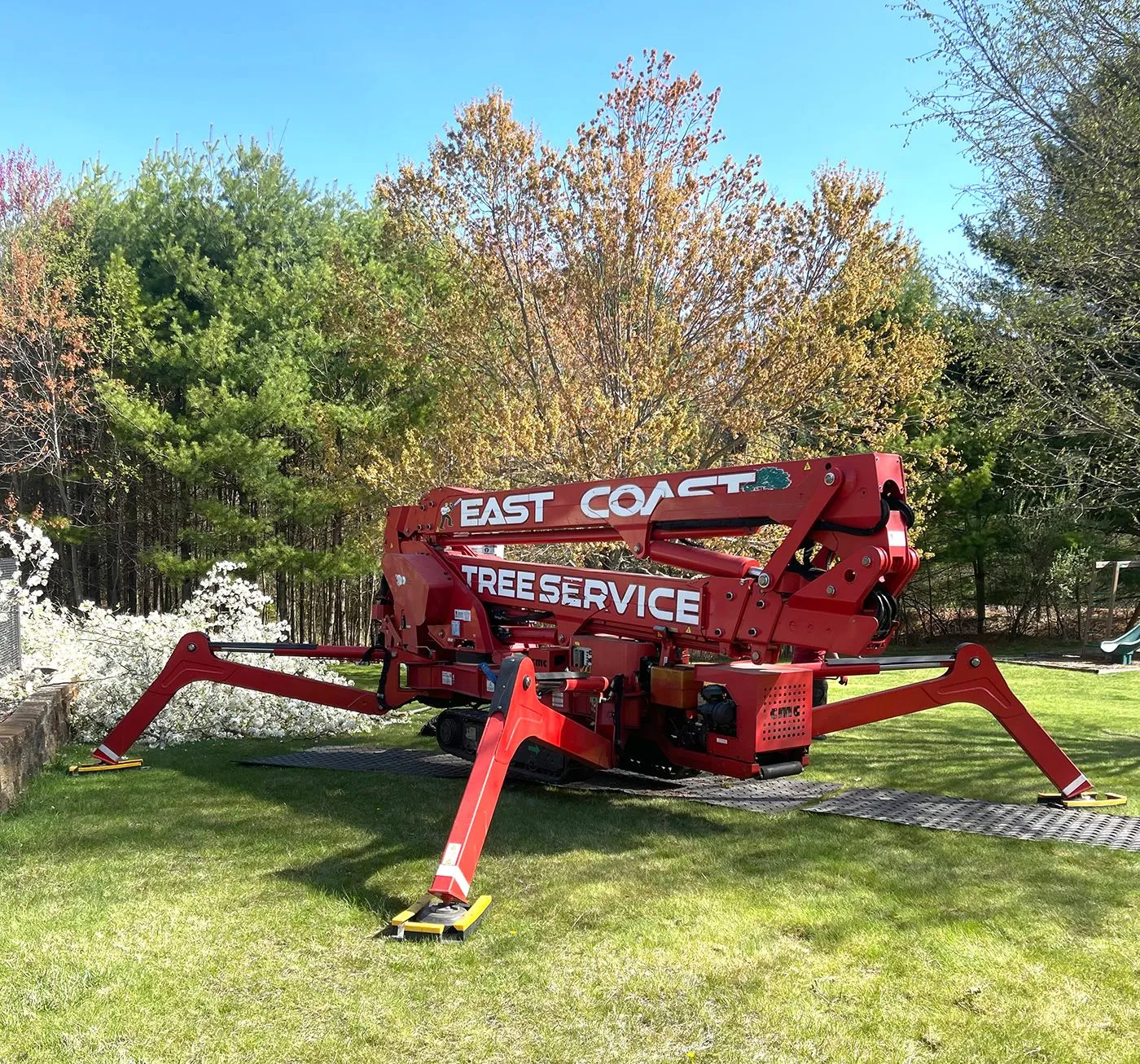
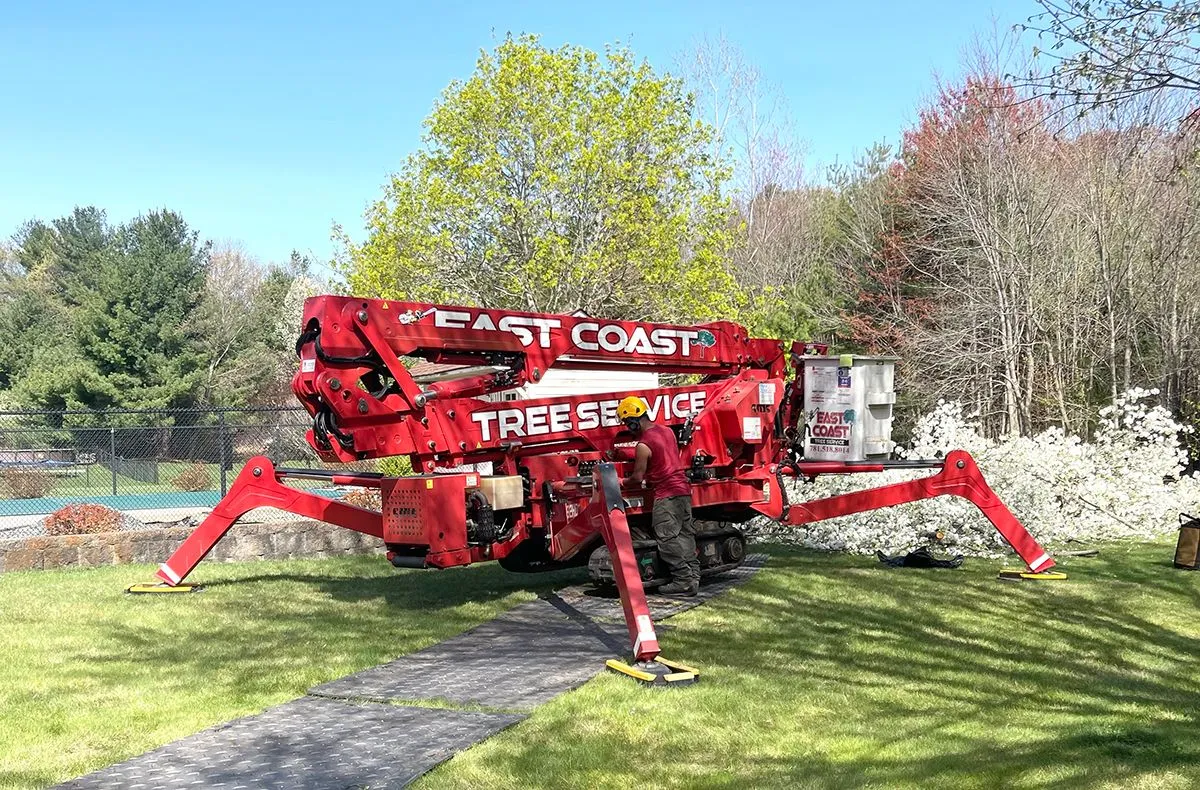
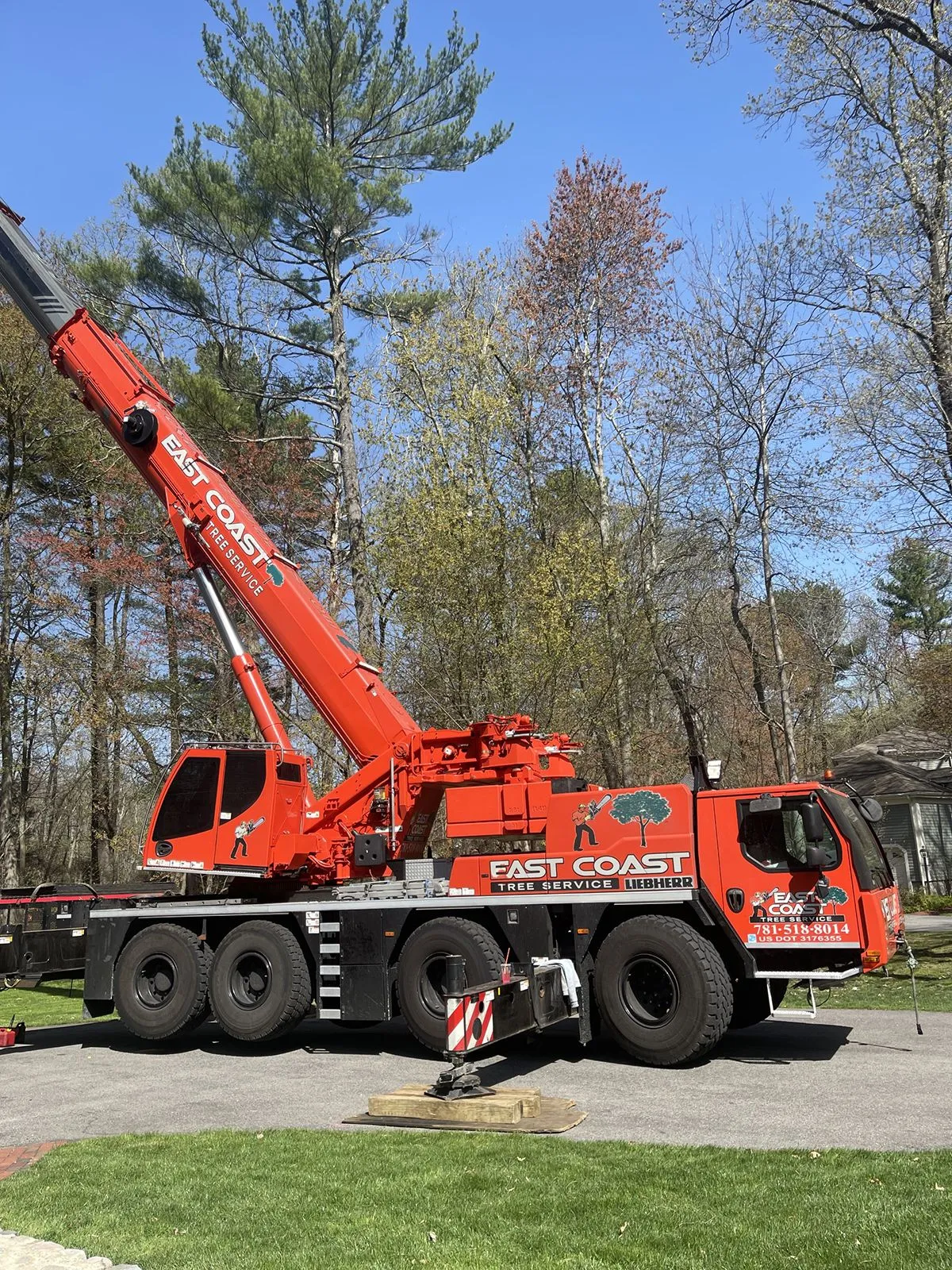
Crane outriggers need suitable support and load distribution for the equipment and surface involved. The exact setup changes by job, so East Coast does not claim one universal mat, pad, or cribbing configuration for every property.
If the lawn is saturated, access decisions may need to change. If a driveway has limited room, equipment position becomes part of the removal plan. Where a pool, garden, or established landscape sits beneath the crown, the size and route of individual pieces may need to be reduced.
Full cleanup is included when East Coast finishes its work. That includes removing the job debris associated with the agreed scope rather than leaving a homeowner with a second cleanup project.
Winchester Tree Permits and Regulations
For an ordinary tree located entirely on private property, Winchester’s Public Shade Tree Bylaw does not create a blanket permit for every private-tree removal. The situation changes when a tree is within the public way, on Town property, near protected wetlands or waterways, or otherwise subject to municipal jurisdiction.
Winchester’s current Public Shade Tree Bylaw is Chapter 18. It works alongside Massachusetts General Laws Chapter 87. A public shade tree or Town tree cannot simply be cut, pruned, removed, or damaged by a private party without the required written Tree Warden permit.
The Winchester bylaw defines the DPW Director as Tree Warden unless the Select Board appoints another designee. The Town’s current Permanent Street Tree Committee materials identify DPW personnel serving in the Tree Warden role.
For a proposed nonhazardous public shade tree removal, the Town’s process can include an application, legal notice, tree posting, public hearing, notice to nearby interested parties, replacement requirements, and other conditions. Massachusetts Chapter 87 also restricts private cutting or removal of public shade trees without written permission.
If a tree sits near the street and you are unsure whether the trunk is inside the public way, checking with Winchester DPW before authorizing work is much safer than guessing from the edge of pavement or lawn.
Winchester Conservation Commission Rules Near Wetlands, Ponds, and Streams
Winchester’s Conservation Commission administers both the Massachusetts Wetlands Protection Act and the local Winchester Wetlands Bylaw, Chapter 13. Tree cutting is specifically included in the Town’s definition of activities that can alter a regulated resource area.
Current Winchester regulations restrict alteration within the first 25 feet of freshwater wetlands, lakes, ponds, rivers, and streams, with limited exceptions. Removal of a tree that presents a health or safety threat can qualify for an exception, but the Commission decides individual cases and states that a permit will be required in most situations.
Winchester also regulates tree removal within wetlands and the 100-foot buffer zone. Under the Town’s 2025 tree-replacement regulation, trees six inches DBH or greater that are approved for removal may require replacement or other mitigation, depending on the circumstances. Unsafe trees and certain pest- or disease-related removals can be treated differently.
This becomes especially relevant around the Aberjona River, Wedge Pond, Mystic Lakes, Horn Pond Brook, Sawmill Brook, and wet areas near conservation land. East Coast does not claim that it automatically obtains Conservation Commission permits for customers. Potential jurisdiction should be verified before regulated work starts.
Common Tree Diseases in Winchester
The three names in the comparison brief do not carry the same local status, so they should not be treated as if Winchester has confirmed outbreaks of all three.
Emerald Ash Borer: Massachusetts DCR reports EAB as well established across the Commonwealth. Ash trees with thinning crowns, extensive dieback, bark damage, or other decline deserve closer evaluation because heavily affected ash can become brittle.
Dutch Elm Disease: DED is a fungal disease spread by bark beetles that attacks the water-conducting tissue of elm trees. Symptoms can include wilting, defoliation, and progressive crown decline. Winchester has elm in municipal planting records, and Massachusetts continues to recommend disease-resistant American elm selections for planting.
Asian Longhorned Beetle: ALB is a serious Massachusetts forest pest with a strong preference for maples and other hardwoods, but the state’s active regulated area remains in Worcester County. It should not be described as a known Winchester infestation. Suspicious large round exit holes, egg sites, or beetles should be reported to the state rather than assumed to be routine tree decline.
Other Massachusetts tree-health issues can occur as well, including hemlock woolly adelgid and beech leaf disease. Diagnosis matters because a tree-health problem and a structural failure are not the same thing.
Plant Health Care and Tree Preservation Options
Plant Health Care, or PHC, is an arboricultural approach that can include monitoring, diagnosis, pest management, soil work, and other treatments intended to retain trees when retention is practical. Cabling and bracing systems are another preservation option used by qualified providers for selected structural defects.
East Coast does not currently advertise Plant Health Care, tree cabling, or bracing as company services. They are included here because the competitor landscape and homeowner decision both involve the question of whether a mature tree can be retained instead of removed.
A leaning oak or maple may be retainable if the lean is long-standing and the root system remains stable. A tree that recently shifted after saturated soil and high wind deserves a different response. Pruning may reduce certain branch-related concerns. Some trees may warrant evaluation for structural support or PHC by a provider offering those services.
East Coast can handle the services it does provide, including trimming, removal, stump grinding, crane-assisted work, storm cleanup, and emergency tree service.
Can a Mature Oak or Maple Be Saved Instead of Removed?
Sometimes. Size and age alone are poor reasons to remove a tree. The decision should focus on root stability, trunk condition, decay, major unions, crown condition, recent movement, available targets, and whether a manageable defect is being mistaken for whole-tree failure.
A long-established lean is different from a lean that appeared after a storm. A cavity does not automatically mean the trunk will fail, but its location, extent, and remaining sound wood matter. Dead branches can often be removed without removing the entire tree.
If the problem can reasonably be addressed with pruning, monitoring, or a preservation treatment supplied by another qualified provider, removal should not be presented as the only possible answer.
Storm Damage and 24/7 Emergency Tree Service in Winchester
Winchester’s current All Hazards Mitigation Plan addresses local exposure to severe weather, while the Town has spent years managing flooding along the Aberjona River and its tributaries. Stormwater and saturated ground deserve as much attention as wind when evaluating trees after a major rain event.
Wet soil can reduce root anchorage at the same time wind loads the crown. Snow and freezing rain add weight to weak branches and unions. Summer thunderstorms can break tops and limbs even when the trunk stays standing.
After a storm, look for root-plate movement, fresh soil cracks, a new lean, separated leaders, hanging branches, fractured tops, or a trunk that has shifted toward a house or access route.
East Coast provides 24/7 emergency service. Emergency calls receive a response within up to 1 hour, and same-day emergency response is available. Active electrical hazards, road conditions, severe weather, and utility clearance can still affect when physical tree work begins.
Winchester’s electric utility is Eversource. If a tree or branch is touching an electrical conductor, stay away from the tree and anything it may be contacting. Utility safety has to be addressed before ordinary tree work proceeds.
What Does Tree Service Cost in Winchester, MA?
For planning, current 2026 Boston-area market data places tree removal at an average of about $812, with many jobs between $432 and $2,166. Tree trimming in the Boston market is reported at roughly $85 to $1,950, depending heavily on size, access, height, and work complexity.
These are third-party market ranges, not East Coast Tree Service pricing.
| Service / tree size | 2026 third-party planning range |
|---|---|
| Tree trimming in Boston area | $85–$1,950 |
| Removal up to 30 ft. | $230–$700 |
| Removal 30–60 ft. | $700–$1,900 |
| Removal 60–80 ft. | $1,200–$2,300 |
| Removal over 80 ft. | $1,500–$3,100 |
Access can move the price substantially. A tree beside an open driveway is different from the same tree behind a historic home with no usable drop zone. Proximity to a pool, roof, neighbor, utility line, retaining wall, or wetland can change the removal sequence and equipment needs.
How much does crane-assisted tree removal cost in Winchester? Current Boston-area data says crane access can add $500 or more in some removals, but there is no dependable flat crane surcharge. For a large tree, total project pricing still depends on the size, access, reach, number of lifts, wood weight, crew requirements, and surrounding property.
How much does it cost to remove a large oak tree in Winchester? For planning, about $1,200 to $2,500 is a defensible third-party range for a large 60- to 80-foot oak before unusually difficult access, stump grinding, emergency conditions, or extensive crane work. A large oak over a house on a tight Winchester lot can exceed that range.
Case Study: Oak Removal on a Winchester Property
We do not currently have a location-verified Winchester oak-removal project with enough confirmed detail to publish as a true case study. We will not relabel a company-wide project or invent a Winchester street, tree height, crane setup, or customer story.
A useful Winchester oak case study should document the actual tree size, condition, property type, access, structures under the canopy, removal method, whether a crane was used, and how the lawn or driveway was protected. Before-and-after photographs should come from that same verified job.
Company-wide customer feedback does confirm that East Coast has worked around large trees, manicured lawns, power lines, difficult access, and crane-assisted tree work. Those reviews can support company capability, but they should stay labeled as company-wide feedback unless the customer’s location is verified as Winchester.
Before and After: Winchester Tree Service
Before-and-after photos are useful when they show something the text cannot: how much working room existed, what was over the roof or driveway, where the crane or crew had to set up, and what the property looked like after cleanup.
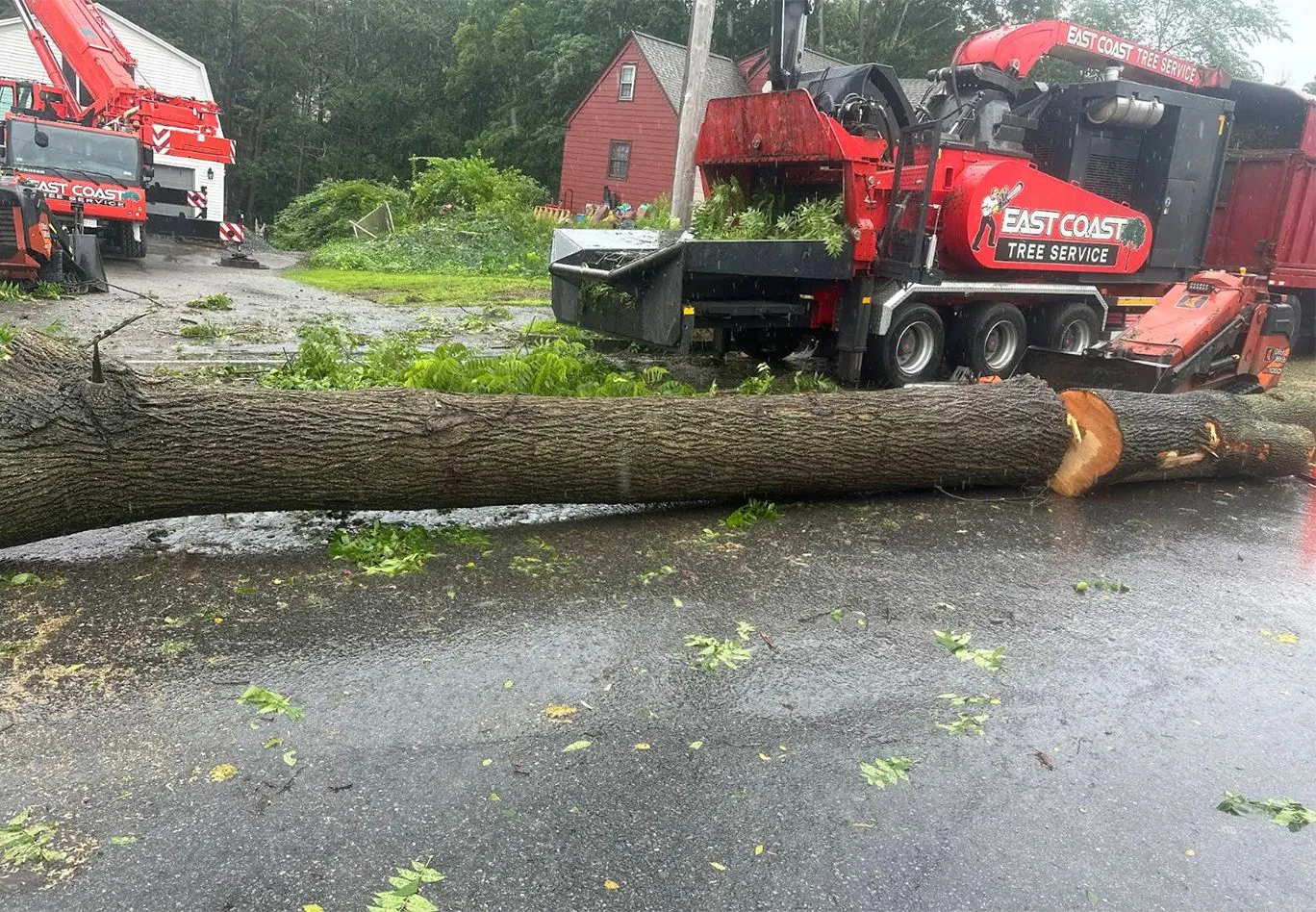
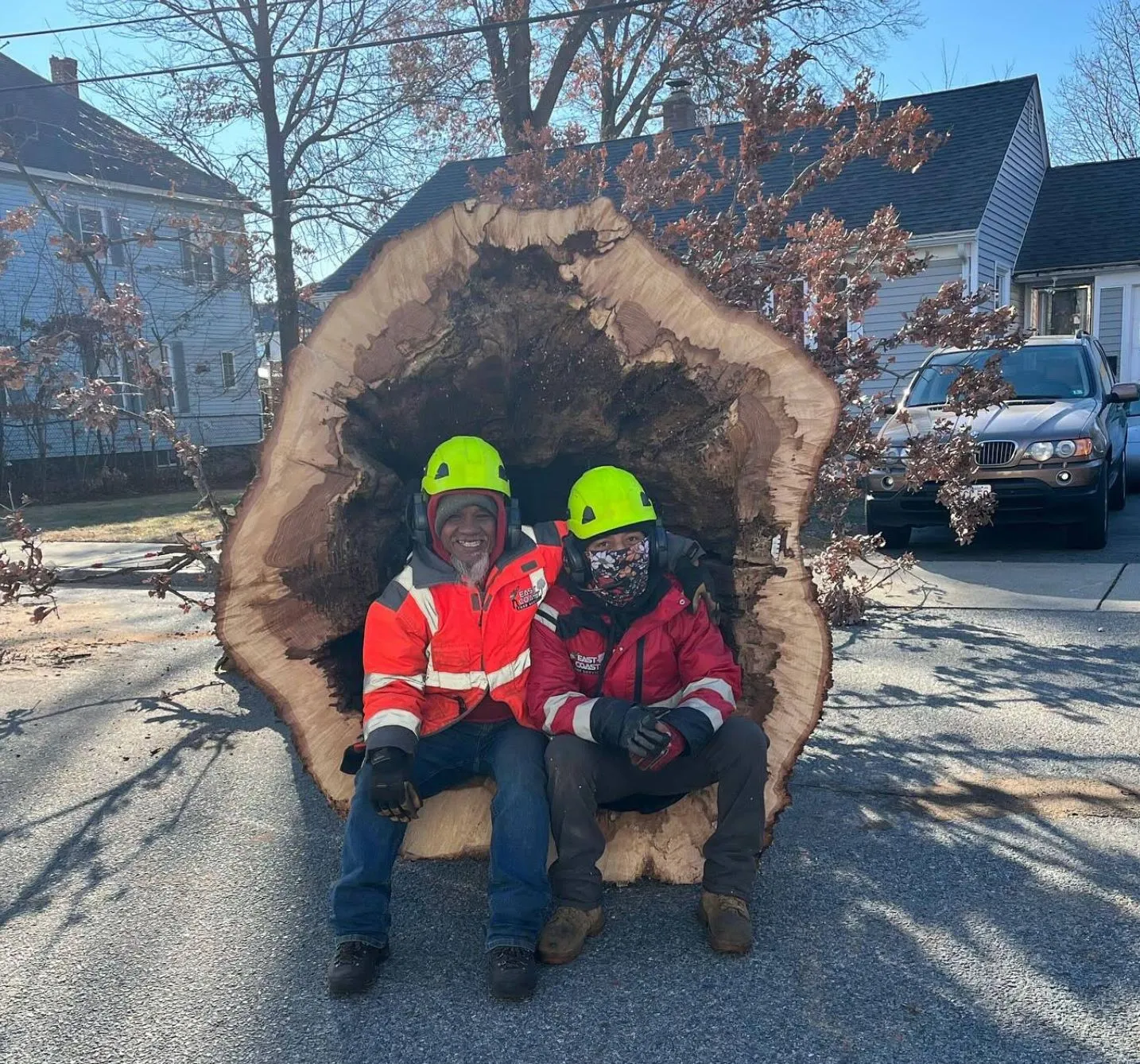
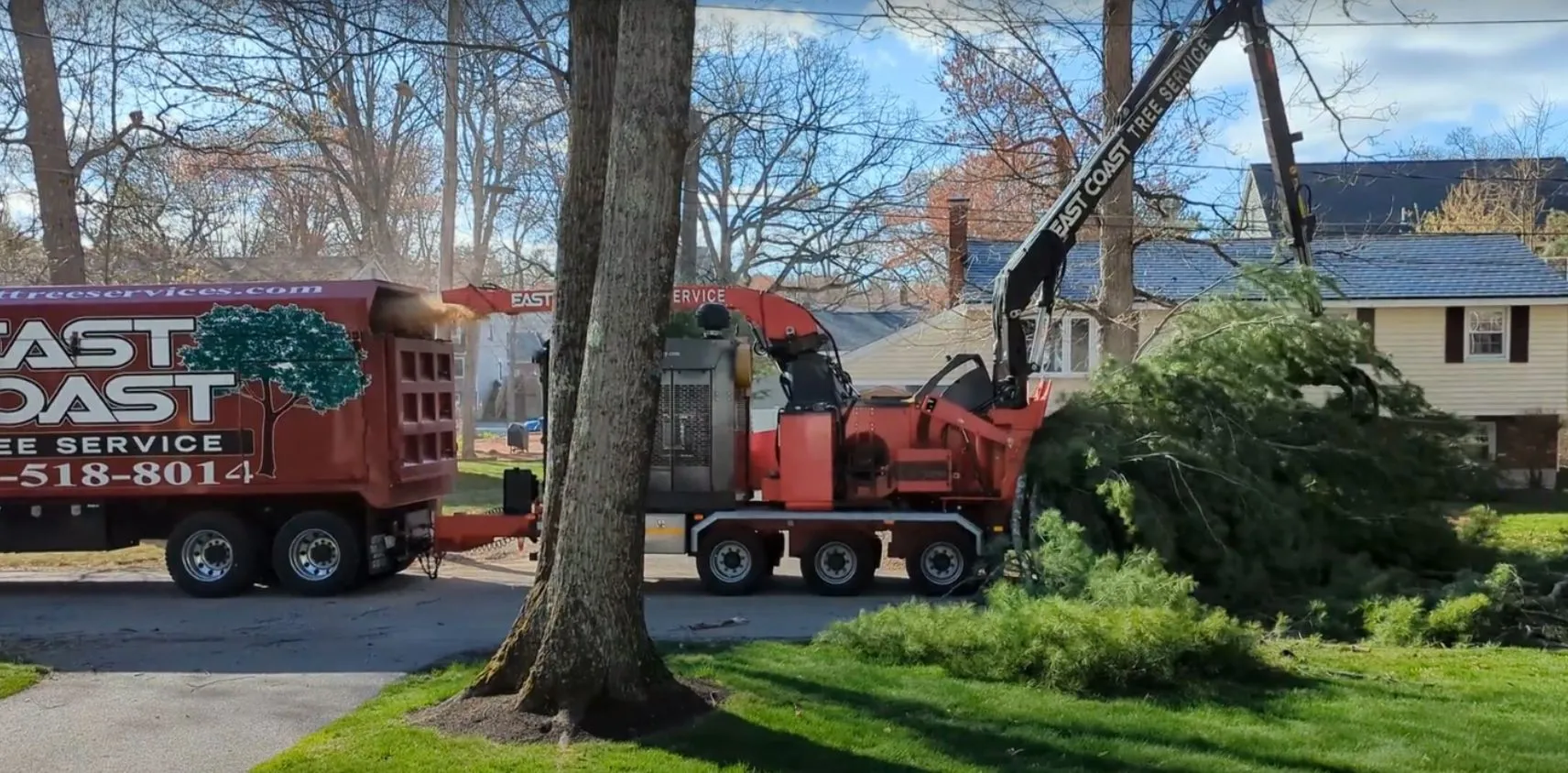
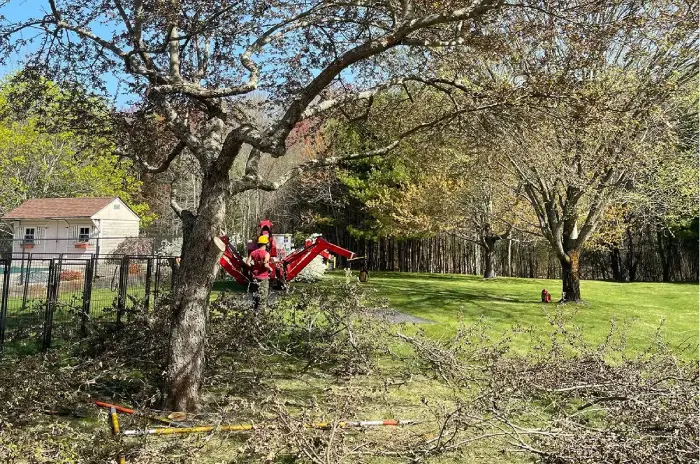
East Coast has company-wide job photography, but a generic image should not be relabeled as a Winchester project. Once verified Winchester images are available, this section should pair each before and after image with the property type, service performed, tree species when known, and a short description of the access or removal challenge.
What’s Included in a Free On-Site Estimate in Winchester?
East Coast provides free on-site estimates. They are handled by the sales team and are not advertised as being performed by an ISA Certified Arborist every time.
The visit can cover tree condition, approximate size and diameter, access, surrounding buildings, driveway and lawn conditions, pools and fences, overhead utilities, potential rigging or crane setup, cleanup, stump grinding, and obvious public-tree or wetland questions that should be checked before work begins.
If several trees need work, the estimator can look at the project as one scope instead of pricing each tree without considering shared access, crew time, equipment setup, and debris handling.
Contractor Insurance, Homeowners Insurance, and Financing
East Coast Tree Service is fully licensed and insured for the work it performs. The company carries general liability coverage and workers’ compensation insurance. Those contractor protections are separate from the homeowner’s own insurance policy.
Does homeowners insurance cover tree removal? Coverage commonly applies when a covered event causes a tree to fall on and damage an insured structure such as a house or detached garage. Some policies may also cover a fallen tree that blocks a driveway or required access.
Preventive removal of a standing dead, declining, or hazardous tree is generally treated as property maintenance. Coverage, deductibles, debris-removal limits, and policy language vary, so the insurance carrier or adjuster should make the coverage decision.
Do you offer financing if I need help paying for tree service? Yes. Financing is available for qualifying projects. Approval and terms depend on the current financing program. Mention financing when scheduling the estimate so current options can be discussed.
Tree Service Across Winchester and Nearby Middlesex County
Winchester is in Middlesex County, between communities already served by East Coast. Nearby service pages include Woburn, Stoneham, Lexington, and Reading.
East Coast also serves communities farther north and east in Middlesex County and nearby Essex County. That broader coverage should not blur the geography of this page: Winchester itself is a Middlesex County town with its own Tree Warden, Conservation Commission, wetlands rules, public-tree bylaw, waterways, historic housing pattern, and urban-forest program.
Schedule Tree Service in Winchester
If you have a tree leaning toward a house, storm damage, dead limbs, a large removal over a structure, a stump that needs grinding, or a mature tree that simply needs a better assessment before you decide what to do, the next step is an on-site look at the property.
East Coast Tree Service offers multiple ISA Certified Arborists on the team, crane-assisted removal capability, full cleanup, financing for qualifying projects, free on-site estimates, and 24/7 emergency tree service.
Call (781) 518-8014 for a free on-site estimate in Winchester, MA.