

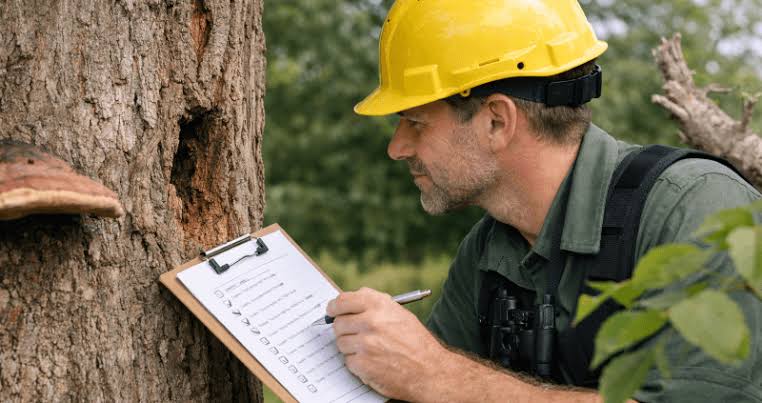
Winterizing trees in eastern Massachusetts starts with checking for weak branches, protecting young trunks, maintaining mulch, and making sure trees enter freezing weather with adequate soil moisture. It also means knowing what to leave alone. Ice-covered branches should not be shaken, and major pruning or removal near a house is better handled by a tree professional.
At East Coast Tree Service, we provide tree trimming, removal, and storm-related services in Reading, Andover, Tewksbury, Billerica, and surrounding Massachusetts communities. We see winter preparation as a way to identify existing problems before snow and ice add more stress to a tree.
A recently planted maple may need help protecting its bark and roots. A mature oak over a driveway calls for a closer look at large branches and their attachments. Evergreens near a heavily salted road face a different set of conditions.
Here are eight winter tree care tasks worth reviewing before the weather changes.
1. Inspect Your Trees Before Heavy Snow and Ice Arrive

Late fall is a useful time to walk around the property and look for changes in the trees.
We recommend starting with those close enough to reach the house, garage, driveway, or areas where people regularly walk.
Look for large dead branches, fresh cracks in the trunk, broken limbs caught in the canopy, and branches that have begun hanging noticeably lower.
Check the ground around the trunk, too. Fresh soil cracks, lifted roots, or a new lean can indicate movement in the root system.
You do not need to stand under a questionable tree to inspect it. In fact, we recommend observing damaged trees from outside the potential fall area.
Why an old lean is different from a new one
Some trees have grown at an angle for decades. Their shape alone does not establish that they are unstable.
A tree that suddenly leans farther after a storm is a different concern, particularly when the surrounding ground has shifted.
Older photographs can help establish whether the trunk has changed position.
For homeowners using our tree services in Andover, MA, we can evaluate damaged limbs, cracked attachments, and trees whose condition raises concerns before winter storms.
A defect does not automatically mean the whole tree needs to be removed. Sometimes selective pruning addresses the problem. Other situations require a closer assessment of the trunk or roots.
2. Protect Young Trees and Thin Bark From Winter Sun and Animal Damage
Young trees can be more vulnerable to winter bark injury because their trunks are relatively thin and exposed.
During a sunny winter afternoon, the south or southwest side of a trunk can warm considerably. When temperatures fall again, the exposed bark may experience damage.
This condition is often called sunscald.
It can affect young maples, fruit trees, and other susceptible species, particularly when their trunks receive direct winter sunlight.
Some trees may also develop cracks associated with temperature changes and existing internal stresses.
We would not recommend wrapping every mature tree on the property. The decision depends on the species, age, exposure, and bark condition.
Using tree wraps and trunk guards
For susceptible young trees, a light-colored tree wrap or suitable trunk guard may help reduce direct sun exposure during winter.
The material should be installed according to the manufacturer’s instructions and removed when winter protection is no longer needed.
Leaving a wrap in place through warm weather can trap moisture, conceal insects, or interfere with the trunk as it grows.
Animal damage is another consideration. Rabbits, voles, and other animals may feed on bark when food is scarce.
A properly sized protective guard can help, but it should not constrict the trunk. Protection may need to extend above the expected snow level because accumulated snow can allow animals to reach bark that is normally out of reach.
Before wrapping a tree, make sure there is no existing wound or decay that should be evaluated.
3. Apply Mulch Without Covering the Trunk
Mulch helps moderate soil temperature and reduce moisture loss around the roots.
This is particularly useful for young trees whose root systems are still developing.
A layer of approximately two to four inches of suitable organic mulch can be appropriate, depending on the material and existing soil conditions.
Spread it over a broad area around the tree rather than piling it into a narrow mound.
Keep the mulch away from direct contact with the trunk and root flare.
When mulch stays against the bark, it can hold moisture where it does not belong and create conditions that favor deterioration.
Do not build a mulch volcano
A tall cone of mulch against the trunk may look tidy, but it is not the arrangement we want.
The tree’s root flare, where the trunk widens into the roots, should not be buried under repeated layers of material.
If an existing mulch bed has built up over several seasons, check its total depth before adding more.
You may need to redistribute the existing material rather than purchase another layer.
For a mature tree growing in lawn, a wider mulch bed can also reduce mower and string-trimmer damage near the trunk.
Neither mulch nor a protective ring can correct a structural defect in a large tree, but good root-zone care can help avoid adding unnecessary stress.
4. Water Young Trees Before the Ground Freezes
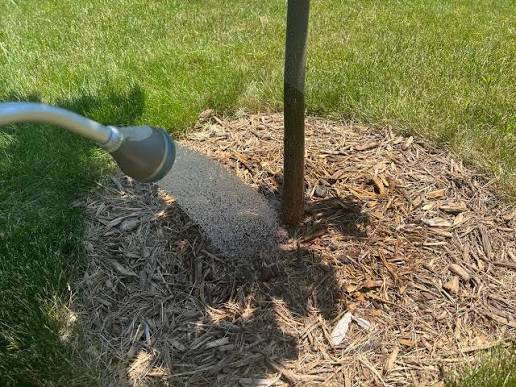
Winter preparation begins while the soil is still able to absorb water.
If eastern Massachusetts has experienced a dry autumn, recently planted trees may enter the cold season with insufficient soil moisture.
Evergreens deserve attention because they can continue losing moisture through their needles or foliage when winter sun and wind are strong.
Once the ground is frozen, their roots may be unable to replace that moisture at the same rate.
We recommend checking soil conditions rather than watering automatically according to the calendar.
If the root area is already wet from recent rainfall, adding more water may be unnecessary.
How should you water before winter?
When the soil is dry and unfrozen, apply water slowly enough for it to soak into the root area instead of running off the surface.
For a newly planted tree, pay particular attention to the root ball and the soil surrounding it.
A larger established tree has a broader root system, so concentrating water directly against the trunk is unlikely to address the full area.
Do not irrigate frozen ground or waterlogged soil.
Also remember to disconnect and drain hoses before freezing temperatures can damage them.
A dry autumn followed by an abrupt freeze is a different situation from a season with regular rainfall. We want the tree’s actual growing conditions to guide the decision.
5. Schedule Winter Pruning Based on the Tree’s Condition
Late winter is often a practical time to prune deciduous trees in eastern Massachusetts.
Without leaves, we can see the branch structure more clearly, including competing stems, crowded attachments, and branches crossing through the crown.
For many trees, this makes it easier to select appropriate pruning cuts before spring growth resumes.
January through March may provide suitable conditions for certain work, but we do not treat that period as a universal rule for every species.
The tree’s health, the reason for pruning, disease concerns, and flowering habits can affect the timing.
What should winter pruning accomplish?
We look at the specific condition of the tree.
A dead branch above a driveway may need removal because it could fall into an occupied area.
A young shade tree with two vigorous competing stems may benefit from structural pruning that favors a better central leader.
A mature tree with a large branch extending over a roof may require a different pruning objective, with attention to the attachment and the amount of living crown retained.
Our professional tree trimming service addresses deadwood, crowded growth, damaged limbs, and clearance concerns.
We do not recommend removing large amounts of healthy foliage simply because the tree is dormant.
Not every tree should be pruned heavily in winter
Some spring-flowering ornamental trees develop their flower buds during the previous growing season. Winter pruning can remove those buds and reduce the following spring’s display.
Certain species also have pruning considerations related to pests or disease.
A tree showing poor vigor or recent stress may need an assessment before additional living branches are removed.
And if a tree has a fresh split or a broken major limb after a storm, that problem should be evaluated based on its immediate condition rather than waiting for a preferred pruning month.
For homeowners in Reading, our tree service in Reading, MA includes pruning and removal when a tree’s condition or location calls for professional work.
6. Limit Road Salt Exposure Around Trees
Road salt can injure trees through contact with the foliage and through accumulation in the soil.
For trees near driveways, streets, and sidewalks, this exposure may become more noticeable during winter.
Vehicles and snowplows can throw salty slush onto trunks and evergreen foliage.
When snow melts, dissolved salts may move into nearby planting beds and root zones.
Repeated exposure can affect water uptake, damage plant tissues, and contribute to browning or dieback.
Watch the side of the tree facing the road
Salt injury may appear as brown needle tips, discolored foliage, dead buds, or reduced growth on the side most exposed to spray.
These symptoms can resemble winter drying or other tree-health problems.
We would not diagnose salt injury from browning alone.
However, the location of the damage and the history of winter salt use can help identify a possible cause.
The UMass Amherst guidance on salt injury explains how winter deicing materials affect landscape plants.
Practical ways to reduce exposure
Use the amount of deicing material necessary for safe access instead of spreading it beyond the walking or driving surface.
Sand can improve traction in some conditions without adding chloride salts to the soil.
Products marketed as pet-safe are not automatically harmless to trees. Their ingredients still need to be considered.
If a tree stands beside an area that receives frequent road spray, a suitably positioned burlap barrier may reduce direct exposure.
Also consider where snow is piled. Moving heavily salted snow into a planting bed can concentrate the material around tree roots when it melts.
For properties close to roads in Reading, Andover, and Tewksbury, drainage patterns can matter as much as the amount of salt used immediately beside the trunk.
7. Leave Ice-Covered Branches Alone and Inspect After Storms
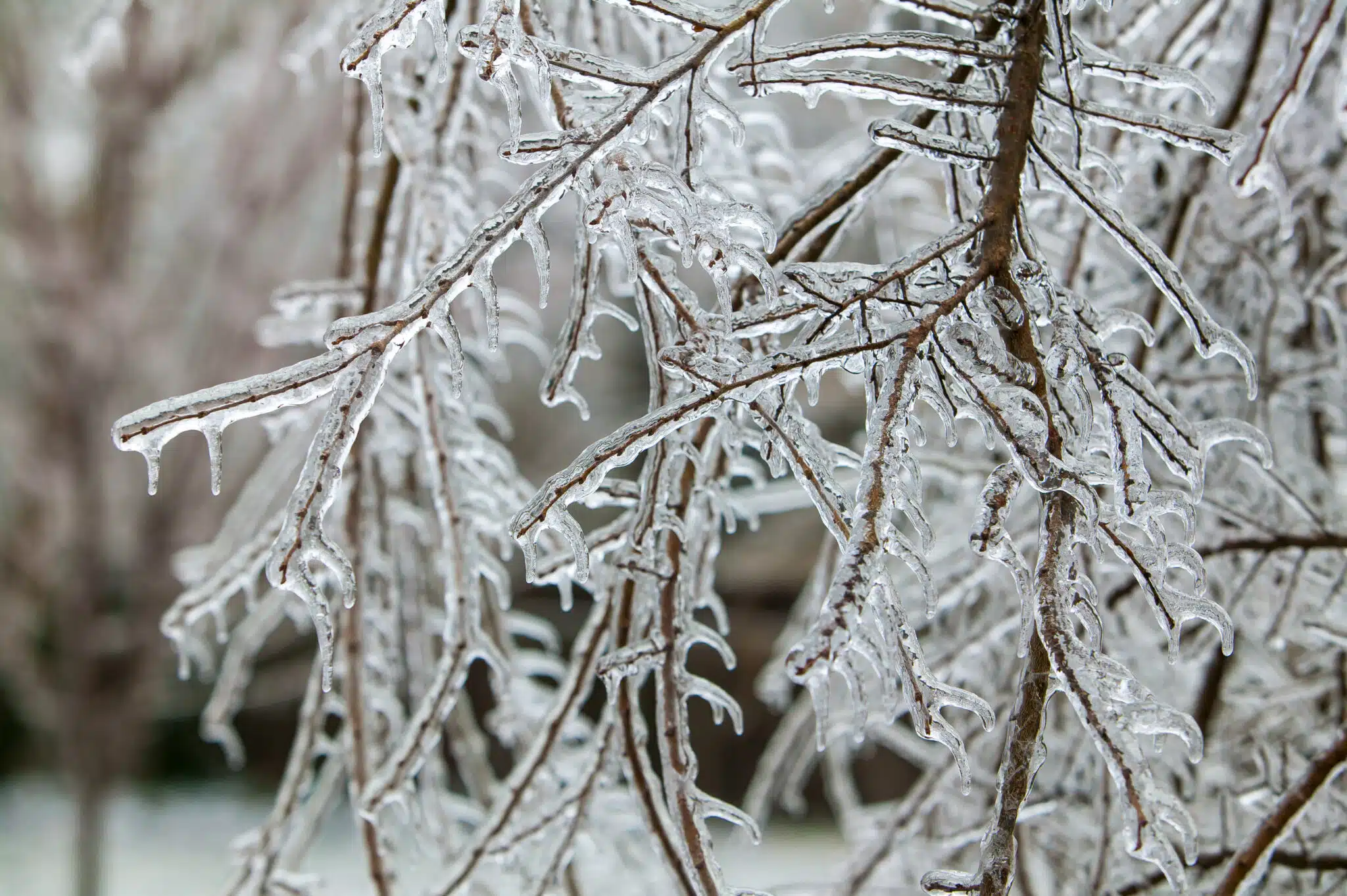
Heavy wet snow and freezing rain add weight to tree branches.
Ice can also change how branches move in the wind.
When a branch is already bent under a heavy load, striking or shaking it can cause a sudden break.
We do not recommend trying to knock ice off large trees with a broom, shovel, or pole saw.
It is safer to remain outside the area beneath loaded branches and allow the ice to melt naturally.
What about soft, powdery snow?
Light, loose snow on a small, accessible shrub or young tree may sometimes be gently brushed away without forcing the branches.
That is different from trying to remove heavy packed snow or ice from a mature tree.
If the branches are frozen together, visibly cracked, or already bending severely, leave them alone.
Do not use a ladder or stand beneath a snow-loaded canopy to reach them.
What should you inspect when the storm passes?
After conditions settle, look from a safe distance for broken limbs, new cracks, hanging branches, and changes in the tree’s position.
Some damaged branches remain caught in the canopy even after most of the snow has melted.
They can move later when the wind picks up.
Our storm damage cleanup service addresses fallen trees and broken limbs that require professional removal and cleanup.
If a major branch is suspended over a roof or driveway, keep people away until it can be evaluated.
If electrical lines are involved, contact the utility first. Never approach or attempt to move a tree or branch touching a downed wire.
8. Check Stakes, Ties, and Supports on Recently Planted Trees
Some newly planted trees require temporary stakes to support them while their roots establish.
Those supports need to be checked as the tree grows.
A tie that was loose when the tree was planted can become tight enough to damage the bark later.
Wind may also loosen a stake or cause a support to rub against the trunk.
Before winter, look for signs of abrasion, tight ties, or hardware that has shifted out of position.
Do not tighten supports until the trunk is held rigidly without any movement. Some movement is part of normal trunk development, and unnecessary staking can interfere with that process.
When should stakes be removed?
Stakes are generally intended to be temporary, but the appropriate removal time depends on how well the tree has established and the conditions of the planting site.
If the tree is stable without the supports, they may no longer be necessary.
If the tree is still poorly anchored, simply removing every stake may not be appropriate either.
We recommend evaluating the tree’s stability and the support arrangement rather than leaving the original staking system in place indefinitely.
Do not attempt to install improvised cables or braces on a mature tree with a structural problem. That is a different kind of work and requires professional assessment.
Which Winter Tree Problems Need Attention First?
Not every tree on a property needs the same amount of work before winter.
A young maple with a thin trunk may benefit from mulch and seasonal bark protection. A mature oak with a large broken branch over the garage presents a more immediate concern.
We prioritize the condition of the tree together with what could be affected if a branch or the entire tree failed.
That means the location matters.
A dead branch over an unused wooded corner of the lot may warrant a different response from a similar branch above the front entrance.
Likewise, a tree that suddenly changes its lean after rain or wind deserves closer attention than one with a stable growth pattern.
When several trees need work, an on-site evaluation can help establish which defects should be addressed first and which trees can be monitored.
Is Winter a Good Time to Remove a Tree in Massachusetts?
Tree removal can be performed during winter when site and weather conditions allow the work to be done safely.
Leafless deciduous trees may provide better visibility of the branch framework. In some conditions, frozen ground may also affect access for equipment.
But frozen ground does not guarantee that every yard can support machinery.
Snow cover can conceal obstacles, and periods of thaw can soften the surface.
We need to evaluate access, ground conditions, nearby structures, and the tree’s condition before planning removal.
For dead, unstable, or badly storm-damaged trees, our tree removal service provides an option when retaining the tree is no longer appropriate.
We would not recommend removing an otherwise manageable tree simply because winter offers a convenient time to schedule the work.
What Should You Do if a Tree Falls During a Winter Storm?
First, keep people away from the tree and any broken or hanging branches.
A fallen tree can remain under tension, particularly when part of the trunk is supported by another tree, a roof, or the surrounding ground.
Cutting or moving the wrong section can release that stored force without warning.
Do not attempt to move a large fallen tree using a vehicle, rope, or chainsaw.
If the tree has contacted electrical wires, keep clear and notify the utility. For an immediate life-threatening emergency, call 911.
East Coast Tree Service offers 24/7 emergency tree service for storm-damaged trees and other urgent tree problems within our service area.
When you contact us, describe where the tree fell, what it is resting on, and whether wires, buildings, vehicles, or access routes are involved.
That information helps us understand the situation before an on-site evaluation.
Winter Tree Care for Oaks, Maples, Pines, and Evergreens
Different tree species respond to winter conditions in different ways.
For mature oaks, we may be more concerned about large deadwood, branch attachments, and the position of heavy limbs near structures.
Young maples can require attention to developing structure and exposed bark.
Pines and other conifers keep much of their foliage through winter, which changes how snow and ice accumulate in the crown.
Arborvitae and other narrow evergreens may bend or spread apart under heavy snow.
We also consider the planting location.
An evergreen beside an exposed driveway may experience both drying wind and salt spray. Another of the same species in a sheltered backyard may have very different conditions.
The species helps guide the evaluation, but the tree’s individual structure and surroundings determine the work needed.
What Can Homeowners Safely Do Without a Tree Service?
Several winter preparation tasks can be handled from the ground without cutting large branches.
Homeowners can inspect trees visually from safe locations, maintain suitable mulch beds, check the fit of young-tree guards, and review how deicing materials are used near planting areas.
Watering young trees when the soil is dry and unfrozen may also be appropriate.
Pruning large branches, climbing trees, using chainsaws near structures, and working around suspended storm damage are different situations.
If a job requires you to stand beneath a broken branch, climb a ladder beside a tree, or approach electrical lines, do not treat it as routine yard maintenance.
We can evaluate those concerns and discuss an appropriate pruning or removal plan.
Schedule Tree Work Before Winter Weather Makes Access Harder
East Coast Tree Service is based in Tewksbury, Massachusetts, and serves Andover, Reading, Billerica, Wilmington, and surrounding eastern Massachusetts communities.
We provide tree trimming, removal, storm damage cleanup, and emergency tree services for residential and commercial properties.
If your winter inspection reveals dead limbs, cracks, a newly leaning tree, or branches extending over the house, call us at (781) 518-8014.
Tell us what you noticed, where the tree stands, and what it could affect if a branch breaks.
We can review the situation and discuss whether the next step should be pruning, removal, or further observation. For younger trees without structural problems, seasonal care such as mulch, watering, and trunk protection may be all that is needed before winter.