

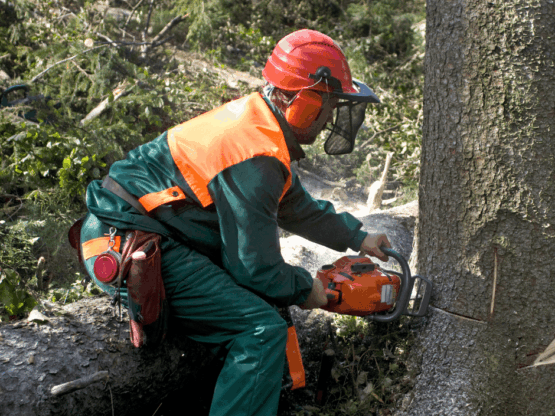
Homeowners insurance in Massachusetts may cover tree removal when a covered event brings a tree down onto your house, garage, shed, fence, or another insured structure. If the tree simply falls in the yard and damages nothing, removal is usually the homeowner’s responsibility. Some policies make limited exceptions for a tree blocking a driveway or disability-access ramp.
The details still come down to your policy.
When we respond to fallen trees through East Coast Tree Service, we can evaluate the site, perform the tree work, and provide estimates, invoices, photos, and other documentation related to what we find and what we do. We cannot decide whether your homeowners policy will pay the claim. Your insurer makes that determination.
That distinction is worth understanding before storm cleanup begins.
The Clearest Insurance Case Is a Tree on an Insured Structure
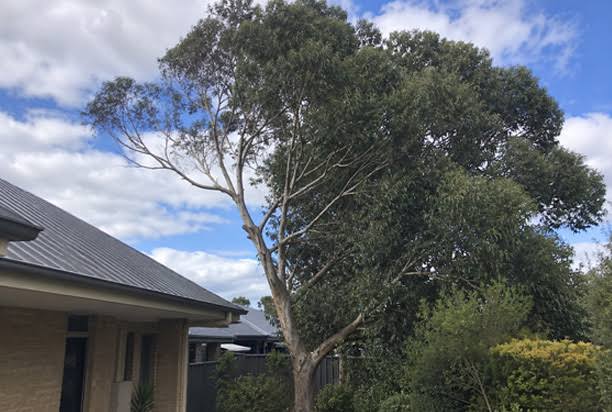
If wind, ice, snow, or another event covered by your policy knocks a tree onto your house, homeowners insurance will commonly address the resulting structural damage.
Tree removal may be part of that claim because the tree has to be removed from the damaged structure so repairs can proceed.
That does not mean the insurer automatically pays every dollar charged for cutting, hauling, stump grinding, landscaping restoration, and repairs.
Those can be different parts of the claim.
When we provide tree service in Reading, MA, we can document the tree work itself. The homeowner should ask the adjuster what portions of that work fall within the approved scope.
A Tree in the Yard Is Usually a Different Situation
Suppose a storm knocks down a large tree at the back of the property.
It misses the house.
It misses the garage.
Nothing insured is damaged.
That can still be an expensive tree to remove, but expense by itself does not create insurance coverage.
Removal of fallen trees that do not damage insured property is generally not covered under standard homeowners policies.
There can be policy-specific exceptions.
A fallen tree blocking the primary driveway or an access ramp may qualify for limited removal coverage under some policies. If that is your situation, describe the blockage clearly when you call the insurer rather than assuming the claim will be treated the same as yard cleanup.
What Caused the Tree to Fall Matters
The landing place is only part of the claim.
The insurer may also look at why the tree came down.
Wind, lightning, ice, and snow are common examples of events that may fall within standard homeowners coverage, subject to the terms and exclusions of the policy.
Neglect creates a different discussion.
If a tree was visibly dead, badly decayed, or previously identified as hazardous and no action was taken, the insurer may examine whether maintenance could reasonably have prevented the loss.
That does not mean every old, hollow, leaning, or storm-damaged tree proves neglect.
We would rather document the tree’s observable condition than try to make an insurance judgment from the yard.
Standing Hazardous Trees Are Usually a Maintenance Expense
Homeowners sometimes call before the tree falls and ask whether insurance will pay to remove it because it could hit the house.
Usually, that is a different category from a covered storm loss.
Removing a dead tree, reducing hazardous limbs, or taking down a tree with structural problems before failure is generally considered property maintenance.
That may feel backward. Removing the tree before it hits a roof is far less expensive than dealing with the roof afterward.
Insurance, however, is generally written to respond to covered losses rather than routine preventive maintenance.
If your insurer has specifically asked you to remove a tree or your policy has an endorsement that changes the usual rule, follow that policy guidance.
Do Not Wait for Insurance Approval When People Are in Danger
There is an important difference between nonurgent cleanup and emergency work.
If a tree is lying harmlessly on the back lawn, there is usually time to call the insurer, photograph everything, get an estimate, and understand the claim requirements before work starts.
A tree through the roof is different.
So is a hanging trunk section over an entrance, a split tree moving toward the house, or storm damage that has left the building exposed to additional rain.
Our 24/7 emergency tree service is intended for tree conditions that cannot safely wait for an ordinary appointment.
Safety comes first. Documentation comes immediately after, as conditions allow.
Take Photos Before the Tree Moves, When It Is Safe
Once a tree is cut apart, some of the evidence explaining the loss disappears.
If the scene is safe enough to photograph, capture wide views before cleanup begins.
Show where the tree came from and where it landed.
Photograph the roof, garage, fence, driveway, shed, or other damaged property. Get pictures of the trunk and root area when they can be reached without walking beneath broken or suspended limbs.
Do not climb onto a damaged roof or stand under a hanging branch for the sake of a claim photo.
We can also document conditions during our inspection and work.
Our current storm damage cleanup service allows us to provide detailed invoices, photos, and reports related to storm cleanup and insurance documentation.
The insurer still decides how that documentation fits the claim.
Ask the Insurer What It Wants Before Nonurgent Cleanup
For a nonemergency job, a short conversation with the insurance company can prevent problems later.
We recommend asking:
- Do you want photos before any branches are moved?
- Do you need an adjuster to inspect the property?
- Is emergency tree removal preauthorized?
- Is tree removal subject to a separate debris-removal limit?
- Is hauling included in that allowance?
- Is stump grinding included?
- Does my deductible apply to the entire loss?
- Do you want the tree work itemized separately from structural repairs?
Write down the claim number and instructions you receive.
If an adjuster asks for an itemized tree-service estimate, we can describe the work being proposed without pretending we know what the policy will approve.
Tree Removal Limits Can Be Much Lower Than the Property-Damage Claim
This catches homeowners by surprise.
A tree may cause tens of thousands of dollars in roof damage while the policy provides a much smaller amount specifically for tree or debris removal.
There is no universal tree-removal limit for every Massachusetts homeowners policy.
Some policies use separate debris-removal limits or sublimits, while others handle the cost differently.
Check the declarations and the debris-removal language in the actual policy.
A large tree requiring a crane or complicated rigging can cost more to remove than the insurance sublimit.
Your Deductible Still Matters
Coverage does not necessarily mean the insurer writes a check for the entire bill.
Your deductible affects the amount you may receive.
If the total covered loss is close to the deductible, the payment can be small or nonexistent. If the tree damaged the roof, siding, fence, or another insured structure, the larger structural claim may make the calculation very different from a claim involving only limited debris removal.
That is another reason we separate the cost of physical tree work from the question of insurance payment.
We price the work required at the property.
The insurer applies the policy.
What If Your Neighbor’s Tree Falls on Your House?
In Massachusetts, the first call is generally to your own homeowners insurer when a neighbor’s tree falls onto your insured property.
The fact that the trunk started on the other side of the property line does not automatically make the neighbor responsible.
A healthy tree can fail during severe weather.
Negligence becomes a different question when there is evidence that someone knew a tree presented a hazard and failed to address it.
If there was previous correspondence about the tree, keep it.
Photos, inspection records, emails, written notices, and earlier tree-service recommendations may matter to the insurers reviewing responsibility.
If Your Tree Falls on the Neighbor’s House, Their Insurer Usually Starts the Claim
The same principle works in the other direction.
If your apparently healthy tree comes down in a storm and damages the house next door, your neighbor will generally begin with their own homeowners insurer.
Their insurer can then decide whether there is any reason to pursue another party.
We would not tell either homeowner at the property who is legally responsible.
Our role is to deal with the tree condition and document the work being performed.
A Tree on Your Car Is Usually an Auto Claim
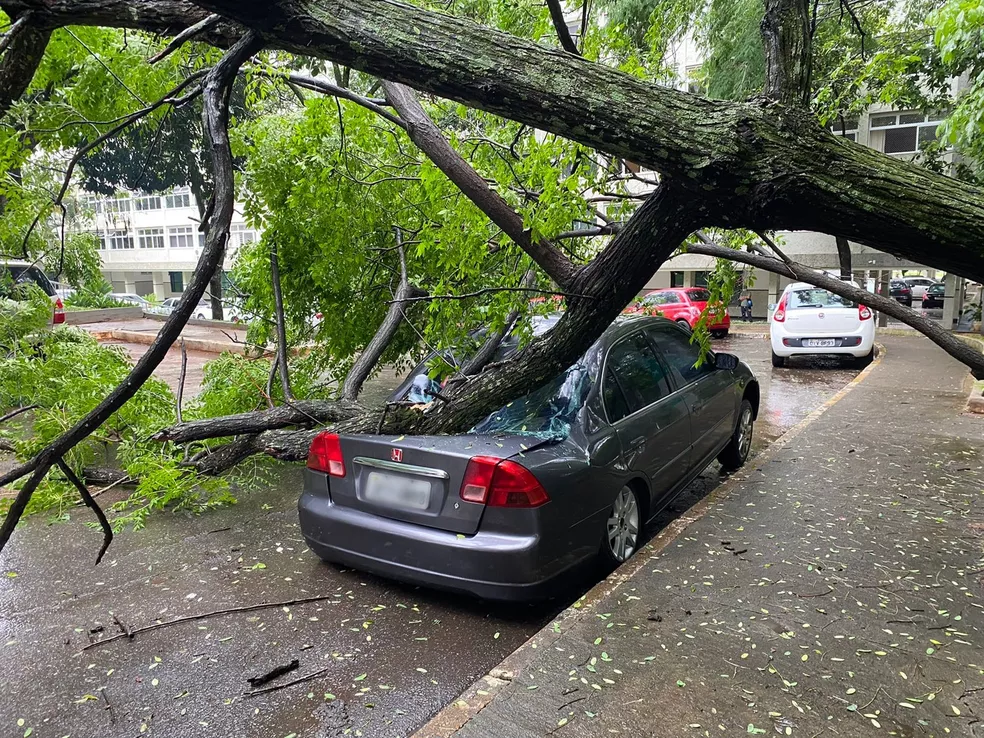
A car is not handled the same way as your house.
Homeowners insurance generally does not pay for physical damage when a tree falls onto your vehicle.
That type of loss normally falls under comprehensive auto coverage, if the vehicle carries it.
If one fallen tree has damaged both the house and a vehicle, you may end up dealing with two different insurance claims.
The homeowners carrier may handle the building.
The auto carrier may handle the car.
A Fence, Shed, or Detached Garage May Have Different Coverage Than the House
It is easy to refer to everything on the lot as “the property,” but homeowners policies separate categories.
Your dwelling coverage applies to the home itself.
Detached garages, sheds, and other structures are commonly covered under a separate portion of the policy.
A fence can also raise questions about other-structure coverage and sublimits.
If a tree damages several things at once, list them separately for the insurer.
Do not assume the coverage for a garage, fence, landscaping, and tree debris is identical.
Storm Cleanup and Tree Removal Are Related, but the Scope Can Be Different
After a major storm, a property may have more than one tree problem.
One trunk may be resting on a roof.
Another tree may have lost half its crown but still be standing.
Branches may block the driveway while a third tree has exposed roots.
Insurance coverage may not apply equally to all of them.
Our tree-service decision is also different for each one.
Through our tree service in North Andover, MA and surrounding communities, we inspect the tree and site before deciding whether the work calls for ordinary removal, sectional rigging, crane assistance, pruning, or emergency stabilization.
For a tree that has already failed in Reading, our tree removal service in Reading, MA covers storm-damaged trees as well as other hazardous removals.
Coverage and tree-work method remain separate questions.
Power Lines Change the Priority
If a tree is touching or tangled with a power line, stay away.
The tree, surrounding ground, fences, equipment, and other nearby objects can become part of the electrical hazard.
Do not start cutting branches to create access for the insurance adjuster.
Do not pull on the tree with a vehicle.
Contact the utility or emergency services as appropriate and keep people away from the area.
Once the electrical hazard has been addressed, the remaining tree work can be assessed.
Does Insurance Cover Stump Grinding?
Do not assume that it does.
Stump grinding happens after the above-ground tree has been removed and may be treated differently from getting a fallen tree off an insured structure.
The same applies to lawn repair, replacement landscaping, firewood processing, and other work that is useful after removal but may sit outside the insurer’s approved scope.
Ask before adding those services to an insurance-related job if reimbursement matters to you.
We can itemize different portions of tree work when the scope calls for it.
What We Can Provide for an Insurance-Related Tree Job
When we inspect storm damage, we can focus our documentation on what is physically present at the property.
Depending on the job, that may include:
- photos of the tree and damaged area;
- a written estimate describing the tree work;
- documentation of emergency or storm-cleanup services performed;
- an itemized invoice;
- records showing debris removal or hauling included in our scope;
- information about the equipment required for a difficult removal.
That documentation can help the homeowner and adjuster understand the tree-service portion of the loss.
It does not guarantee reimbursement.
A Preventive Tree Inspection Can Still Save You Money Even When Insurance Will Not Pay
Insurance should not be the reason to leave a clearly hazardous tree standing.
If a dead limb is over the roof, a trunk has developed a major crack, or root movement is changing the tree’s lean, dealing with it before the next storm may prevent a much larger problem.
Preventive tree work usually comes out of the homeowner’s pocket.
So does replacing worn shingles before the roof leaks.
Maintenance costs less than some failures, even when there is no insurance check attached to the work.
What to Do After a Tree Falls in Massachusetts
If a tree has just come down, start with the site rather than the policy.
Keep people away from unstable trees, broken limbs, damaged roofs, and wires.
If conditions allow, photograph the tree before it is moved.
Call your insurance company and report any damage to insured property.
Ask what documentation the adjuster needs and whether emergency tree work can proceed immediately.
Then call a tree company that can evaluate how the tree needs to be removed.
East Coast Tree Service provides 24/7 emergency tree response throughout Reading, Tewksbury, Billerica, North Andover, North Reading, and surrounding eastern Massachusetts communities.
If the situation is safe enough to wait, we can inspect the site and prepare an estimate before work is scheduled.
If the tree has created an immediate hazard, tell us what it hit and whether utility lines are involved when you call (781) 518-8014.
We can handle the tree. Your insurer can tell you how the policy handles the bill.