

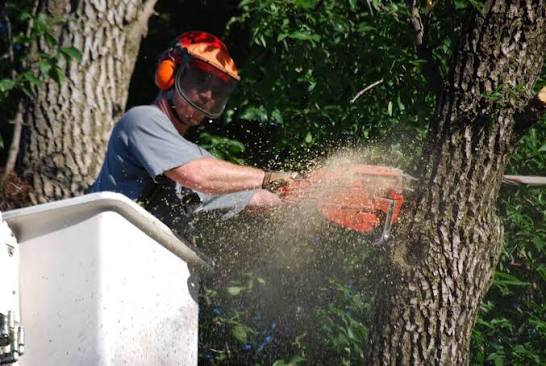
Eversource tree trimming in Massachusetts focuses on keeping vegetation from interfering with electric lines. Hiring your own arborist serves a broader purpose: assessing tree structure, removing damaged limbs, improving clearance around your home, and managing trees beyond the utility’s scheduled work. If a branch is growing into an energized power line, contact the electric utility first. If the concern is a branch over your roof or a declining tree elsewhere in the yard, a private tree service may be the appropriate place to start.
At East Coast Tree Service, we provide tree trimming, removal, and storm-related services for homeowners in Tewksbury, Chelmsford, Reading, Billerica, and surrounding eastern Massachusetts communities.
We often need to consider two separate issues when a tree stands near the street: what the electric utility needs to maintain around its equipment and what the property owner wants to accomplish with the rest of the tree.
The difference affects who should evaluate the work, what gets pruned, and who pays for it.
What Does Eversource Tree Trimming Cover?
Eversource maintains vegetation near portions of its electric infrastructure to reduce the likelihood of branches contacting energized equipment and causing outages.
The work can include pruning trees growing near distribution lines, managing vegetation within utility rights-of-way, and addressing trees that threaten electrical facilities.
Depending on the location and the utility’s approved program, crews may also remove incompatible vegetation or recommend removing a tree that presents a continuing problem for the lines.
That does not mean Eversource will remove every unhealthy tree in a neighborhood.
The utility’s decision is based on the relationship between the vegetation and the electric system. A dead branch over a homeowner’s garage may be outside the scope of routine line maintenance if it does not threaten utility equipment.
Massachusetts regulates electric distribution vegetation management through the Department of Public Utilities. Utility maintenance programs include scheduled work and additional attention to certain hazard trees where electrical reliability is affected.
Homeowners can review an example of Eversource’s pruning procedures in the vegetation management notice published by the Town of Lexington.
How Is Private Tree Trimming Different?
When we evaluate a tree for a homeowner, we consider the condition of the tree and the specific problem on the property.
A maple might have a large branch extending over the roof. A pine could have a broken limb hanging above the driveway. Another tree may have competing stems or deadwood that should be assessed before the next storm.
These concerns can exist even when no electric line passes through the crown.
Our tree trimming services include pruning to address damaged branches, crown structure, clearance, and other tree-care objectives.
We also consider whether the tree should be retained, pruned, or evaluated for removal because of its condition and location.
Utility trimming is planned around electrical clearance. Private pruning is planned around the work the property needs, with electrical hazards considered before anyone begins cutting.
Eversource vs. Hiring a Tree Service: What Is the Difference?
| Question | Eversource Vegetation Management | Private Tree Service |
|---|---|---|
| Primary purpose | Maintain electrical clearance and system reliability | Address tree condition, structure, property clearance, and requested tree work |
| Typical work area | Vegetation affecting utility lines and applicable rights-of-way | Trees on the property, subject to ownership, access, and electrical safety restrictions |
| Who decides the work scope? | Utility vegetation-management requirements | Property owner and tree professional, based on the assessment |
| Who pays? | Routine utility maintenance is generally not billed as a separate homeowner pruning service | The property owner or other contracting party |
| Pruning objective | Maintain appropriate clearance from electrical equipment | Address specific structural, health, clearance, or removal concerns |
| Cleanup | Depends on the program and work conditions | Defined by the agreed service scope |
| Work close to energized wires | Handled under the utility’s applicable line-clearance procedures | Requires appropriate qualifications and utility coordination; not ordinary pruning |
There is some overlap. Both types of work can involve sound pruning techniques, and both may address hazardous branches.
The difference is the reason the work is being done and the authority under which it takes place.
Will Eversource Trim a Tree on Private Property?
It may, when the tree affects electric facilities covered by the utility’s vegetation management responsibilities.
Property ownership alone does not determine whether the utility has a right or obligation to perform work.
Electric utilities may hold easements or rights-of-way across privately owned land. The applicable agreements and legal requirements can permit certain maintenance activities around the lines.
That does not give the utility responsibility for general tree care throughout the yard.
If a tree is leaning toward your shed but is not threatening the electrical system, that concern may fall outside the utility’s work program.
If the same tree could fall into distribution equipment, the utility may need to assess the electrical risk.
We recommend contacting the actual electric provider to clarify whether a particular tree falls within its program before assuming the work will be covered.
Who Is Responsible for Trees Near the Service Line to Your House?
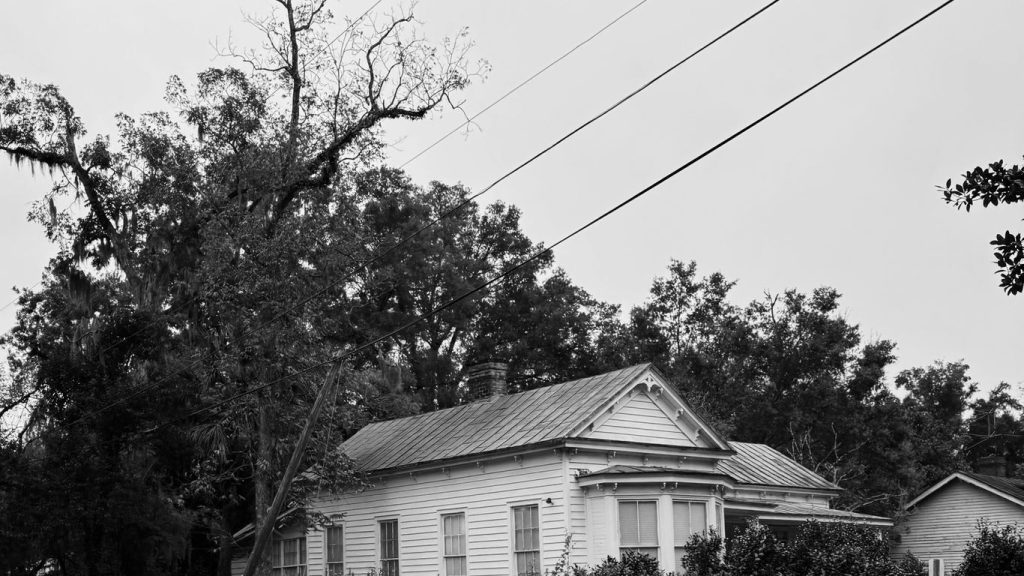
This is where homeowners need to be particularly careful.
The wires running along a street and the line connecting electrical service to an individual house do not necessarily have the same maintenance responsibilities.
The line from a pole to a building is commonly called a service drop.
Responsibility for vegetation near service drops depends on the utility’s policies, the service configuration, and the applicable requirements.
We would not assume Eversource will prune a branch solely because it touches the wire leading to one home. We also would not tell a homeowner to cut that branch themselves.
Contact the electric utility to identify the line and determine whether it must be inspected, disconnected, protected, or otherwise addressed before tree work.
Is Every Wire on the Pole an Electric Line?
No. Utility poles may carry electric distribution conductors, telecommunications cables, or other equipment.
From the ground, homeowners may not be able to identify which company owns a particular wire.
A lower cable should never be assumed safe to touch simply because it looks like telephone or internet wiring.
It may be close to energized equipment, and damaged or fallen lines can create hazards that are not obvious.
If you are uncertain which line is affected, contact the utility rather than trying to identify it by touching, moving, or cutting nearby branches.
How Far Does Eversource Trim Trees From Power Lines?
Utility pruning often removes branches farther from electrical conductors than a homeowner might expect.
That is because the required clearance needs to account for future growth, wind movement, and changes in line position.
Specific distances vary by the electrical facility and the vegetation management specifications in effect.
For example, a 2024 Eversource distribution pruning notice published by Lexington describes planned clearance of approximately 10 feet below and to the sides of primary conductors, with 15 feet above.
Another 2026 plan submitted to a Massachusetts municipality lists eight feet to the sides, 10 feet below, and 15 feet above for a particular pruning classification.
These are examples from specific plans, not one universal clearance requirement for every Eversource line.
Transmission corridors can have different vegetation-management requirements from neighborhood distribution circuits.
We recommend confirming the applicable specification with the utility rather than estimating how much of a tree should be removed based on a general number found online.
Why Does Utility Tree Trimming Sometimes Leave an Uneven Crown?
When a tree has grown around overhead lines, the branches may need to be directed away from the conductors.
That can produce a crown with more foliage on one side or a visible opening where branches previously extended toward the wires.
Directional pruning is commonly used to guide future growth away from electrical equipment.
The resulting shape may be different from what a homeowner would choose for a tree growing in an open yard.
But an uneven appearance does not automatically mean the utility contractor used poor pruning practices.
Eversource’s published vegetation management notices reference accepted arboricultural techniques and oversight of its contractors.
The question is whether the work was appropriate for the clearance objective and performed according to the applicable pruning specifications.
Should You Hire an Arborist to Reshape the Tree Afterwards?
Sometimes additional pruning can be appropriate, but we would first want to examine the remaining structure.
If the utility removed substantial growth from the line-facing side, further cutting on the opposite side may remove more foliage than the tree should lose at that time.
We would consider the species, condition, branch attachments, and amount of living crown remaining.
The purpose of follow-up pruning should be clearly defined.
Trying to make an asymmetrical crown look perfectly balanced immediately can lead to unnecessary cuts.
Will Eversource Remove a Whole Tree Near Power Lines?
It may remove or authorize the removal of certain trees when they create an unacceptable conflict with the electrical system or applicable right-of-way management requirements.
However, the presence of a tree near a power line does not mean it automatically qualifies for removal by the utility.
A tree that repeatedly grows into the conductors may be evaluated differently from one whose branches can be redirected through pruning.
A declining tree outside the immediate line corridor may also need assessment if it could fall into electrical facilities.
These decisions depend on the location, condition, utility requirements, and any applicable municipal procedures.
If the concern is a hazardous tree elsewhere on the property, our tree removal services address trees that need to be taken down because of structural problems, storm damage, or conflicts with nearby structures.
When electrical equipment is involved, the appropriate utility coordination must be resolved before work proceeds.
What Happens to Branches and Wood After Eversource Trimming?
Cleanup depends on the type of vegetation work, the location, and the applicable program.
Some utility projects chip branches and remove the material. Others may leave larger wood pieces or certain vegetation within a managed right-of-way under specified conditions.
It would be inaccurate to promise that Eversource always removes everything or always leaves the wood behind.
When you receive advance notice of vegetation work, ask the utility what will happen to the material cut from your property.
If you are hiring a private tree service, cleanup should be discussed as part of the estimate.
At East Coast Tree Service, our website describes tree debris cleanup as part of our pruning and removal services. We can explain the proposed cleanup scope when evaluating the job.
If a stump remains after a tree is removed, our stump grinding service may also be relevant, depending on the property owner’s plans for the area.
Does Eversource Charge Homeowners for Tree Trimming?
Routine utility vegetation management is generally performed as part of maintaining the electrical system rather than as a separately purchased homeowner pruning service.
But that should not be confused with a promise of free tree care for the entire property.
If the utility determines that a requested service falls outside its maintenance responsibilities, the homeowner may need to arrange and pay for private work.
Costs associated with new connections, privately requested work, or particular service arrangements may also be governed by different rules.
Before scheduling work near a service drop, ask the utility what it will handle and whether any service coordination or charges apply.
When Should You Hire Your Own Tree Service?
We recommend arranging a private assessment when the concern is primarily about the tree or the property rather than utility clearance.
For example, a homeowner may want to address a dead branch above a driveway, reduce an overextended limb near a roof, or evaluate a cracked trunk after a storm.
Those conditions can exist well away from electrical equipment.
We also look at trees that have developed weak branch attachments, decay, or declining sections of the crown.
The appropriate recommendation may be selective pruning, monitoring, or removal, depending on what we find.
For property owners in Chelmsford, our tree service in Chelmsford, MA covers trimming, removal, stump grinding, and storm-related work.
We assess the tree and the surrounding area before recommending a scope of work.
Do Not Prune Trees Near Energized Wires Yourself
Tree branches near electric lines present hazards that are easy to underestimate from the ground.
A branch may move into a wire after it is cut. A pole saw, ladder, rope, or falling limb can also create a path for electrical contact.
Electricity can injure or kill someone without the person intentionally touching a conductor.
Ordinary tree pruning experience does not automatically qualify a contractor to perform line-clearance work near energized electrical equipment.
OSHA distinguishes work involving electrical hazards and requires appropriate qualifications, precautions, and working distances under the standards applicable to the job.
For work that could enter the electrical hazard area, contact the utility first and confirm what arrangements are necessary.
You can review the OSHA guidance for tree care and tree removal operations for an explanation of the electrical hazards involved.
What If a Branch Is Already Touching a Power Line?
Do not attempt to pull, shake, cut, or move it.
Keep people and pets away from the tree and contact the electric utility.
If a wire is down or there is an immediate electrical emergency, stay clear and call 911.
Massachusetts provides official power outage safety guidance for downed wires and other electrical hazards.
A tree that is in contact with a line must be treated differently from an ordinary branch-removal job.
What If a Storm Brings Down a Tree and Power Lines?
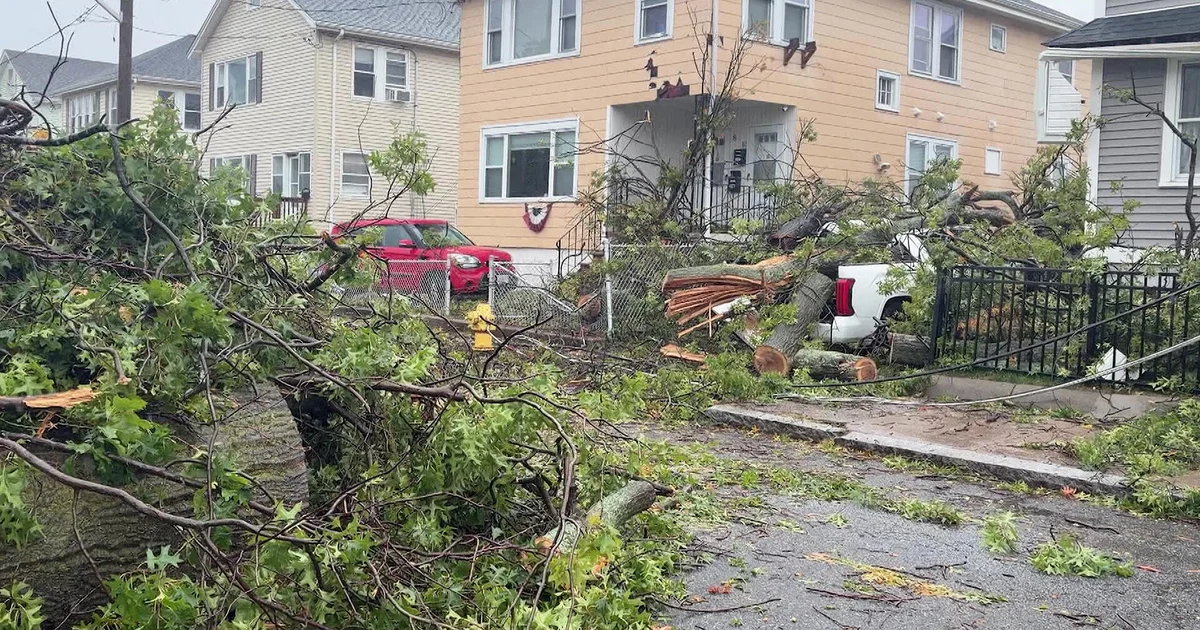
After a storm, a fallen tree may be resting against a house, driveway, or fence while also affecting overhead wires.
We do not recommend walking beneath the tree or approaching the trunk to inspect damage when electrical lines may be involved.
A fallen wire can remain energized. Branches, wet ground, fencing, and other conductive materials may also create danger.
Electrical hazards must be addressed through the utility and emergency authorities before ordinary tree cleanup can proceed safely.
Once the site is cleared for appropriate tree work, our 24/7 emergency tree service can be contacted about storm-damaged trees and dangerous limbs.
We also provide storm damage tree cleanup for fallen material and property restoration work within the scope of our services.
What About Trees Along the Street or Sidewalk?
Another question is whether the tree belongs to the homeowner or is considered a public shade tree.
In Massachusetts, certain trees located within a public way or its boundaries are governed by Chapter 87 of the General Laws.
The local tree warden has authority over public shade trees, and pruning or removal may require permission.
Utility work can also be subject to procedures involving the municipality and the approved vegetation management plan.
We would not assume that a homeowner can authorize substantial work on a roadside tree simply because its trunk stands in front of the house.
Before arranging pruning or removal, confirm whether the tree is privately owned or subject to municipal control.
The Massachusetts guidance on tree laws explains the relevant provisions.
Can You Hire Any Arborist to Work Near Power Lines?
No. Tree-care experience and qualifications for work near energized conductors are separate considerations.
Massachusetts does not have a general statewide license required for every arborist. Professional credentials are available through organizations such as the Massachusetts Arborists Association and the International Society of Arboriculture.
Those credentials can help homeowners evaluate a professional’s tree-care background.
However, a general arborist certification does not by itself establish the electrical qualifications needed for line-clearance work.
If the tree is close enough to electric facilities that the work could create an electrical hazard, the utility must be contacted and the appropriate work arrangements established.
For work outside that hazard area, we recommend checking the contractor’s experience, insurance, proposed scope, and cleanup arrangements.
Can Eversource and a Private Tree Service Both Work on the Same Tree?
Yes, in some situations, provided the work is appropriately coordinated.
A utility may prune branches that interfere with its lines, while the homeowner may later want other parts of the crown evaluated for structural problems.
That does not mean both parties should independently cut the tree without considering the combined effect.
If significant pruning is planned near the electrical system, the appropriate sequence and responsibilities need to be clarified.
We would want to know what the utility is scheduled to remove before recommending additional work on the remaining crown.
That helps avoid unnecessary cuts and provides a clearer understanding of the tree’s likely condition after line clearance.
How Do We Evaluate a Tree Near the Street?
When a homeowner contacts us about a tree near a road or utility corridor, we start by understanding the concern.
Is the tree leaning? Is a branch extending over the driveway? Has the trunk developed a crack? Or is the problem limited to growth toward electrical wires?
We also look at where the tree stands, what surrounds it, and what can be accessed without entering an electrical hazard area.
Where the concern involves the utility’s lines, the correct starting point is coordination with the electric provider.
For tree work that can be evaluated and performed within our service scope, we discuss the condition of the tree and the property owner’s objective.
Our tree services in Tewksbury, MA include pruning, removal, stump grinding, and emergency work for residential and commercial properties.
Who Should You Call First? A Quick Decision Guide
| What You Notice | First Step |
|---|---|
| Branches growing directly into electric distribution lines | Contact the electric utility to request an assessment |
| A branch touching the wire from the pole to your house | Contact the utility and clarify service-drop responsibility before arranging tree work |
| A dead limb over your roof, away from wires | Contact a private tree service for an inspection |
| A cracked or declining tree that could reach power lines if it fell | Notify the utility about the electrical exposure and arrange a coordinated assessment as appropriate |
| A fallen tree with a downed or potentially energized wire | Keep clear and call 911; notify the utility |
| A roadside tree that may be publicly controlled | Check with the local tree warden before authorizing pruning or removal |
| A tree pruned for utility clearance that needs further evaluation | Have a private tree professional assess the remaining structure after utility work |
The goal is to involve the correct party before anyone begins cutting.
That can prevent duplicated work and avoid creating electrical hazards through an otherwise routine tree-care request.
Tree Trimming in Chelmsford, Tewksbury, and Eastern Massachusetts
East Coast Tree Service is based in Tewksbury, Massachusetts. We serve homeowners and businesses in Chelmsford, Reading, Billerica, Wilmington, Andover, and other surrounding communities.
Our services include tree trimming, tree removal, stump grinding, and storm-related cleanup.
If you are concerned about a tree near your home, driveway, or garage, call us at (781) 518-8014 to discuss the work and request an estimate.
Tell us where the tree stands, what concerns you, and whether overhead utility lines are nearby.
If electrical wires are involved, contact the utility first so the appropriate safety requirements and responsibilities can be established. For tree work outside that electrical hazard, we can assess the condition of the tree and explain the pruning or removal options that fit your property.