

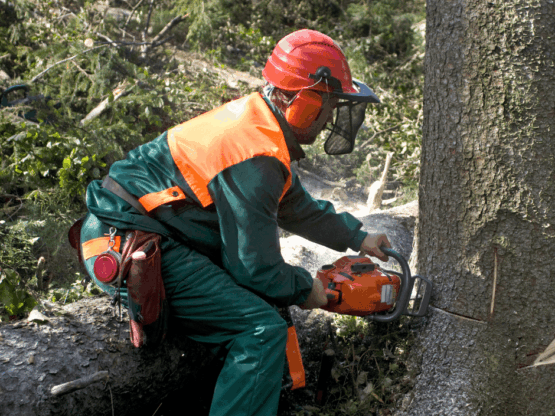
1. A Tree Clearly Inside Your Private Property May Not Need a General State Permit

If the tree is entirely on your private property, away from regulated wetlands and outside the public way, Massachusetts Chapter 87 does not create a general permit requirement for removing it.
That does not settle the question in every city or town.
Municipalities can adopt their own tree preservation rules. Somerville, for example, regulates many private trees that are 8 inches DBH or larger. Cambridge has its own Tree Protection Ordinance and regulates certain private trees based on trunk diameter and other conditions.
DBH means diameter at breast height. It is the trunk diameter measured 4.5 feet above the ground.
So a tree being on private property is a starting point. You still need to know whether your city or town regulates that type of removal.
2. A Tree Along the Street May Be a Public Shade Tree
This is where property lines can cause confusion.
Under Massachusetts General Laws Chapter 87, trees located within a public way or on its boundary may be considered public shade trees. A homeowner may maintain the lawn around one and see it as part of the front yard without having the legal authority to remove it.
Public shade trees fall under the authority of the local Tree Warden. Cutting or removing one generally requires permission and may involve a public hearing.
If a tree is close to the sidewalk, curb, or road and the property line is not obvious, confirm ownership before scheduling the work.
Lowell has a process for residents who are not sure whether a roadside tree belongs to the City or the private parcel. Homeowners looking for tree service in Lowell, MA should settle that question before a roadside tree is removed.
3. Wetlands Can Put a Private Tree Under Conservation Review
A tree can be on your property and still sit inside a regulated area.
Massachusetts wetland rules can apply to work inside wetland resource areas and within 100 feet of certain wetlands. Tree cutting, stump removal, soil disturbance, and equipment access can all affect how the local Conservation Commission looks at the project.
This matters because removing one small tree is different from clearing several trees and grinding the stumps. The amount of disturbance changes.
Dracut tells property owners that tree cutting near wetlands may depend on how many trees are being removed, whether the stumps are coming out, and why the work is needed. The Town recommends contacting Conservation before proceeding.
East Coast Tree Service provides tree removal in Dracut, MA, but municipal approval and the physical removal plan are separate parts of the job.
4. Riverfront Rules Depend on the Municipality
A river or perennial stream near the property deserves another check before tree work begins.
The Massachusetts Rivers Protection Act created regulated Riverfront Areas along perennial rivers and streams. In most communities, that area extends 200 feet from the river.
There are exceptions.
Some densely developed Massachusetts municipalities use a smaller state Riverfront Area. Lowell is one of the communities where the state Riverfront Area is 25 feet rather than 200 feet.
That means a homeowner in Dracut should not automatically use the same riverfront distance that applies in Lowell, even though the towns are close to each other.
Local wetland bylaws may add another layer of regulation too.
Looking at a river on an online map is not enough to determine jurisdiction. The regulated boundary may depend on the actual wetland line, the mean annual high-water line, and local rules.
5. Andover Has Specific Guidance for Tree Work Near Wetlands
If you are specifically searching for a tree removal permit in Andover, MA, the Town has published guidance for tree work near wetlands.
Andover advises property owners to contact the Conservation Department when trees are within a wetland, within 100 feet of a wetland, or within 200 feet of a perennial stream.
The Town may ask for details such as:
- The number of trees being removed
- The approximate size of the trees
- The species, if known
- The location of the trees on the property
- The reason for the proposed removal
There is another useful part of Andover’s guidance. If the tree is outside the regulated wetland and buffer areas and is not located on Town property, the Conservation Department says it does not need to be contacted about the proposed tree work.
That statement applies to Conservation review. A public shade tree, scenic road, or another regulated condition may still involve a different municipal rule.
East Coast Tree Service’s Andover tree service page also notes that properties near local wetlands may need to be checked with the Town before work begins.
6. A Dead or Hazardous Tree Can Follow a Different Process
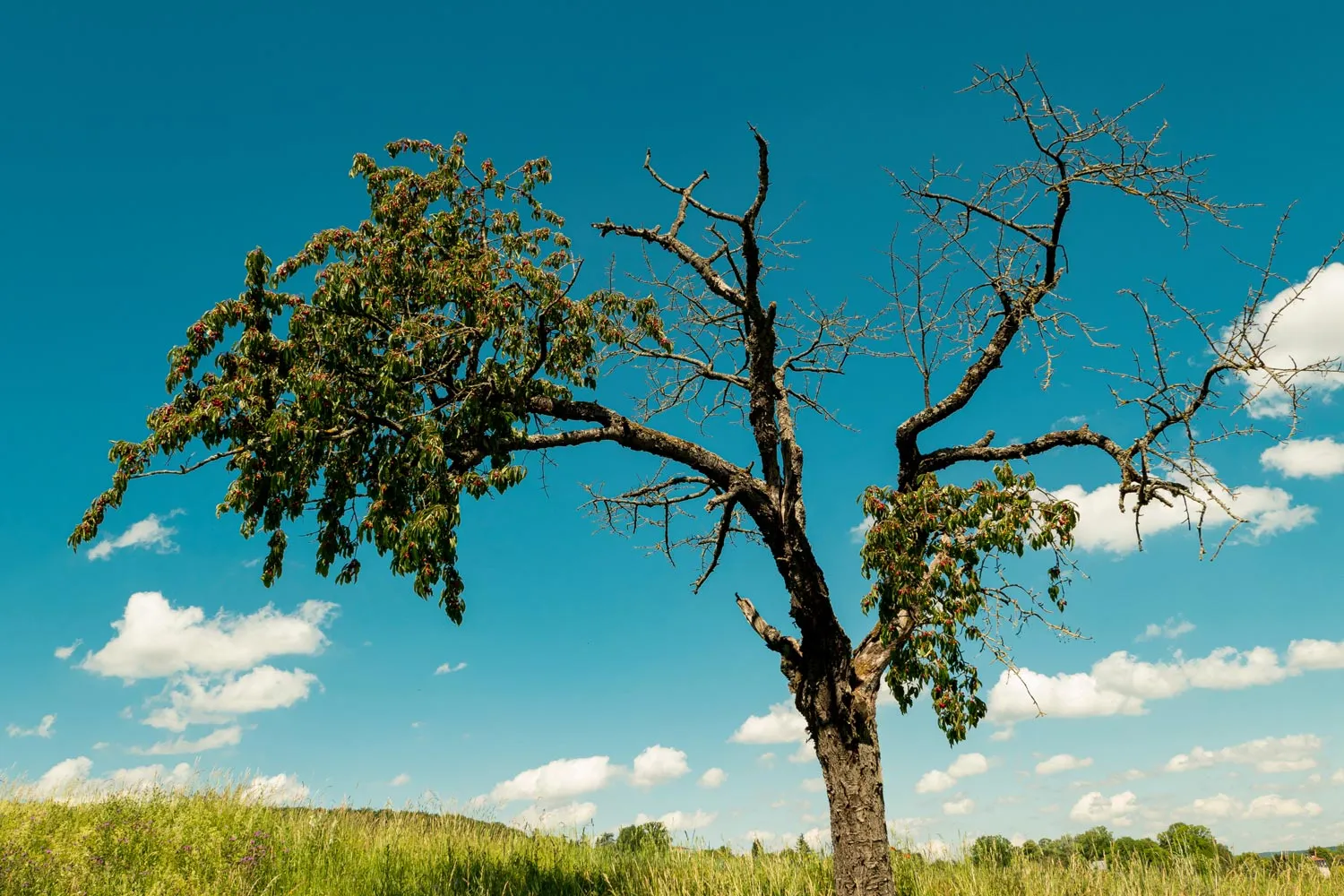
Dracut states that certain minor activities, including removal of a hazardous tree, may qualify for administrative approval from Conservation staff rather than a full wetlands filing.
Somerville allows immediate removal when a tree presents an immediate safety risk, but the City still instructs property owners to document the condition with photographs, notify the Tree Warden, and provide evidence of the hazard.
That is why it can help to document a dangerous tree before removal when conditions allow. Photos of a failed trunk, uprooting, damaged limbs, and the surrounding property may be useful if the municipality later asks why the work was necessary.
For trees that have already failed or present an immediate hazard, East Coast Tree Service also provides 24/7 emergency tree service throughout its eastern Massachusetts service area.
What About Trees on Scenic Roads?
Massachusetts also has rules that can affect tree cutting along designated scenic roads.
Chapter 40, Section 15C allows cities and towns to designate scenic roads and regulate certain tree cutting associated with work inside the road right-of-way.
For a homeowner, the practical issue is the boundary.
If a mature tree sits close to an older road and you are not sure whether the trunk is entirely on private property, check before removing it. The lawn edge is not always the property line.
Which Department Should You Call?
The right office depends on what is triggering the review.
If the tree appears to be in or along the public way, start with the local Tree Warden, Department of Public Works, or whichever municipal department handles public trees.
If there is a wetland, pond, stream, or river nearby, contact the local Conservation Department or Conservation Commission.
If your municipality regulates private trees based on trunk diameter, species, development activity, or another local standard, look for the local tree preservation ordinance.
In Andover, wetland questions go through the Town’s Conservation Department. Dracut also directs residents to Conservation for tree cutting near wetlands. Lowell has a process for checking whether a roadside tree is City-owned or privately owned.
Making that call before the tree comes down is usually easier than trying to sort out the rule afterward.
Do Not Confuse the Permit Question With the Removal Plan
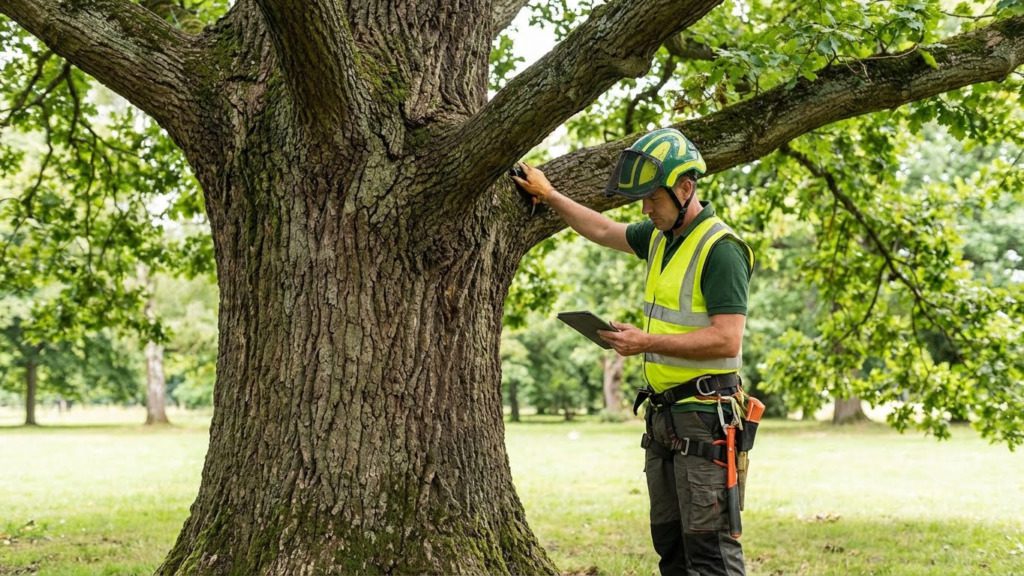
Permission to remove a tree and figuring out how to remove it are two different parts of the job.
Once the legal side is clear, the crew still has to look at the tree itself. Lean, decay, access, buildings, utility lines, neighboring property, and the available landing area all affect how the removal will be handled.
A permit does not tell you whether a tree can be felled into an open yard, dismantled in sections, controlled with rigging, or removed with crane assistance.
East Coast Tree Service provides tree removal and emergency tree services throughout eastern Massachusetts.
The company also serves homeowners in Reading, Tewksbury, and Billerica.
Before You Remove a Tree in Massachusetts
Start by confirming where the tree sits. If it is clearly inside your private lot and away from regulated areas, the process may be simple. If it is near a road, wetland, river, or another protected area, there may be another step before removal.
Local rules matter too. A tree that can be removed without a private-tree permit in one Massachusetts town may require municipal approval a few towns away.
If you are planning a removal, confirm whether the tree is private, public, or inside a regulated environmental area first. Then have the tree and property evaluated so the removal method, access, cleanup, and equipment needs can be priced as one clear scope.